This plant database contains text and photographs describing the important characteristics of native species. For a current list of available species, please visit the Availability page.
Species
Plant Database
-
Abies grandis
Grand Fir
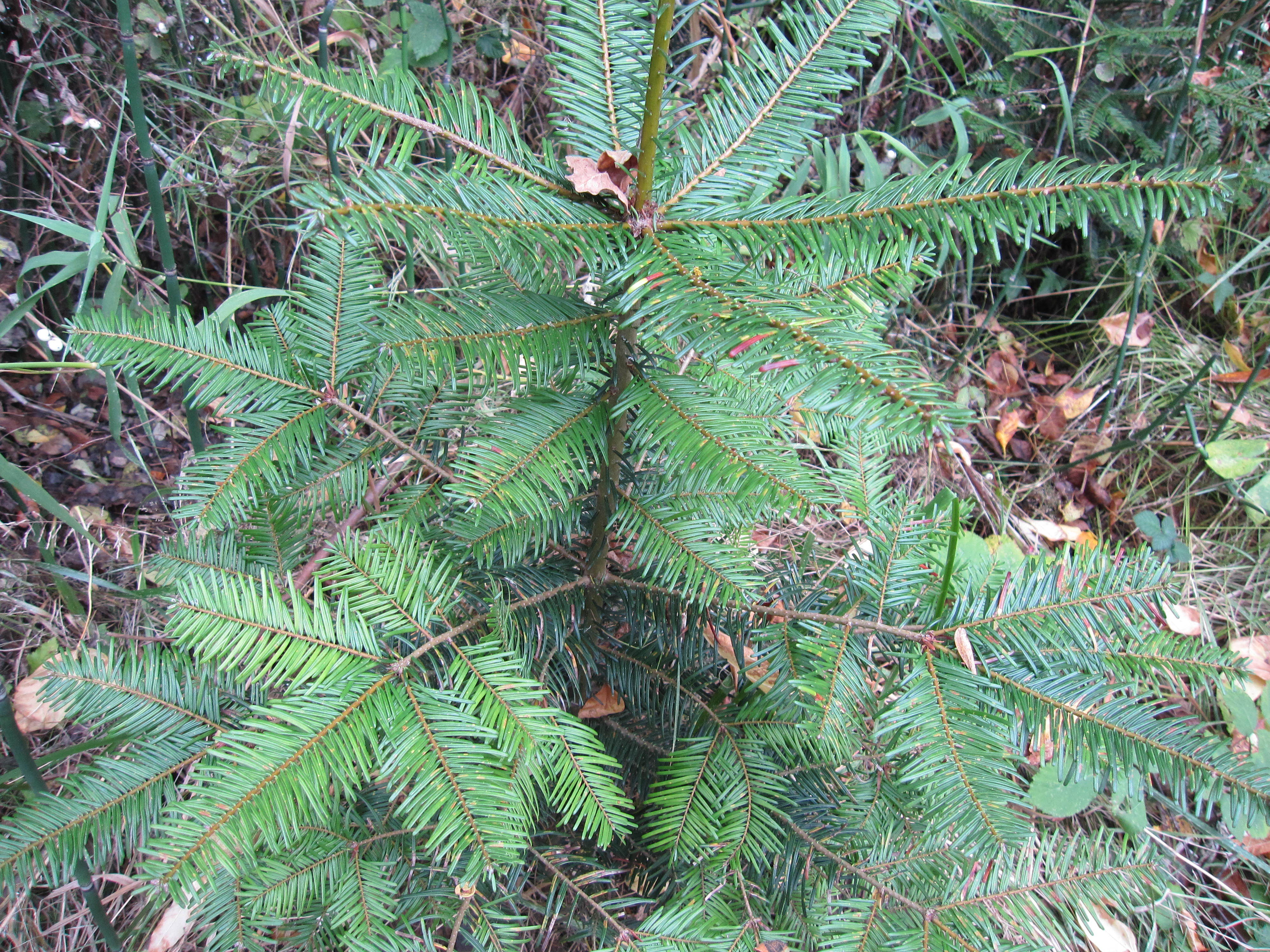
Grand Firs are the tallest and fastest-growing conifer in forests and woodlands of the Willamette Valley, reaching 80 meters (250 feet) in height.
Grand Fir is recognizable by its citrus-like scent, erect, purple-grey cones that perch atop branches, and 2-ranked, deep green needles. The bark is smooth on young trees, becoming moderately blocky on older trees, which can achieve an impressive columnar trunk.
This shade and sun-tolerant tree is an excellent species to use in reforestation projects within the Willamette Valley of northern Oregon and Southern Washington. It also makes a lovely and highly fragrant Christmas tree.
-

Acer circinatum
Vine Maple
Vine Maples are small trees or large shrubs that reach 6 meters (20 feet) in height.
This species is found in the Willamette Valley as an important understory component for tall evergreens such as Doug Fir and Western Hemlock. They prefer moist, well-drained sites in the shade at low to middle elevations. Vine Maples are distinguishable by their 5-9-lobed leaves which are coarsely toothed. Their seeds are winged double samaras in the shape of an airplane propeller. Young twigs have a reddish hue while older bark is gray in color.
In the fall, Vine Maples put on a spectacular show of color. This is a must have shrub for any forest restoration project in Washington and Oregon.
-
Acer macrophyllum
Big Leaf Maple
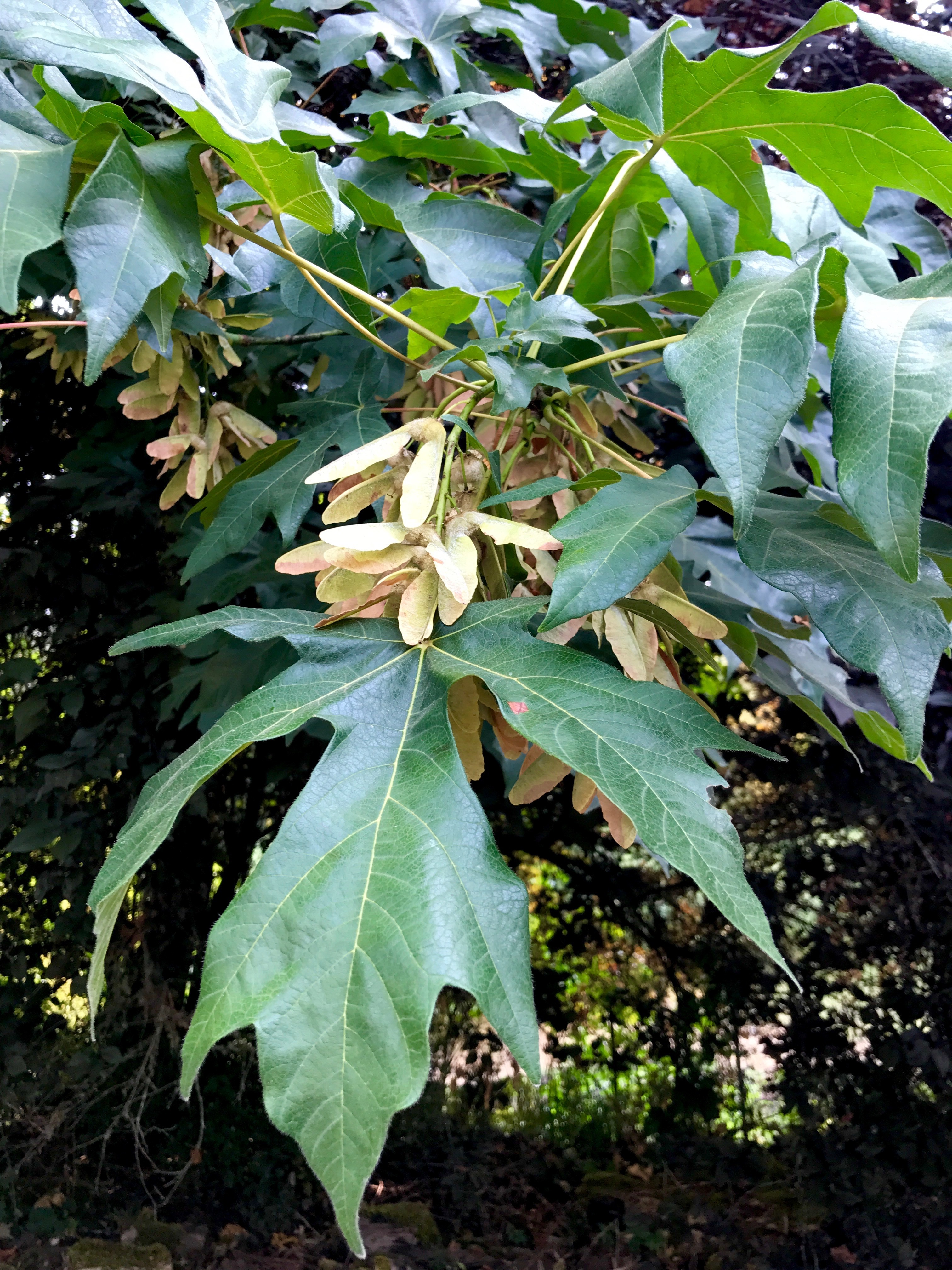
Big Leaf Maple is a fast-growing tree that can reach 30 meters (100 feet) in height. This tree occupies a wide range of environments from dry bluffs and slopes to rich, well-drained alluvial soils. It is found throughout the Willamette Valley at low elevations and is an ecologically important plant as it is a host to a wide variety of mammals, birds, and epiphytic plants and fungi.
This tree is easy to identify as its leaves have five lobes, resembling a human hand, and has the largest leaf of all maples, reaching 38 centimeters (15 inches) in diameter. The seeds are winged and covered in very small, dense hairs that can be quite painful if touched by a naked hand.
-
Alnus rhombifolia
White Alder
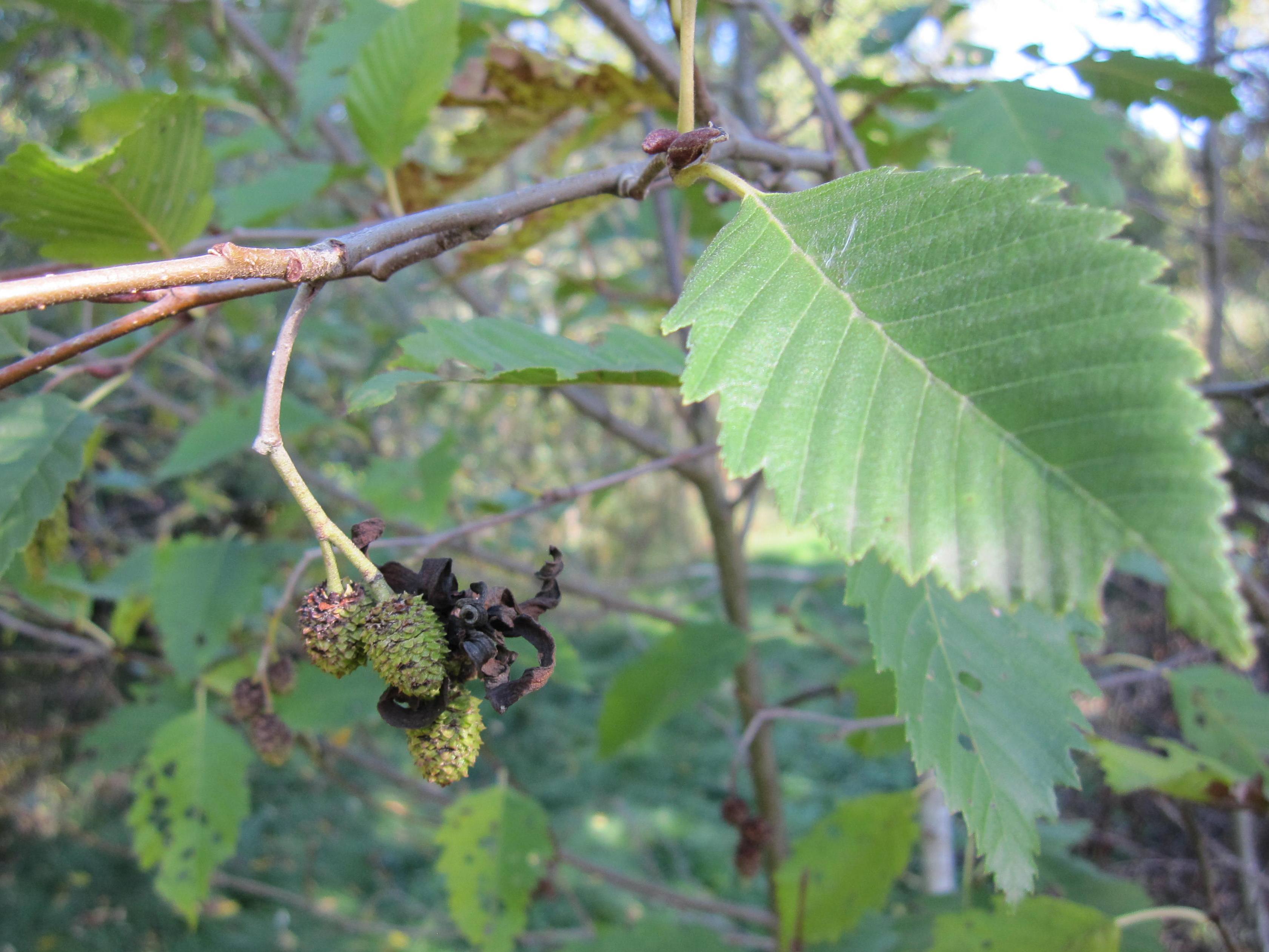
White Alder is one of a suite of climate-adapted species already native to every county in the Willamette Valley. It is a long-lived but fast-growing riparian species that ranges from 5 to 35 meters (16-115 feet) in height. In the Willamette Valley, white alder co-occurs and occasionally hybridizes with red alder.
White alder has smooth, grey bark that splits into deep blocks with maturity. Leaves are singly to doubly serrate, dark green above and light green below. In contrast to red alder, its leaves are not lobed, and leaf margins are not inrolled; it also has somewhat smaller cones and is significantly longer-lived. This is a great species to add structure and diversity to riparian plantings.
-

Alnus rubra
Red Alder
Red Alder is a fast-growing tree that reaches 35 meters (115 feet) in height. These trees grow on stream banks and moist slopes throughout the Willamette Valley.
Their unique leaves are typically egg-shaped, broad, and have edges that are both serrate and shallowly lobed. The seeds are produced in a cone-like infructescence, while the pollen is formed in male catkins of hanging spikes. Red Alders are rapid colonizers of disturbed moist sites. They are less tolerant of heat and drought than the closely related white alder.
-
Amelanchier alnifolia
Western Serviceberry
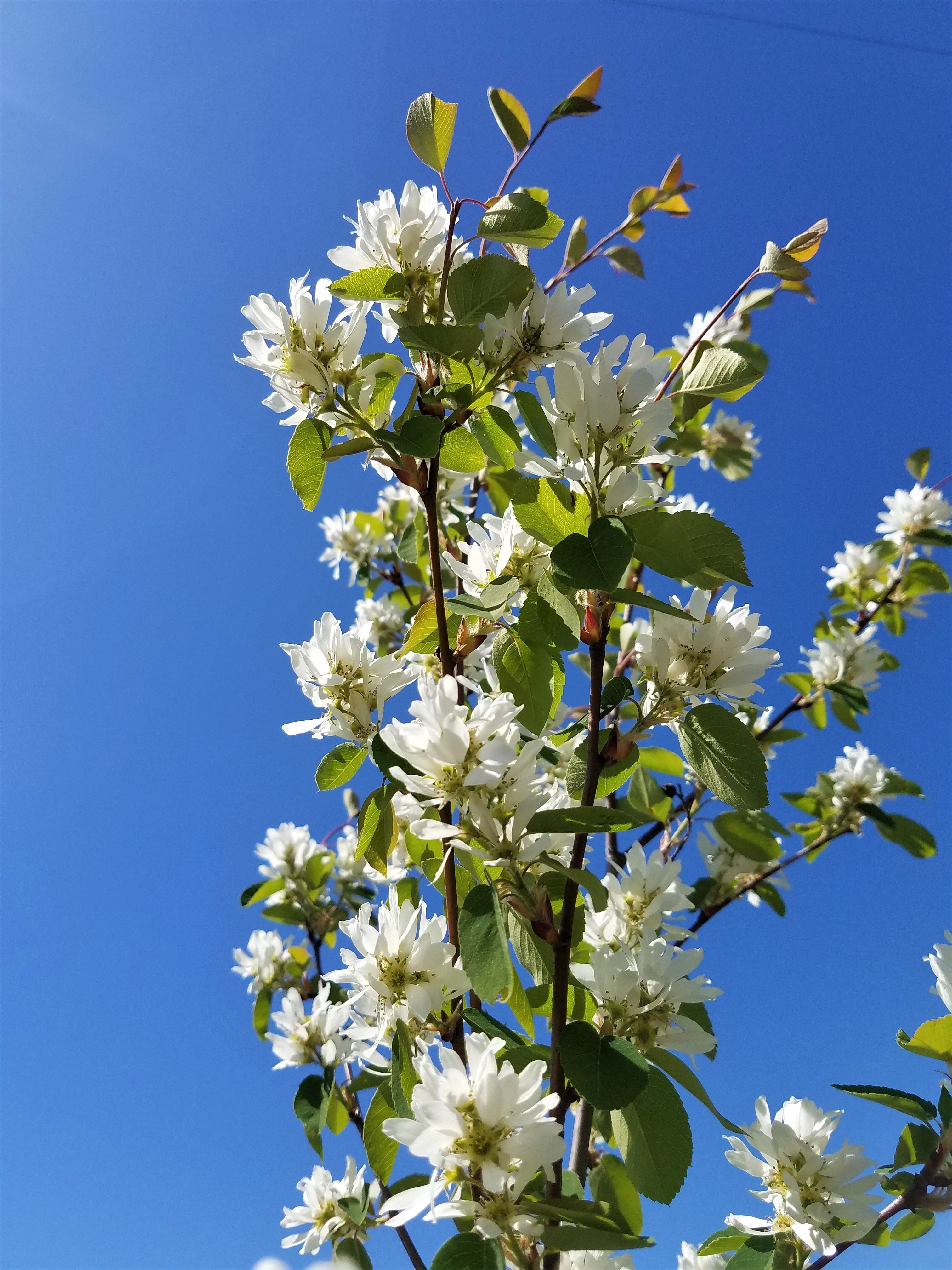
Western Serviceberry can reach heights of 5 meters (16 feet) in areas of full sun with well-drained soils. This shrub is found at low to middle elevations throughout the Willamette Valley in a wide amount of habitats such as rocky bluffs and shorelines to meadows and thickets.
Western Serviceberries can be identified by their tendency to grow in dense colonies. The shrub has thin, round leaves and dark grey to reddish bark. In early spring, the shrubs have white flowers while in fall, dark purple berries take the flowers' places.
This is an extremely hardy plant that will grow well in any dry, open site. It requires very little maintenance and is an excellent food source for the fauna of the area as well as humans.
-
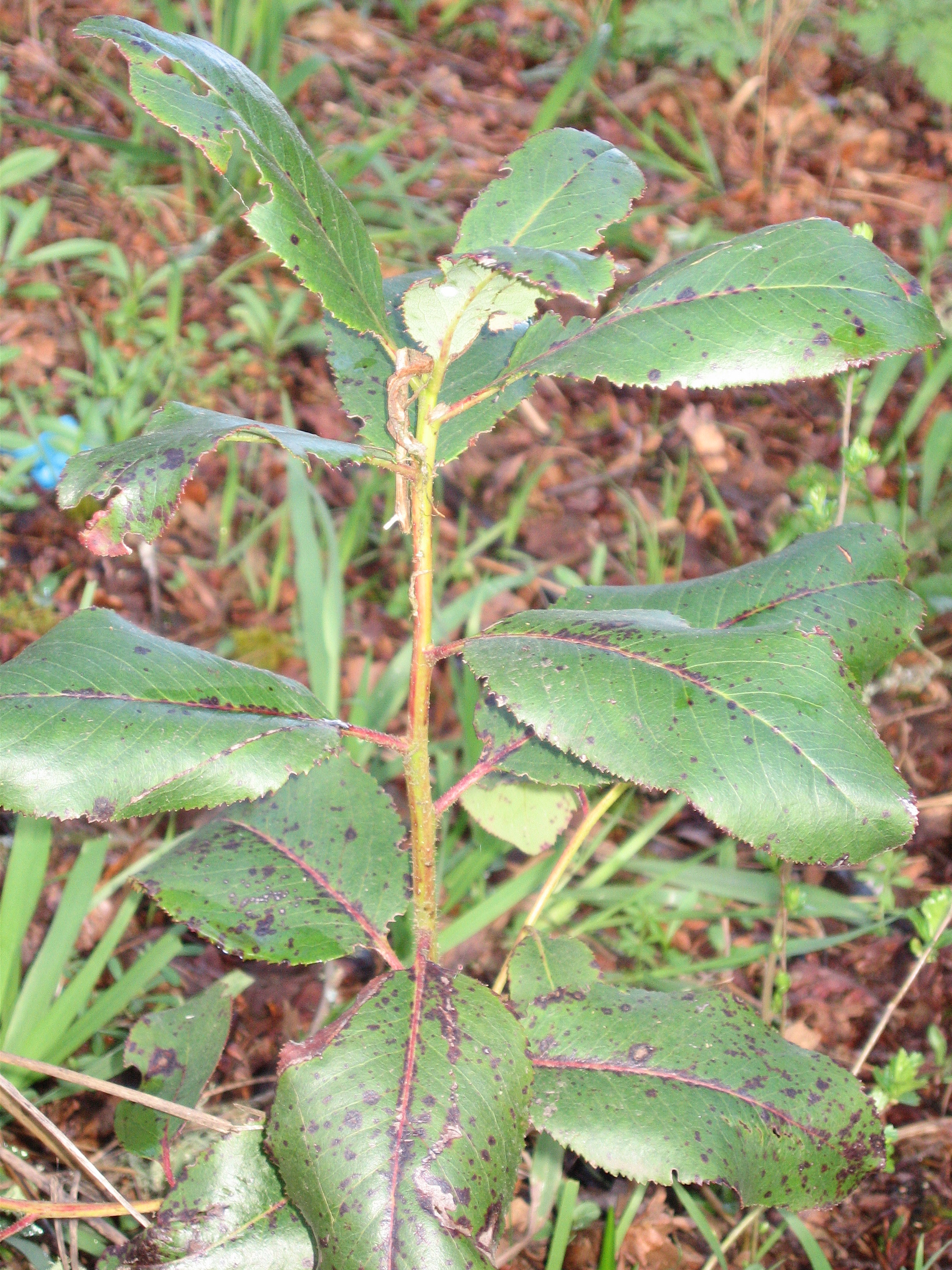
Arbutus menziesii
Pacific Madrone
Pacific Madrone is a small tree of 15 meters (50 feet). This tree prefers a southern or western exposure in dry, poor soils. Madrones can take full sun and are found throughout the Willamette Valley in low to middle elevations.
The most striking feature of this plant is its bark. The thin top layers of bark are red and peal back revealing smooth greenish yellow bark underneath. Older bark is brown and flaky.
Pacific Madrones are a must for sites that are drier with poor soils. It is most often associated with Salal, Doug-Fir, and Garry Oak.
-
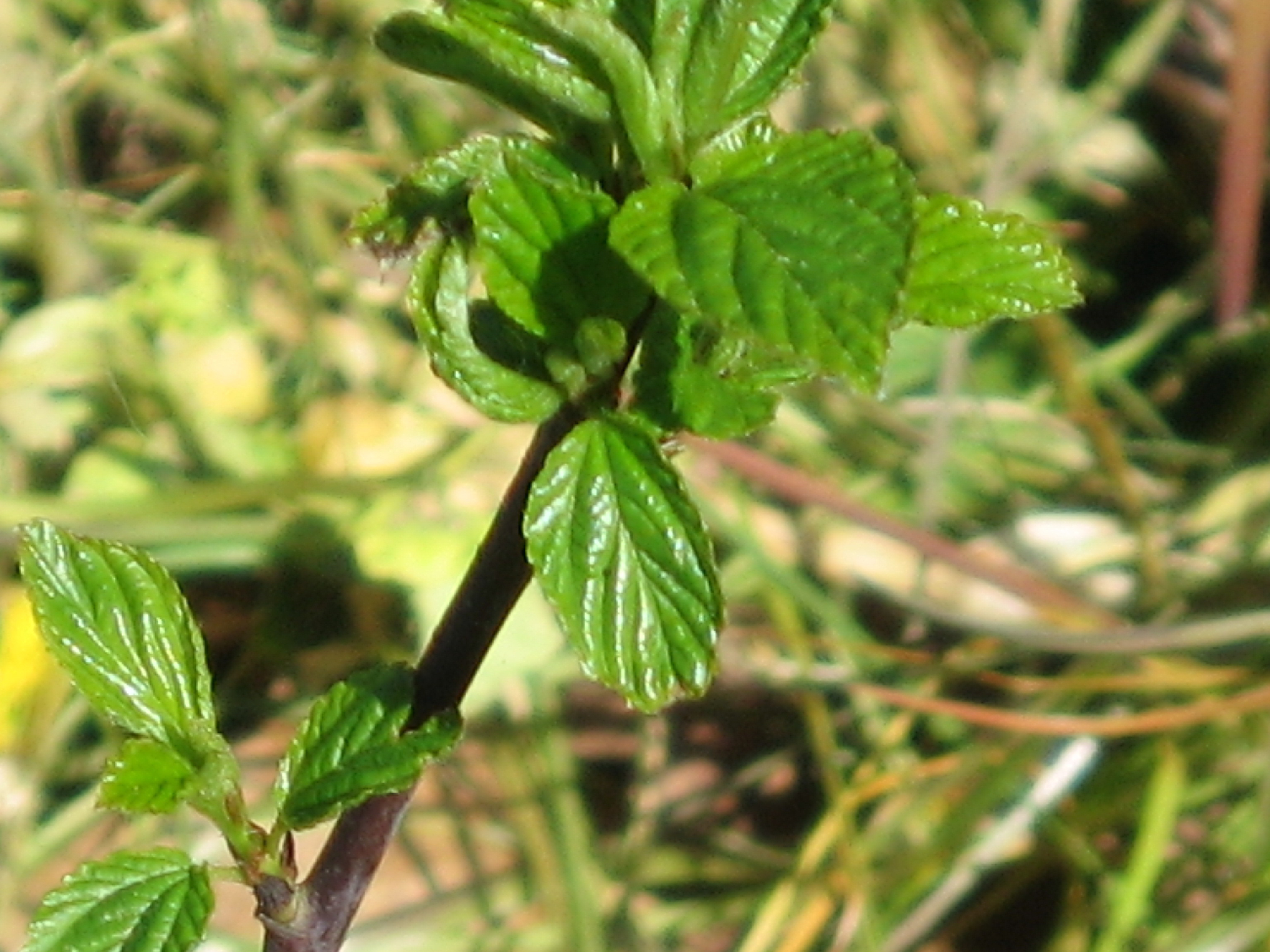
Ceanothus sanguineus
Red Stem Ceanothus
Red Stem Ceanothus is a 3 meters (10 feet) tall shrub that grows in dry or moist open sites. It can tolerate full sun or partial shade and will grow in very poor soils. Often associated with a disturbance such as fire. This shrub is found throughout the Willamette Valley at low to middle elevations.
The shrub gets its common name, Red Stem, from the color of its bark, which can be red to purple. The flowers are small and located in groups at the end of lateral branches.
Red Stem Ceanothus has nitrogen-fixing bacteria associated with its roots, making it an excellent pioneer plant after disturbances. It is also a food source for deer and the flowering twigs can be used as a soap.
-
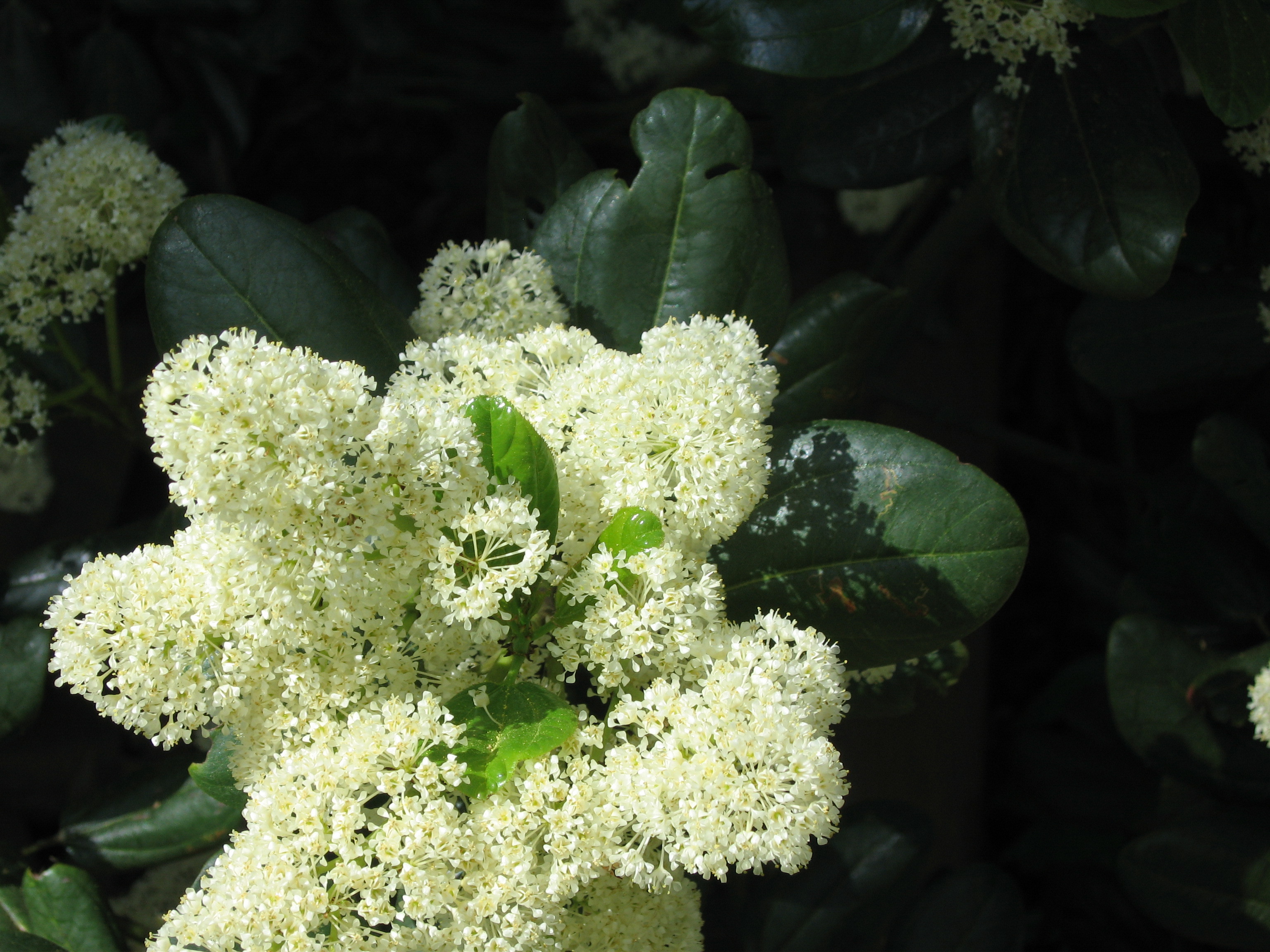
Ceanothus velutinus
Mountain Balm
Mountain Balm is a shrub that reaches 3 meters (10 feet) in height and is related to Redstem Ceanothus. Mountain Balm's preferred habitat is similar to Redstems, but must have full sun. It is also associated with a disturbance such as fire. The plant is found at low to middle elevations from British Columbia to California.
This shrub has shiny, sticky leaves that produce a spicy fragrance. The flowers look like Redstem's, but they are located in groups along the lengths of side branches.
Mountain Balm is closely associated with fire in that this plant requires it for seed germination. -
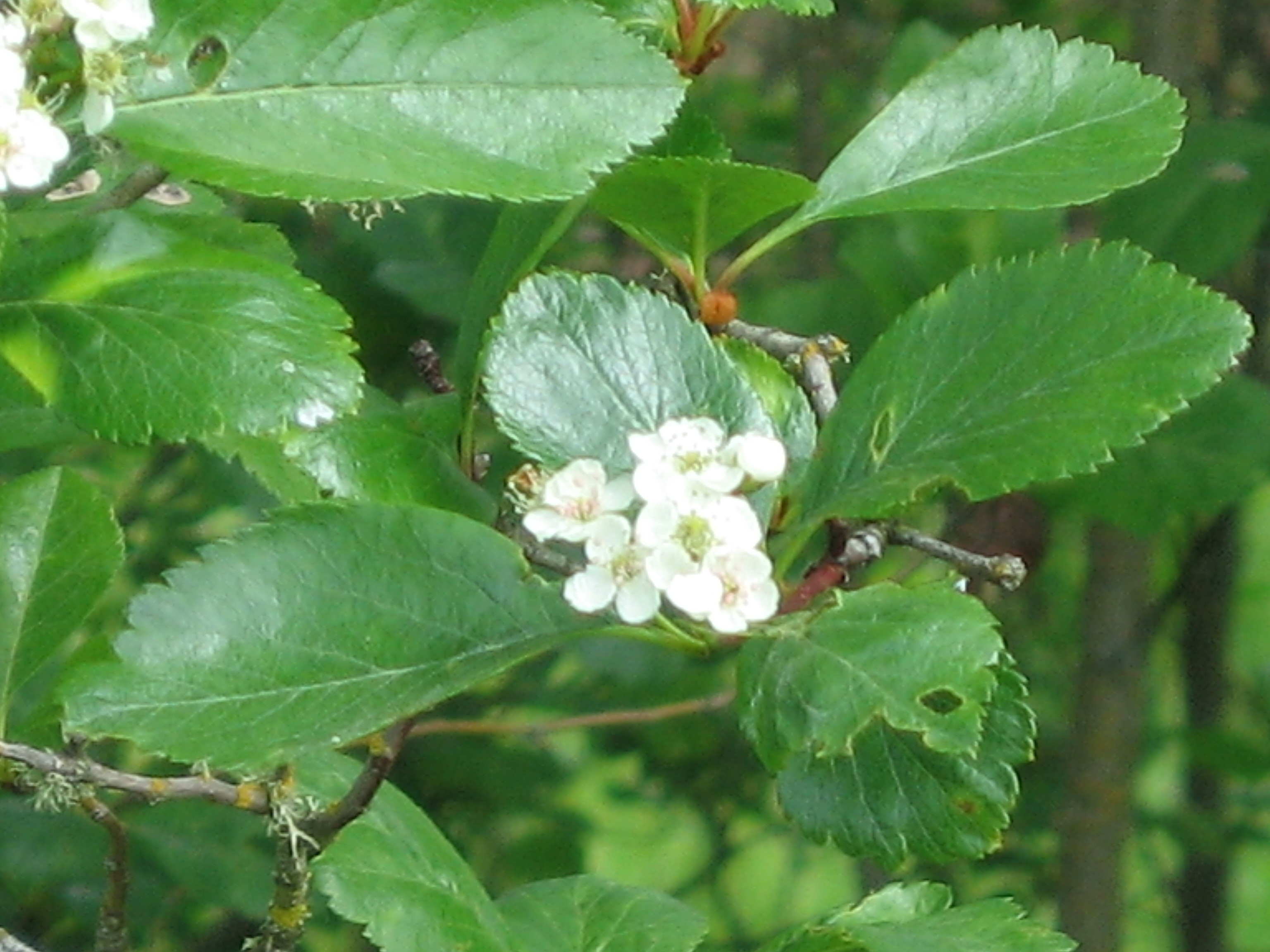
Crataegus gaylussacia
Black Hawthorn
Black Hawthorn is a large shrub reaching 10 meters (33 feet) in height. It prefers moist, open places in full sun. This shrub is drought resistant and can stand brief periods of flooding. Black Hawthorn is found at low to middle elevations from Alaska down to California.
This species can be distinguished from its invasive English cousin by its thick leathery leaves that are slightly lobed. They have rough grey bark and long thorns on the branches. The flowers are white and clustered, located on the terminal part of the stem. The fruits are black apple-like berries with very large seeds.
This species is wonderful in moist forested sites. The roots grow deep and stabilize the soil, while the flowers and fruits provide a food source for butterflies, ladybugs, and people.
-

Euonymus occidentalis
Western Wahoo
Western Wahoo is a small shrub that reaches 1 meter (3 feet) in height. It is found sporadically throughout Oregon and Washington forests and thickets at low to middle elevations.
The flowers of this plant can be green with purple mottles or purplish red. The seeds are in capsules of three, which are covered by a reddish orange aril; much like a cashew.
This species does well in riparian areas with plenty of shade. It provides a food source for birds and wildlife of the Pacific Northwest.
-
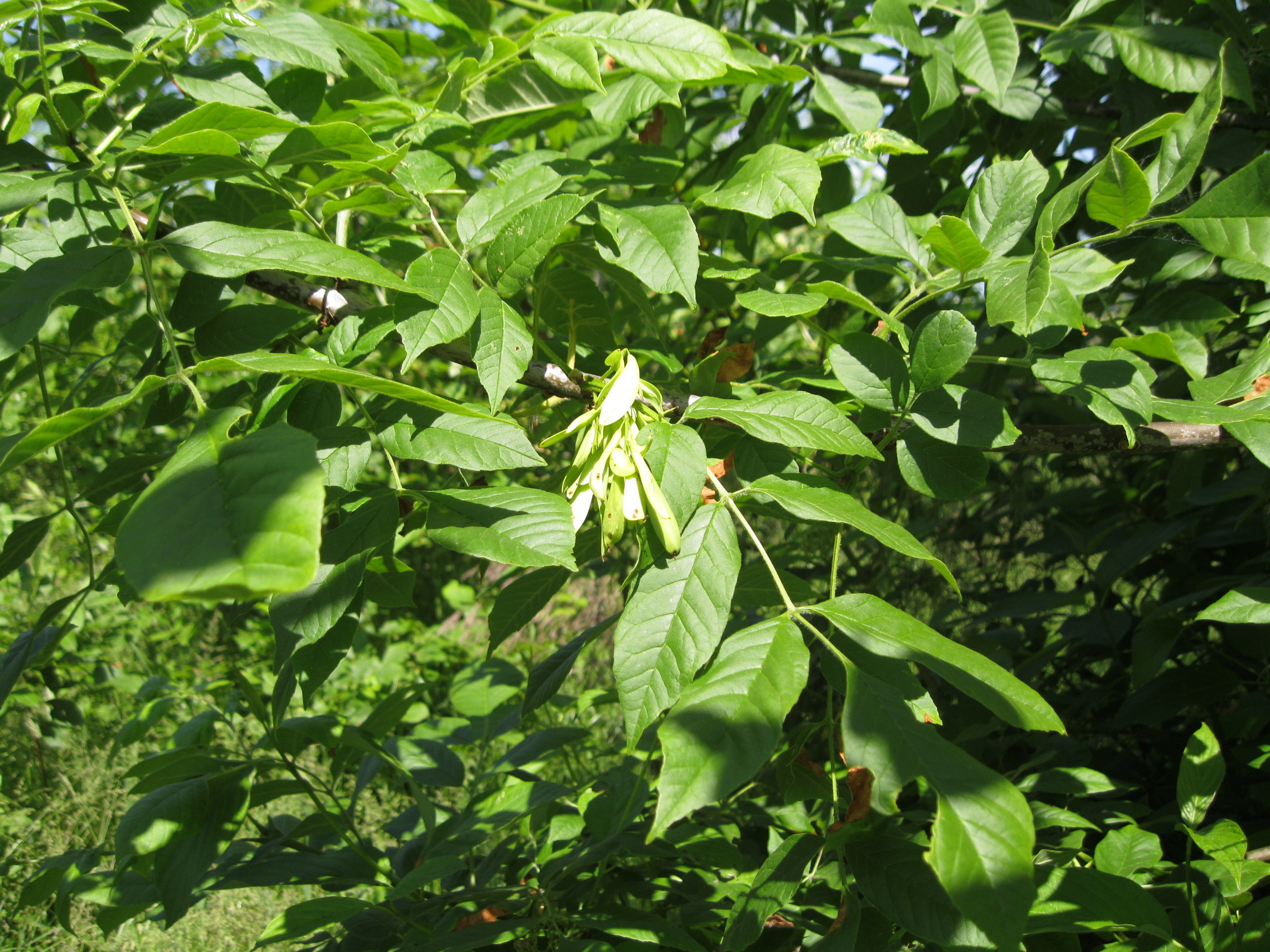
Fraxinus latifolia
Oregon Ash
Oregon Ash is a 25 meter ( 82 feet) tall tree that grows in moist or wet soils in the Willamette Valley at low elevations. It prefers full sun along stream banks and in sloughs.
The unique identification feature of Oregon Ash is the pinnately compound and oppositely arranged leaves. As this tree ages, the bark becomes greyish brown and fissured. The flowers are small and inconspicuous, but the seeds are highly visible. Each seed is in a winged, canoe-shaped samara.
This species is best used in riparian projects. It is a relatively long lived tree.
-
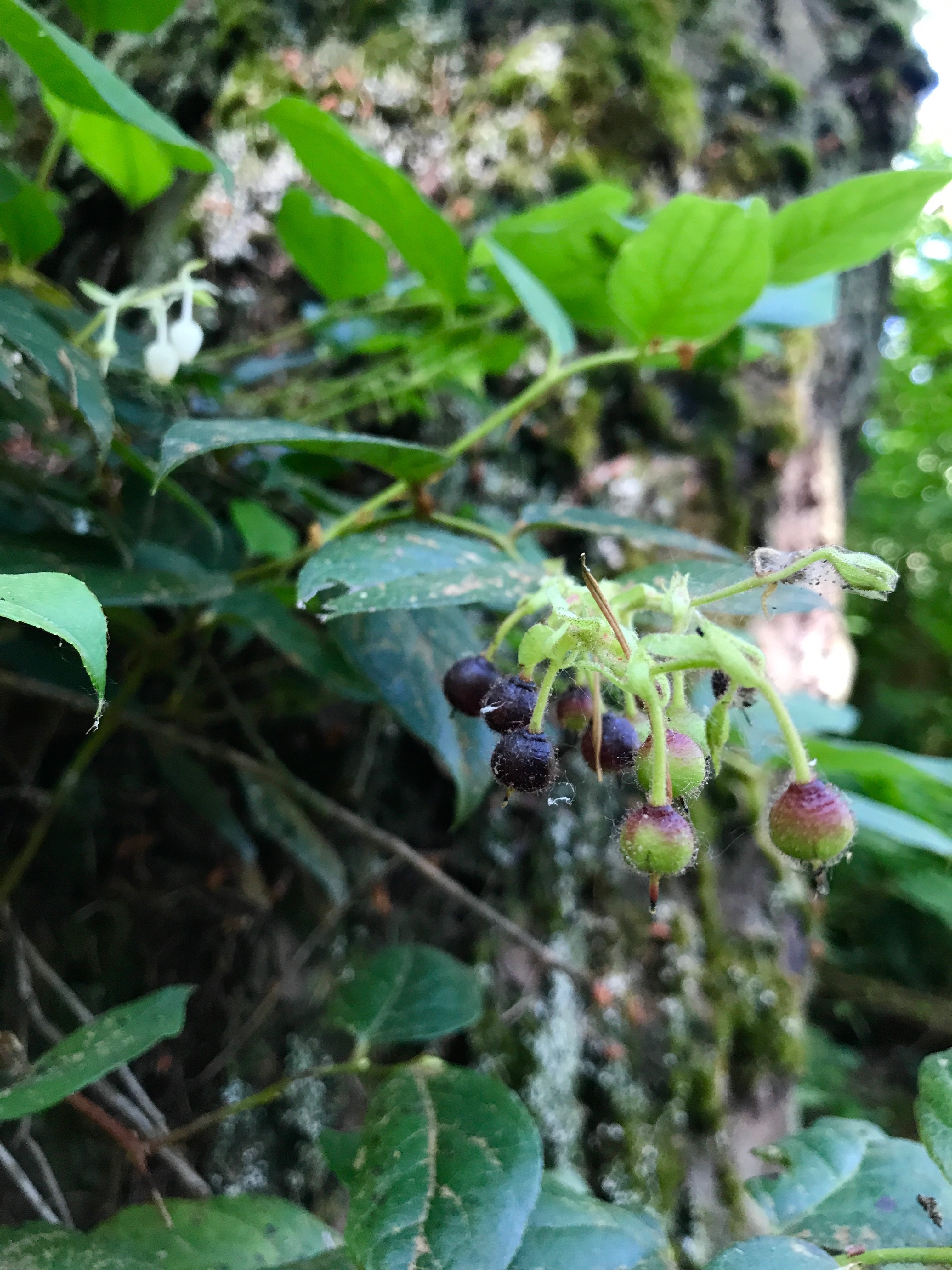
Gaultheria shallon
Salal
Salal is an erect creeping shrub that can reach heights of 1 meter (3 feet). It is found throughout the Willamette Valley in coniferous forests and rocky bluffs. This shrub is highly adaptable and can thrive in sun, shade, moist, dry, infertile or fertile soils. Salal prefers low to middle elevations.
Salal can be recognized by its hairy branched stems, pinkish-white bell shaped flowers, and reddish-blue to dark purple fruit.
This evergreen shrub is an important understory species of our coniferous forests, providing habitat and a source of food for birds and wildlife. Humans also enjoy their sweet tasting fruit.
-
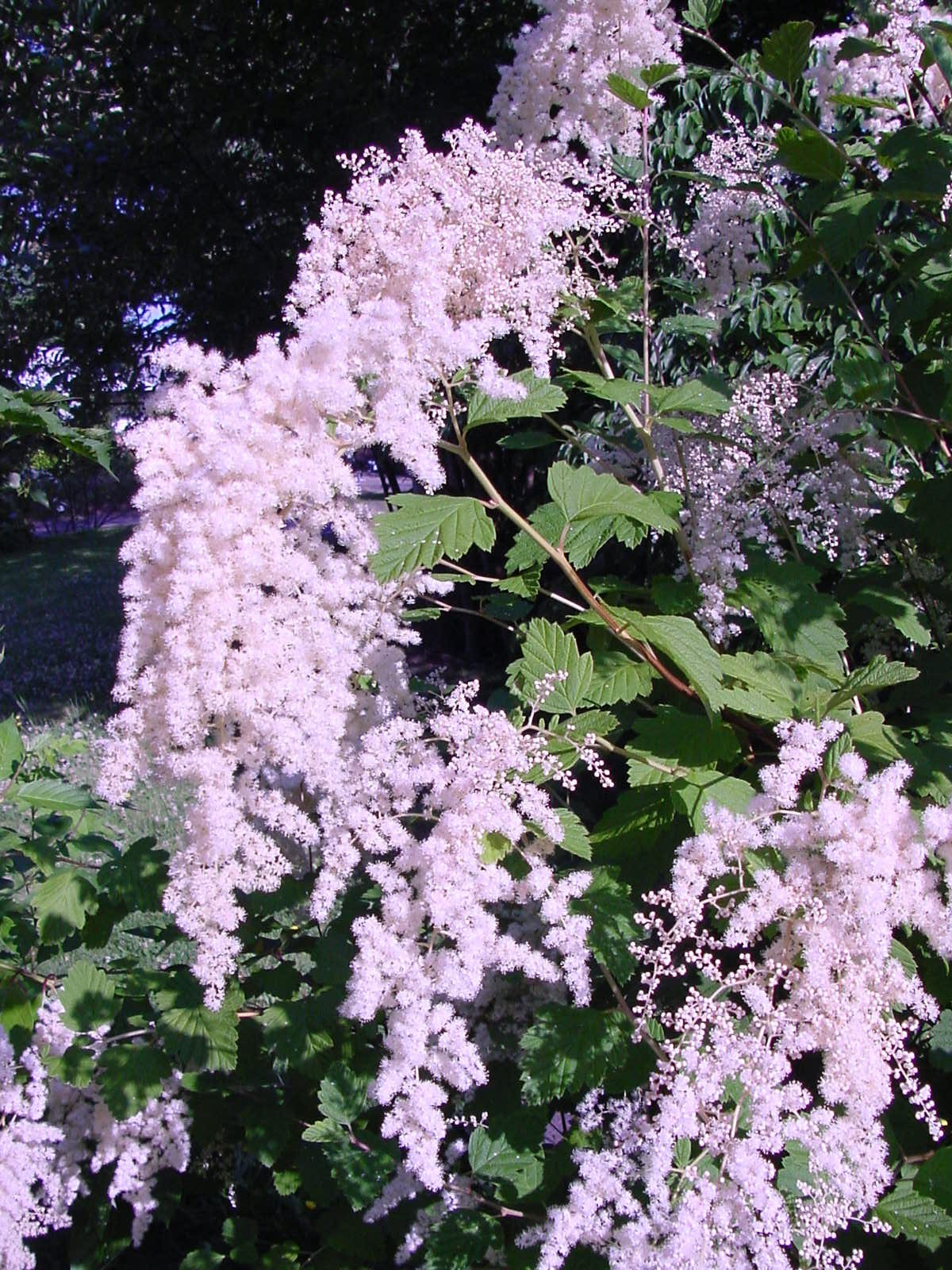
Holodiscus discolor
Oceanspray
Oceanspray is an erect shrub that reaches 4 meters (13 feet) in height. Preferring full sun, it can be found in open woods, clearings, logged areas, and ravines at low to middle elevations. This shrub can be found from Southern British Columbia to California in dry or moist soils.
Oceanspray has strong arching branches and produces beautiful cascading panicles of small, creamy white flowers.
This plant is an important species in open areas as a food source for a wide range of pollinators.
-
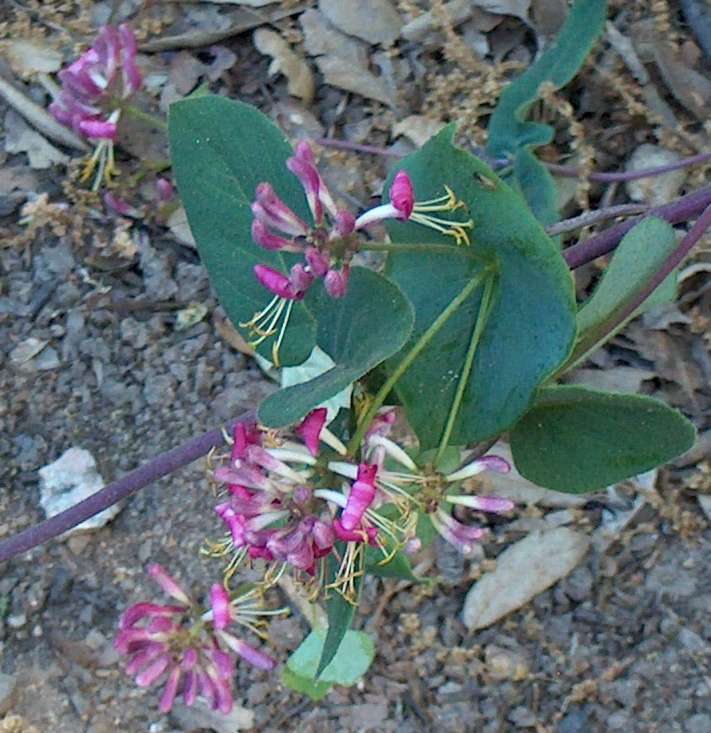
Lonicera hispidula
Hairy Honeysuckle
Hairy Honeysuckle is a crawling, hairy branched vine. It is found crawling along the floor of dry open forests and thickets. The vine can be found throughout the Willamette Valley at low to middle elevations.
This vine is very similar to Orange Honeysuckle, but has pinkish purple, trumpet-like flowers instead.
This plant is best used in drier, open sites and will help attract pollinators to the area.
-

Lonicera involucrata
Black Twinberry
Black Twinberry is a fast growing shrub that can reach 3 meters (10 feet) in height. It prefers full or partial sun and moist soils in forests, thickets, stream sides, and swamps from low to subalpine elevations. This shrub ranges from Canada down to California.
Black Twinberry forms yellow tubular flowers in pairs. These produce two black berries throughout the summer, which are nestled by 2 pairs of purple-maroon bracts.
Due to its speed in growth, this plant is a must for riparian areas to quickly establish roots that help stabilize the site. -
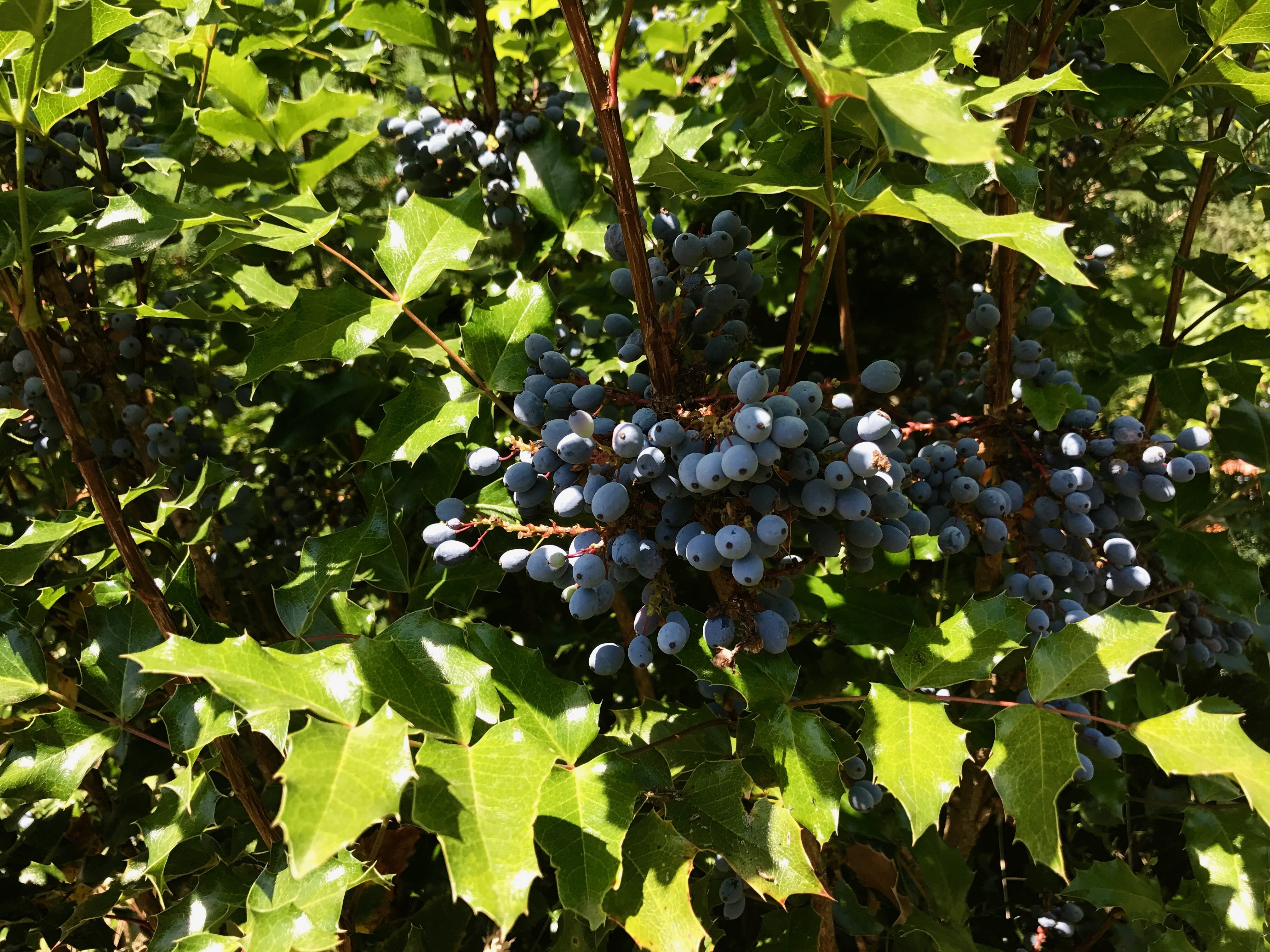
Mahonia aquifolium
Tall Oregon Grape
Tall Oregon Grape is an erect shrub that reaches 2 meters (6 feet) in height. It prefers full sun in dry soils from Southern British Columbia to central Oregon at low to middle elevations.
This shrub has 5-9 leaflets per leaf with small yellow flowers that produce blue berries in the summer.
This plant is very hardy and deters browsing by animals, such as deer. Tall Oregon Grape is also highly drought tolerant, perfect for the Northwest's unpredictability.
-
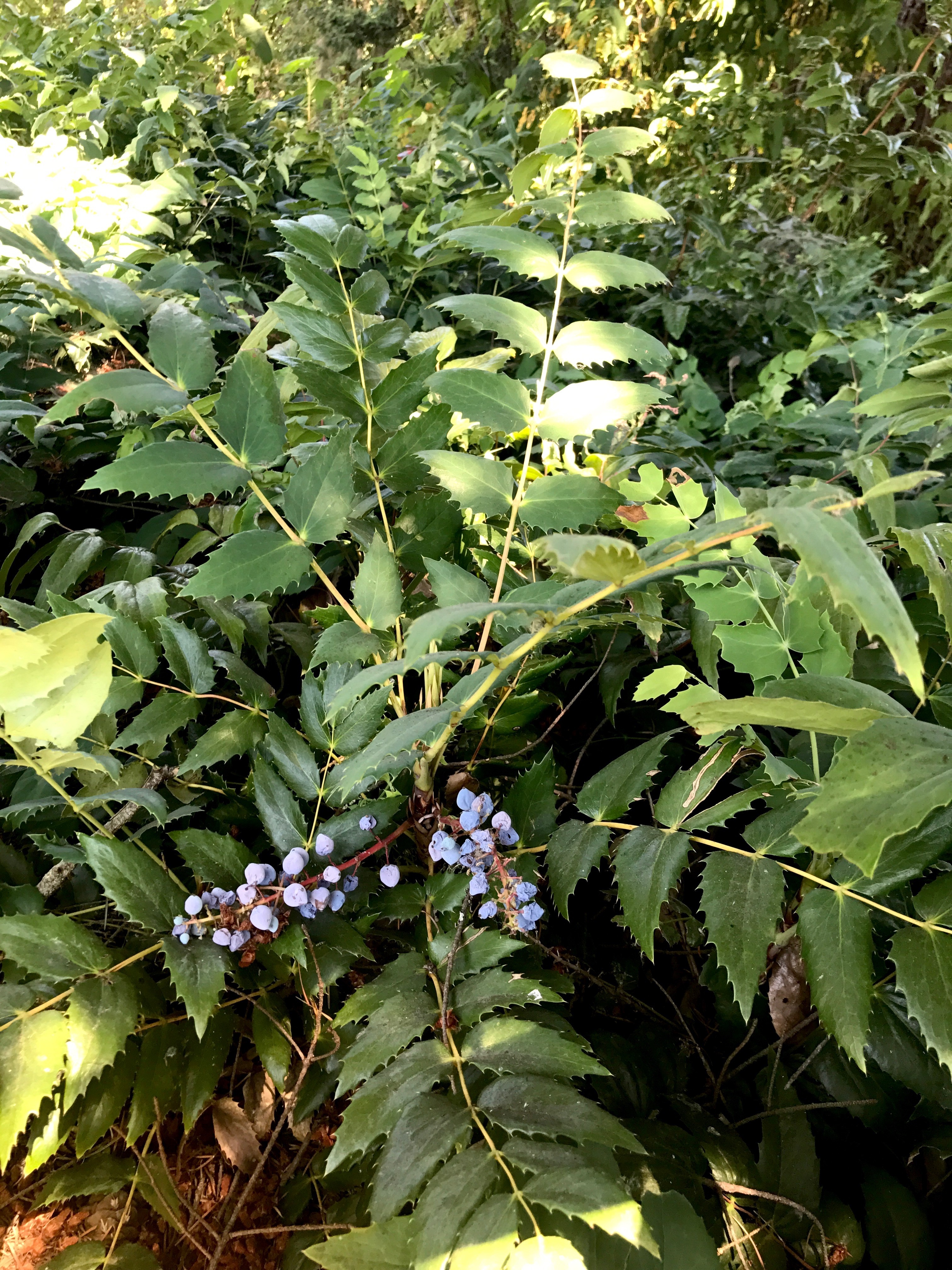
Mahonia nervosa
Long-Leaf Oregon Grape
Long-Leaf Oregon Grape is also an erect shrub that reaches .6 meters (2 feet) in height. It prefers shaded, moist forests at low to middle elevation in the Willamette Valley.
Long-Leaf Oregon Grape also has small yellow flowers that produce blue berries late in the summer. To distinguish this shrub from its close relative, Tall Oregon Grape, look for 9-19 leaflets per leaf.
This plant is a great ground cover for forested sites.
-
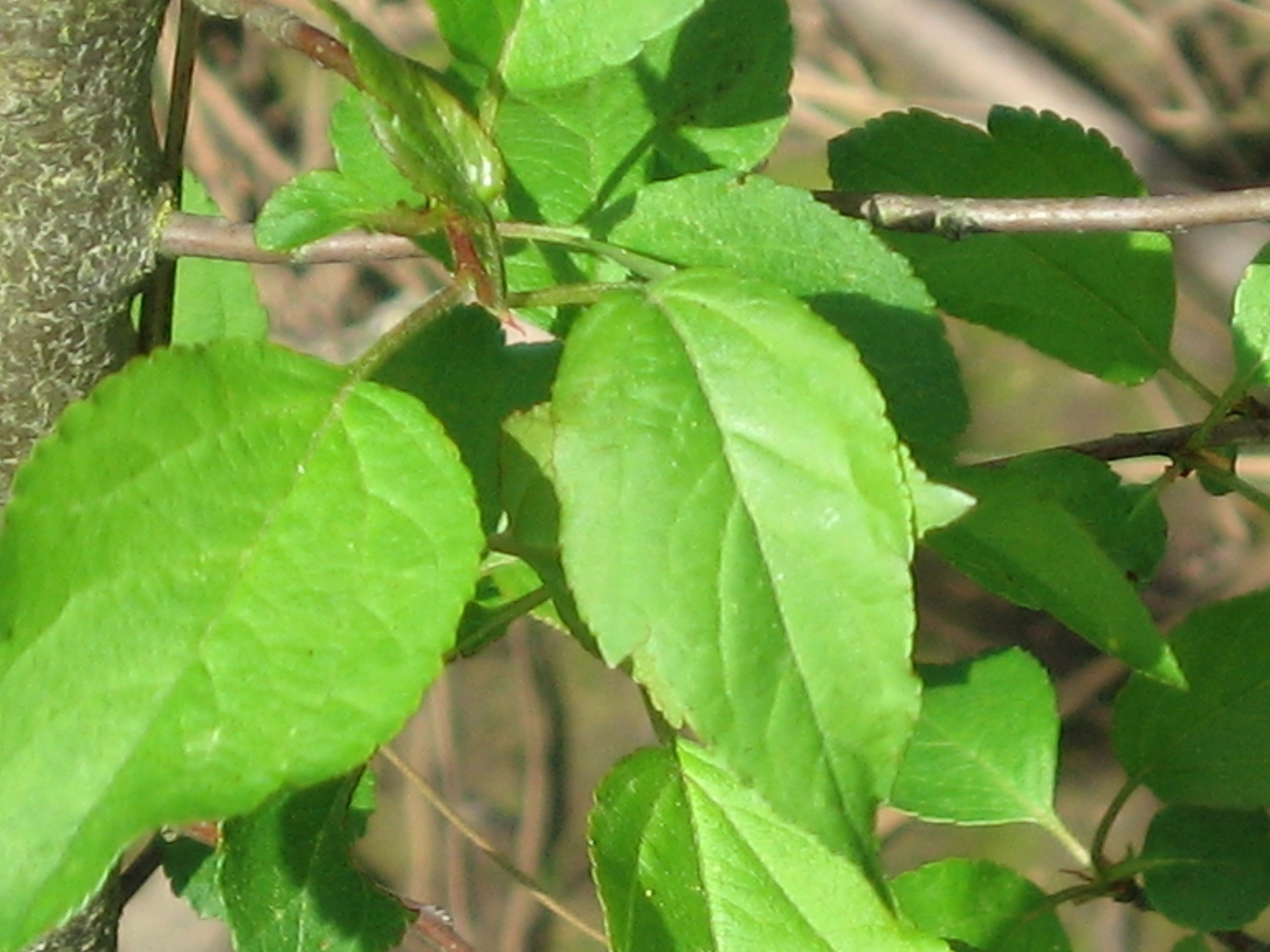
Malus fusca
Western Crabapple
Western Crabapple is a 12 meter (39 feet) tree in moist woods, swamps and edges of stream banks. It is found at low to middle elevations throughout the Willamette Valley and can tolerate sun or shade.
The plant has showy white flowers with a sweet fragrance. The fruit is a very small apple that is a bit tart.
This is the only native apple to Oregon and is an important species to include in riparian areas as it is a food source for many types of wildlife. Humans have even enjoyed the Crabapple's fruit.
-
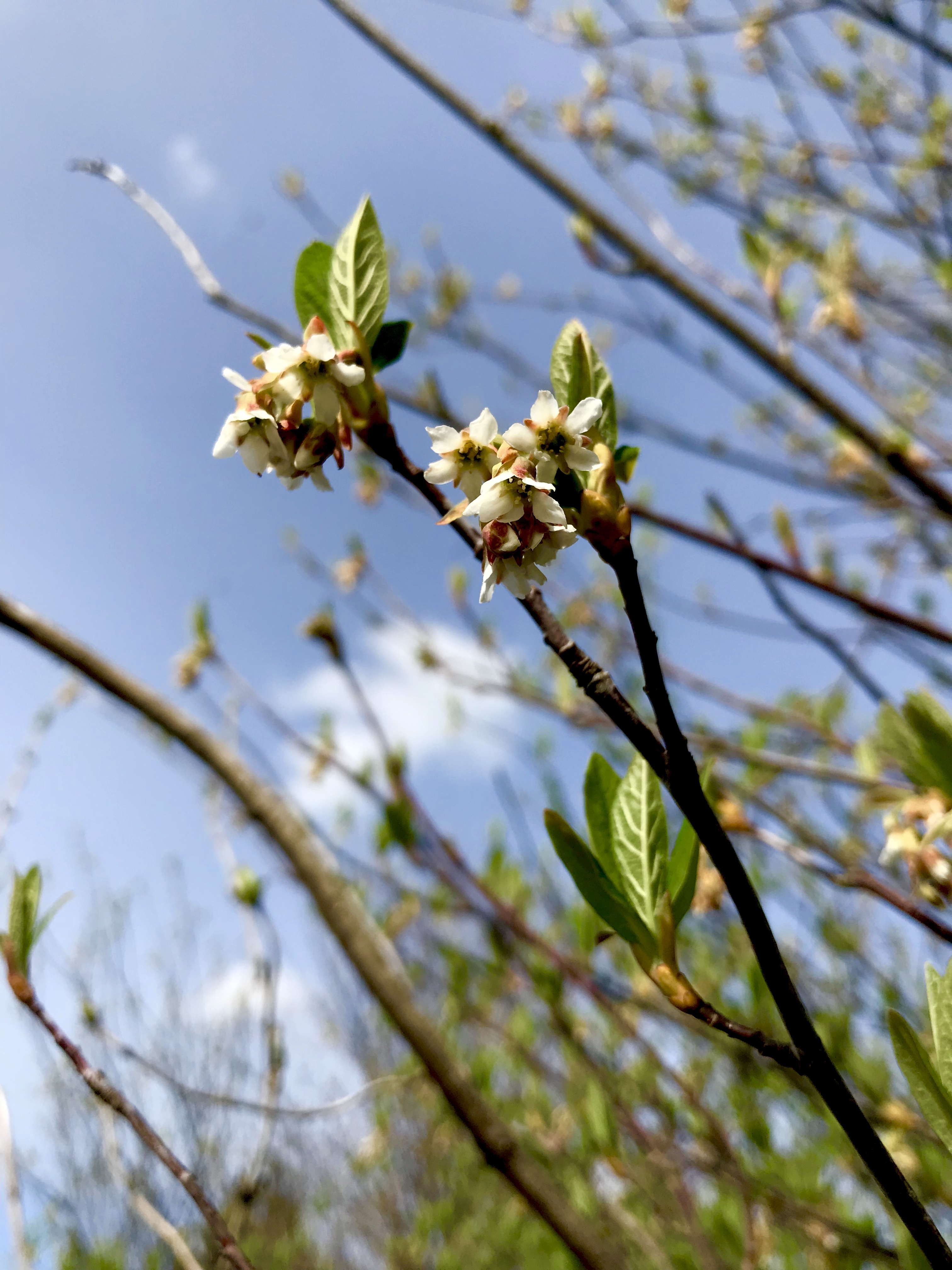
Oemleria cerasiformis
Osoberry (formerly Indian plum)
Osoberry is a large shrub that can reach heights of 5 meters (16 feet). It grows in dry to moist woods and stream banks and will do well in full or partial sun. This shrub is found at low to middle elevations in the Willamette Valley.
Trees produce either male or female flowers in the early spring. The flowers are white, somewhat bell shaped, and produce an unusual fragrance. The fruit is a small dark purple plum-like drupe that ripens in late spring or early summer.
Osoberry is a fast growing shrub, perfect for sites where a root base is needed to prevent erosion.
-
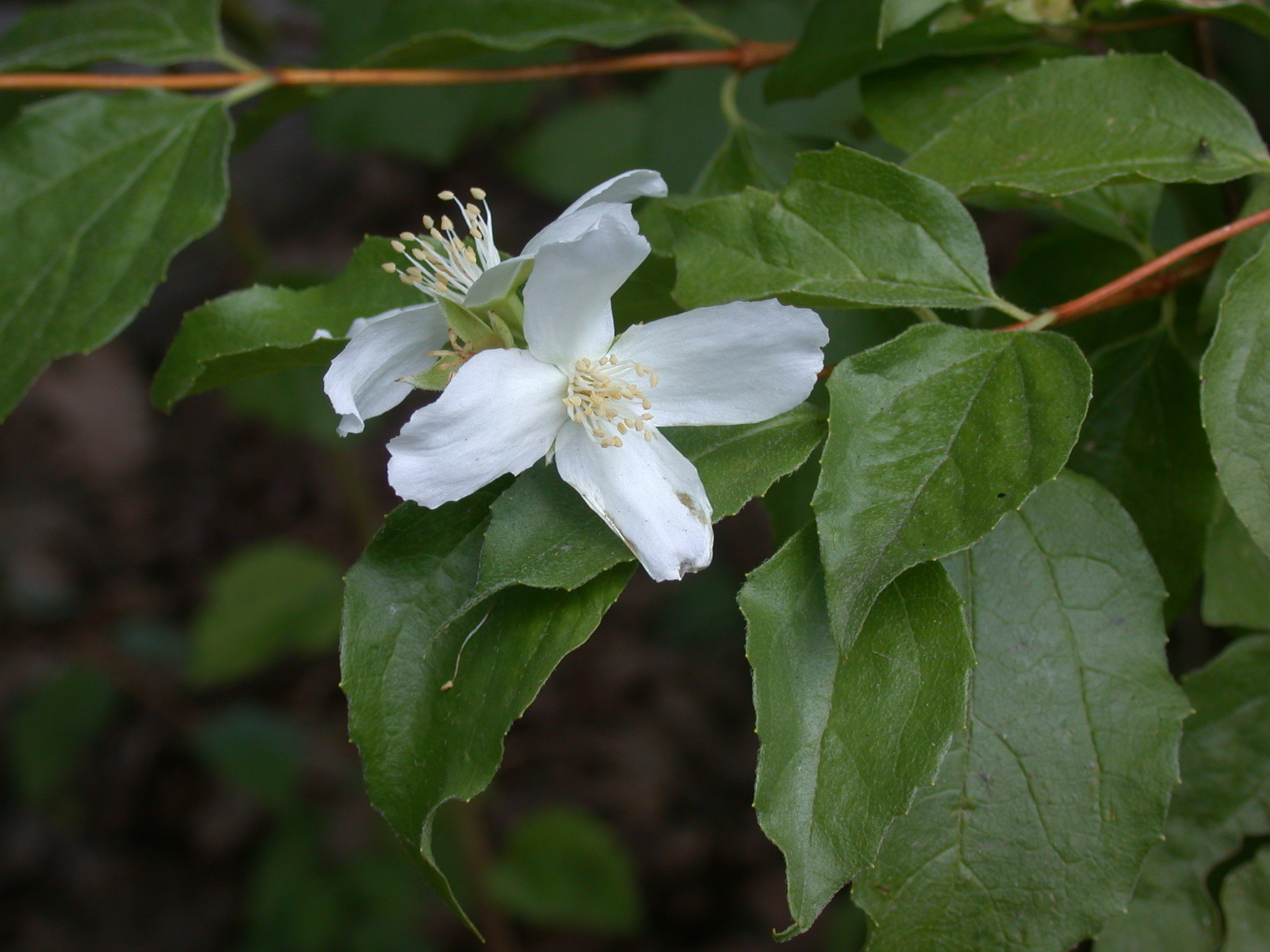
Philadelphus lewisii
Mock Orange
Mock Orange is a loosely branched erect shrub that reaches 3 meters (10 feet) in height. It is extremely adaptable and will grow in open moist forests, to dry rocky soils.
This shrub is found throughout the Willamette Valley at low to middle elevations.Mock orange has opposite leaves and produces white flowers in June, with a powerfully sweet fragrance.
This plant is excellent for restoration sites due to its extreme adaptability and low maintenance requirements.
-
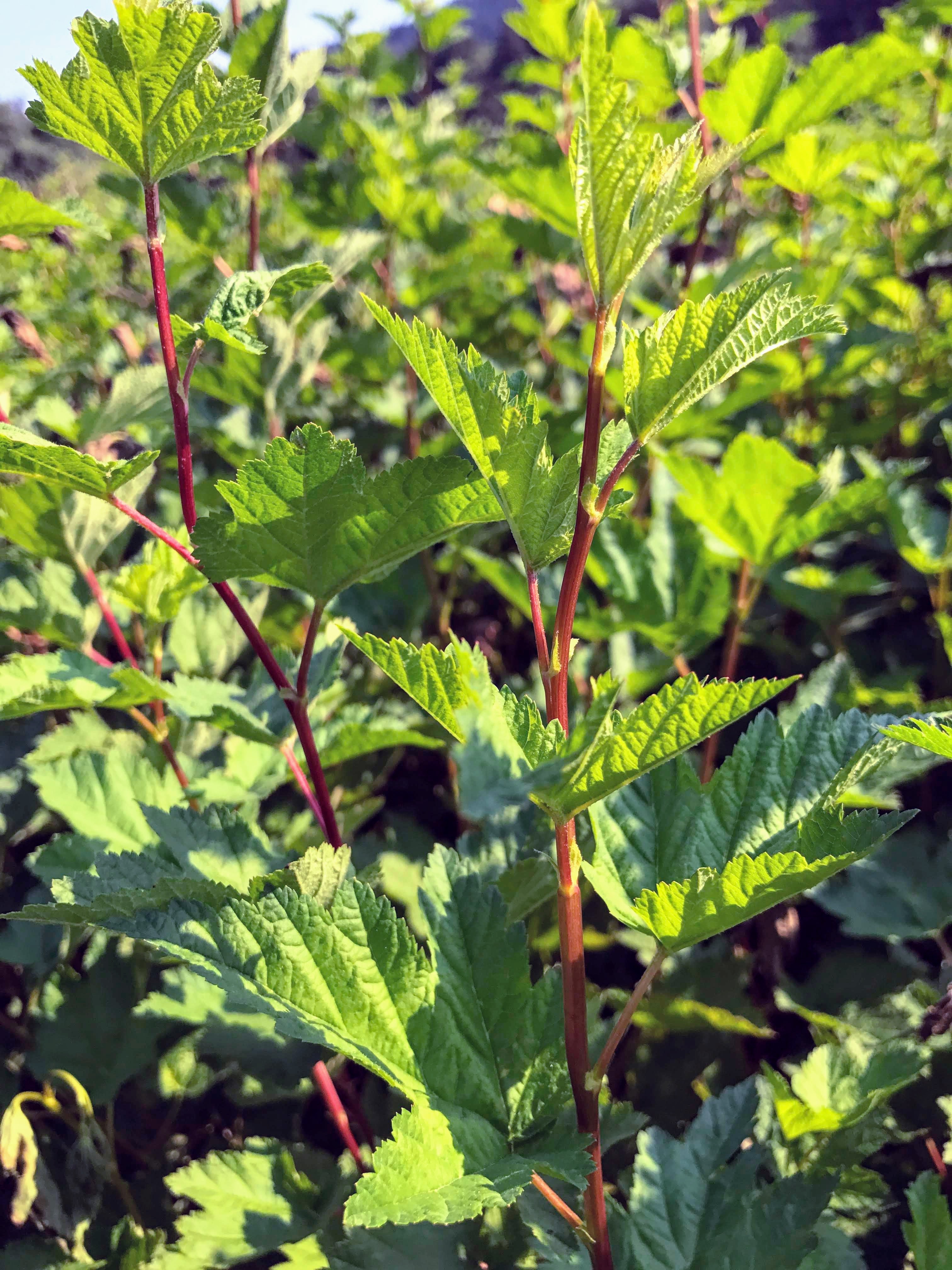
Physocarpus capitatus
Pacific Ninebark
Pacific Ninebark is an erect to spreading shrub that reaches 4 meters (13 feet) in height. Prefers low to middle elevations throughout the Willamette Valley in moist open areas of full sun or shade. This shrub can withstand seasonal flooding and drought and is found in woods, meadows and thickets.
The unique feature of Pacific Ninebark is its bark. Brown in color, it will shred off in layers. Its small white flowers form dense clusters at the ends of branches.
This shrub is perfect for areas in which light levels and hydrology fluctuate throughout the year. It is also a fast growing plant that will help stabilize the soil. -

Pinus ponderosa
Willamette Valley Ponderosa Pine
Willamette Valley Ponderosa Pine prefers dry open sites west of the Cascades and reaches heights of 61 meters (200 feet). This is an inland species that ranges in the low to middle elevations. It prefers warm sunny places, but can tolerate severe winters and wet climates.
The bark is cinnamon in color, scaly, and smells like vanilla in the hot sun. The long needles are almost always found in bundles of three. Ponderosa Pine's cones are egg-shaped, 3-6 inches long, and the scales are tipped with a short prickle.
These trees are important species in reforestation projects as they are long-lived, provide excellent habitat for native wildlife, and can establish in sites too wet for Douglas-Firs. -
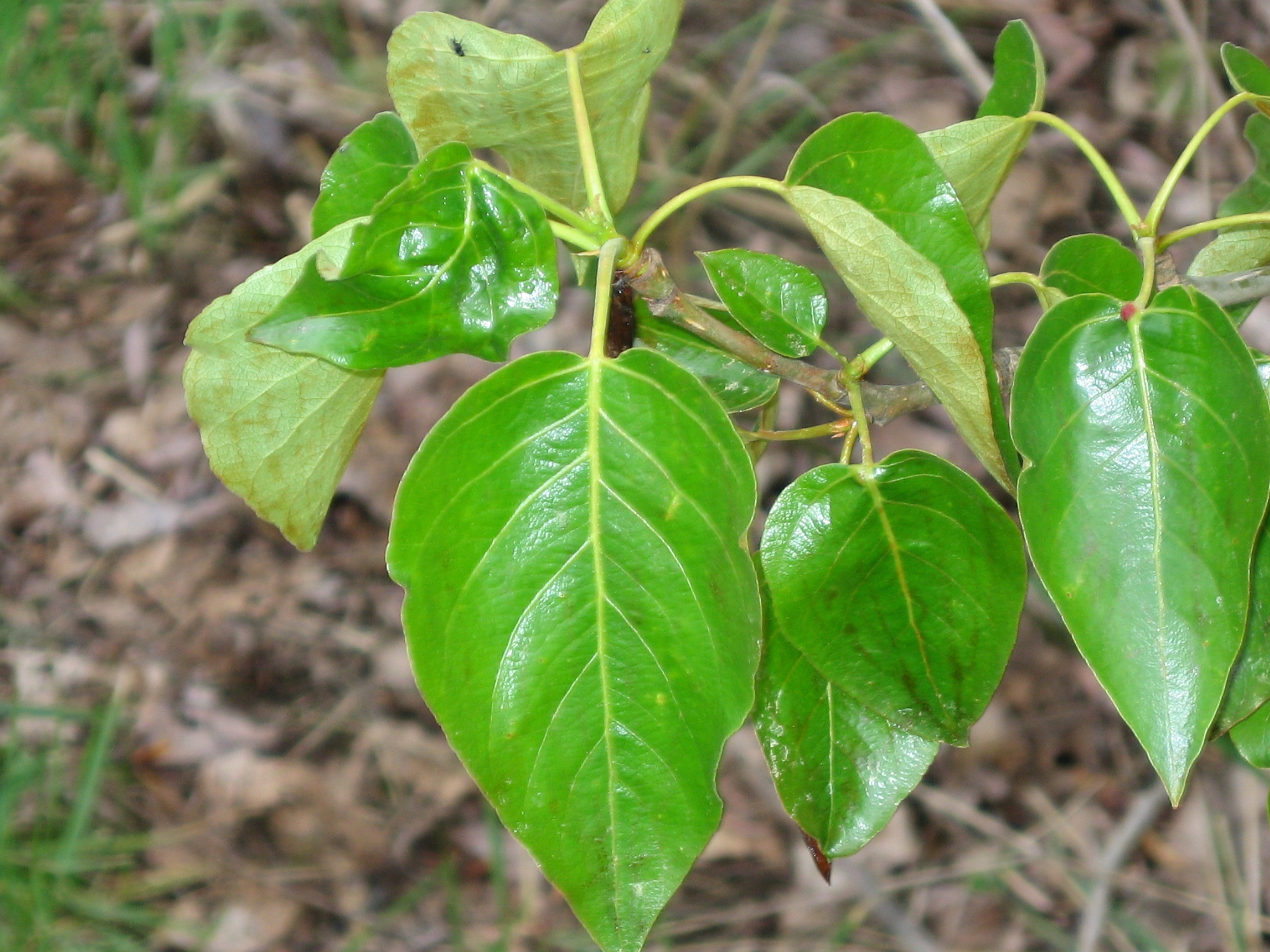
Populus trichocarpa
Black Cottonwood
Black Cottonwood is a large tree reaching heights of 50 meters (164 feet). It prefers low to middle elevation of the Willamette Valley in moist to wet sites, usually along rivers and streams.
There are several identifying characteristics for this tree, such as it produces a sweet-smelling perfume from its open buds. It also has a silver color under the leaf that will flash in the wind.
These trees are excellent for wetland restoration to prevent erosion and take up excess nitrogen in the soil. Its perfume will attract butterflies and birds to the area. -

Prunus emarginata
Bitter Cherry
Bitter Cherry is a small tree, which reaches heights of 15 meters (49 feet). It grows on moist sites such as forests or stream banks at low to middle elevations in the Willamette Valley.
The bark is reddish brown or grey. Its flowers are white or pink, clustered in a flat top about 10 inched across. These flowers produce red cherries in the late summer.
This is an important pioneer species for logged areas. Bitter Cherry also provides a food source for deer, elk, birds, and many small mammals (though humans find the fruit too bitter to eat). -
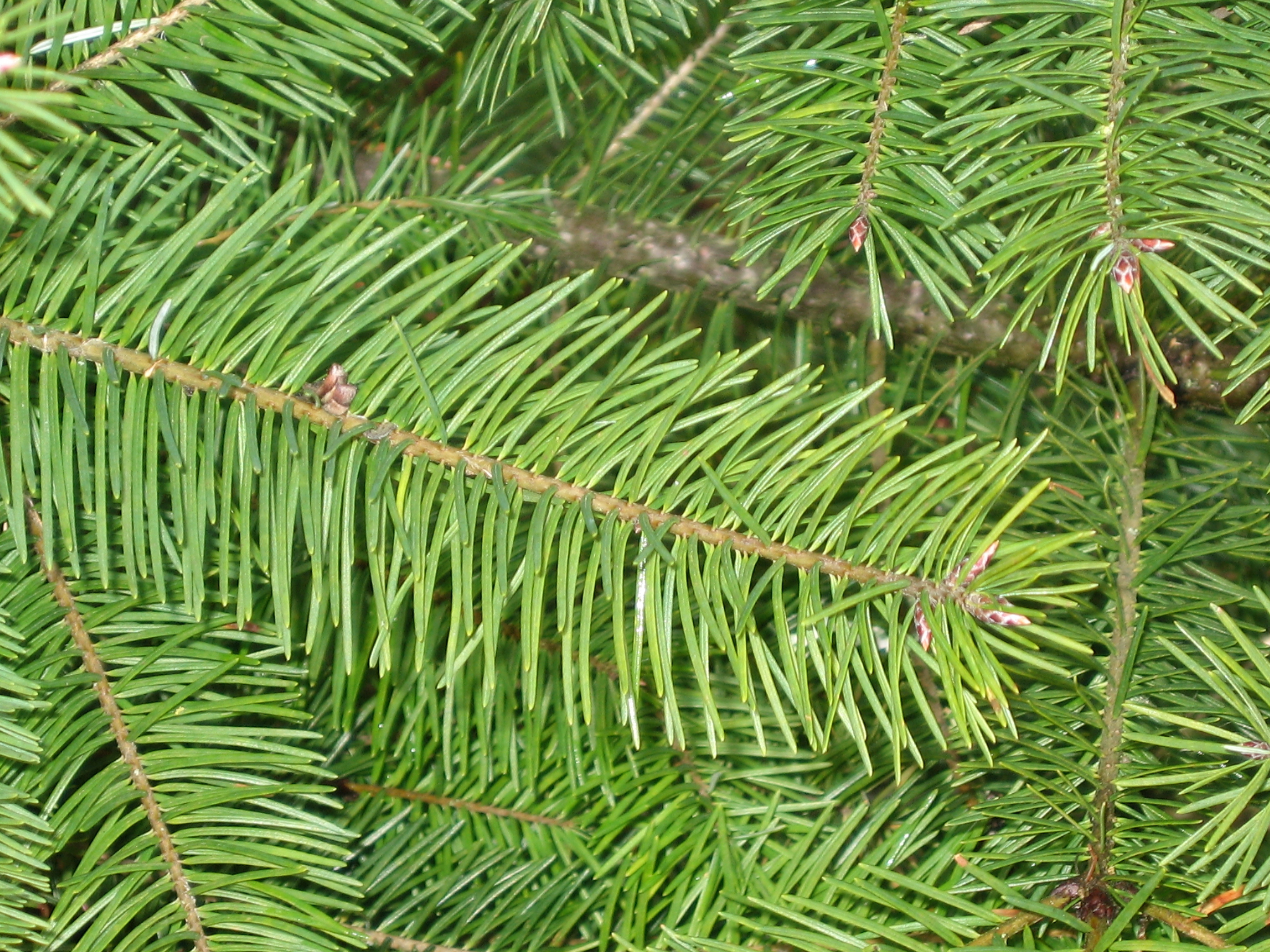
Pseudotsuga menziesii
Douglas Fir
Douglas Fir is perhaps Oregon's most famous tree. It grows to heights of 70 meters (200 feet). Found at low to mountainous elevations in the Willamette Valley, it prefers dry to moist sites in full sun.
The most distinguishing feature of the Douglas Fir is its pine cone. A three pronged bract sticks out between the cone scales. These cones are almost always present, even in young saplings.
Douglas Fir is an important reforestation species due to its fast growing nature, provides habitat and a food source for wildlife and the bark is fire resistant. -

Quercus garryana
Oregon White Oak
Oregon White Oak reaches 25 meters (82 feet) in height and grows in dry rocky bluffs and slopes or in rich well-drained soils. They prefer full sun in the Willamette Valley at low elevations.
These are heavy limbed trees with deciduous leaves that are deeply lobed. They are often short and crooked with light grey bark with furrows and ridges. The fruits are the acorns, which fall to the ground when ripe in early autumn.
Oregon White Oak is a must for upland restorations as it is a very long lived tree (centuries old) that can tolerate harsh winters, drought, strong winds, and heavy rains. These trees also provide habitat and a food source for many different types of wildlife. Humans enjoy eating the fruits as well. -
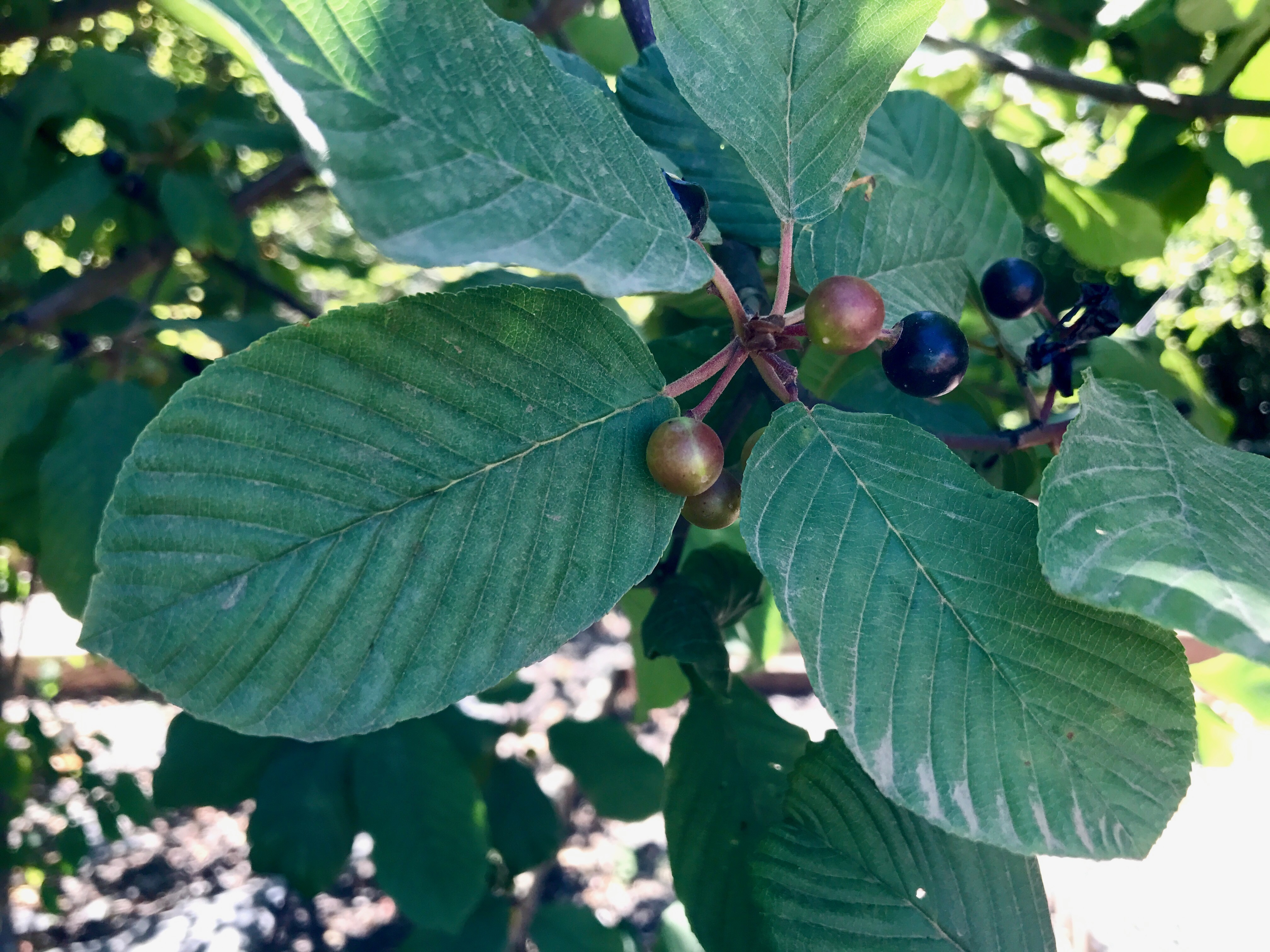
Rhamnus purshiana
Cascara
Cascara is a 10 meters (33 feet) tall erect shrub, which is found throughout the Willamette Valley's bottom to middle elevations. It thrives as an understory shrub in mixed woods in dry to wet sites.
The leaves of this shrub are strongly veined with a washboard-like surface. The bark is silver gray and has very potent medicinal properties. The flowers are small and inconspicuous, but the berries are bluish or purplish black. They are edible, but not very tasty.
This shrub is an important component to the understory or reforestation projects and grows well with maples and red alders. -
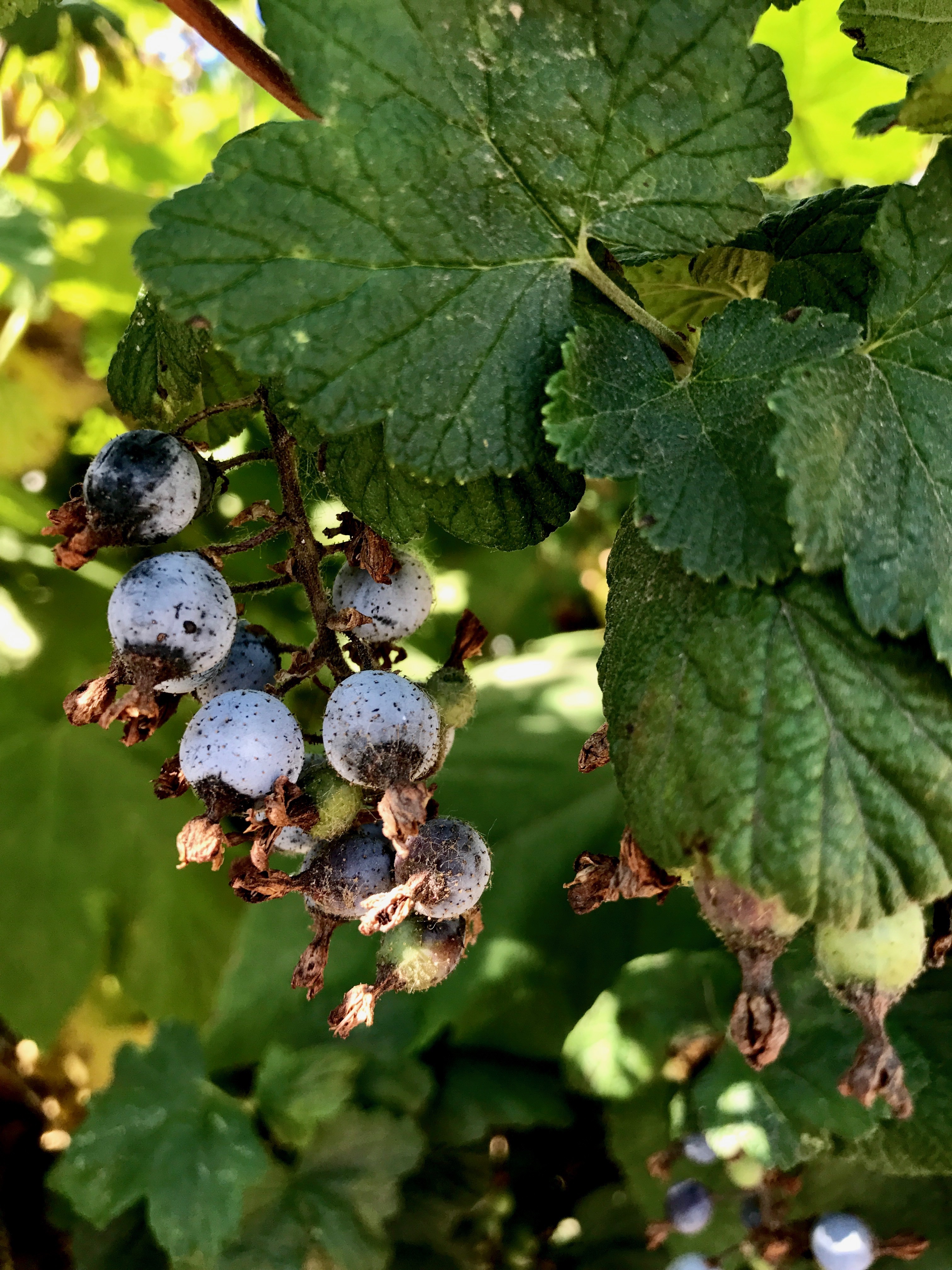
Ribes sanguineum
Red Flowering Current
Red Flowering Current is an erect 3 meters (10 feet) tall shrub that prefers full sun, dry areas throughout the Willamette Valley at low to middle elevations. This shrub can be found in dry open forests, rock slopes and disturbed sites.
This currant lacks any prickles and has rose colored flowers. They produce rounded bluish black berries with purple mottling. The berries are not poisonous, but don't taste great.
This plant is fast growing and attracts hummingbirds and other pollinators. It is also drought tolerant. -
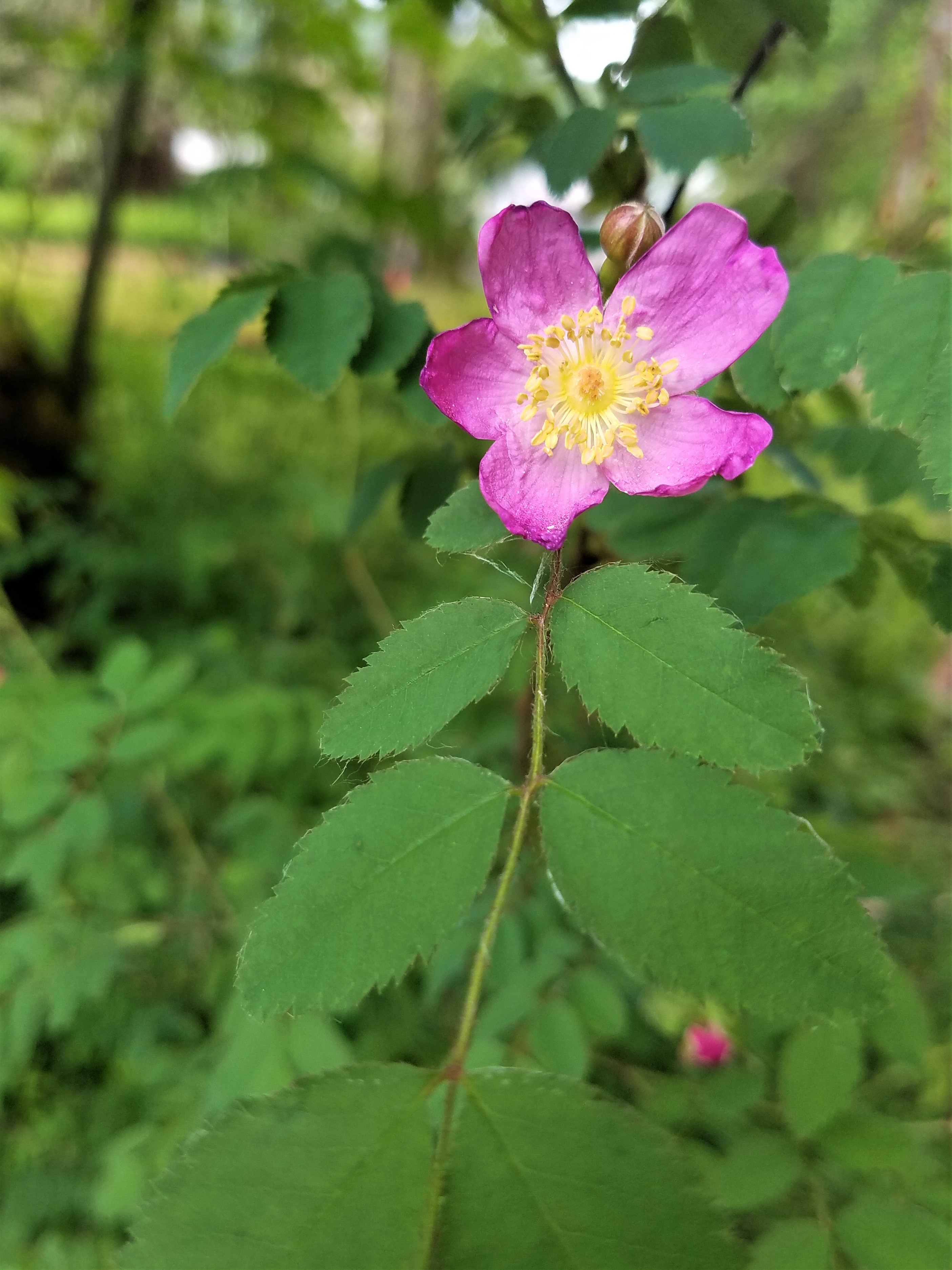
Rosa gymnocarpa
Bald Hip Rose
Bald Hip Rose is a spindly shrub that reaches heights of 1.5 meters (5 feet). It thrives in a variety of habitats from meadows to thickets and even stream banks, but cannot survive in waterlogged soils. The shrub is found throughout the Willamette Valley at low to middle elevations.
The flowers are small and pale pink to rose colored. The plant is very delicate with numerous soft prickles. In the summer, the flowers produce orange to scarlet hips.
This species is used as an understory plant in dry to moist forests. -
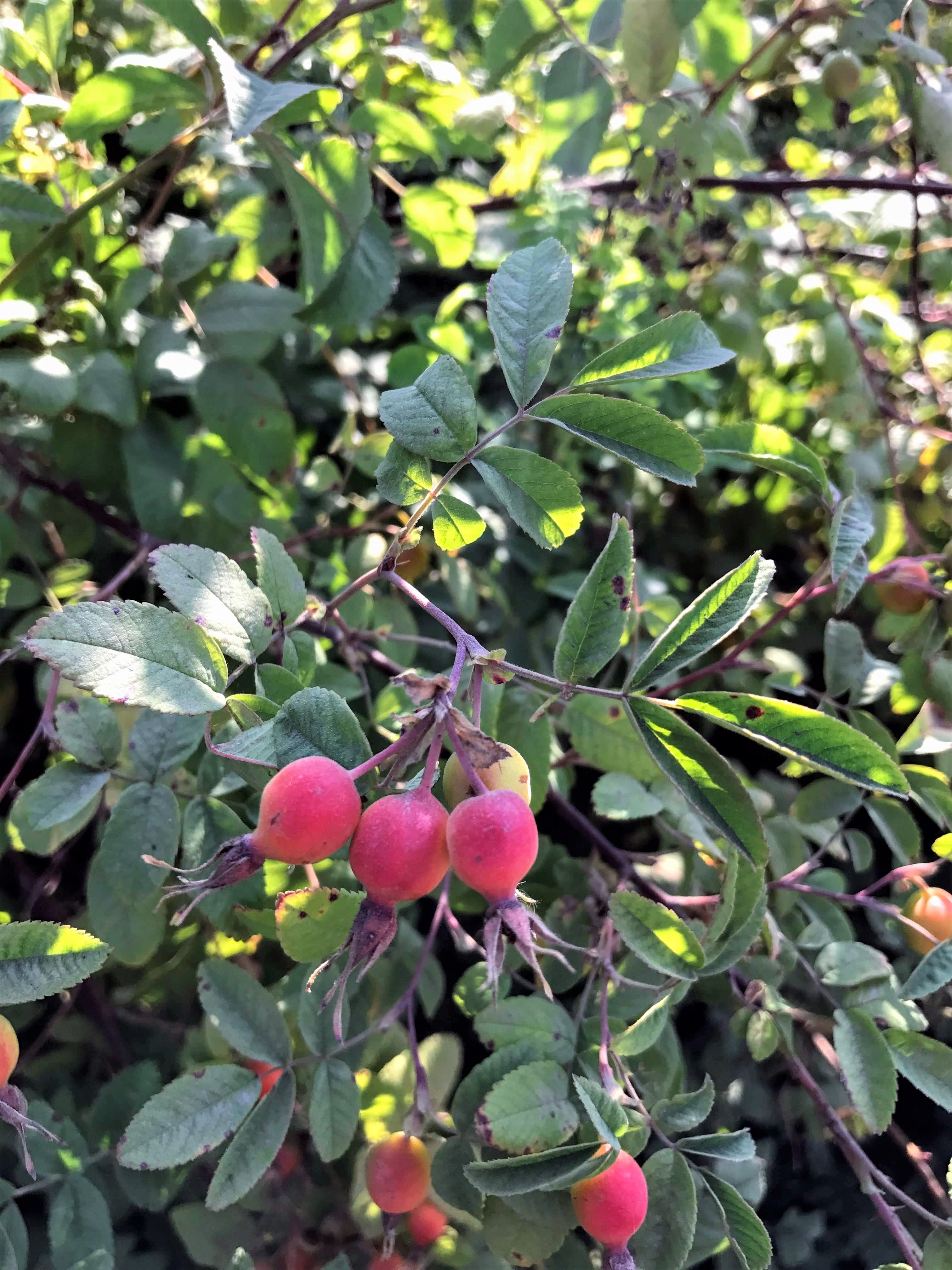
Rosa pisocarpa
Cluster/Swamp Rose
Cluster/Swamp Rose is very similar to Bald-Hip, but it will reach 3 meters (10 feet) in height and prefers sunny or shaded wet areas. Found throughout the Willamette Valley at low to middle elevations in meadows, thickets and forests.
The flowers are pink and large and borne in clusters at the end of branches. Late in the summer, the flowers produce purplish red hips.
This is an excellent riparian species that is home and a food source to many birds and mammals. -
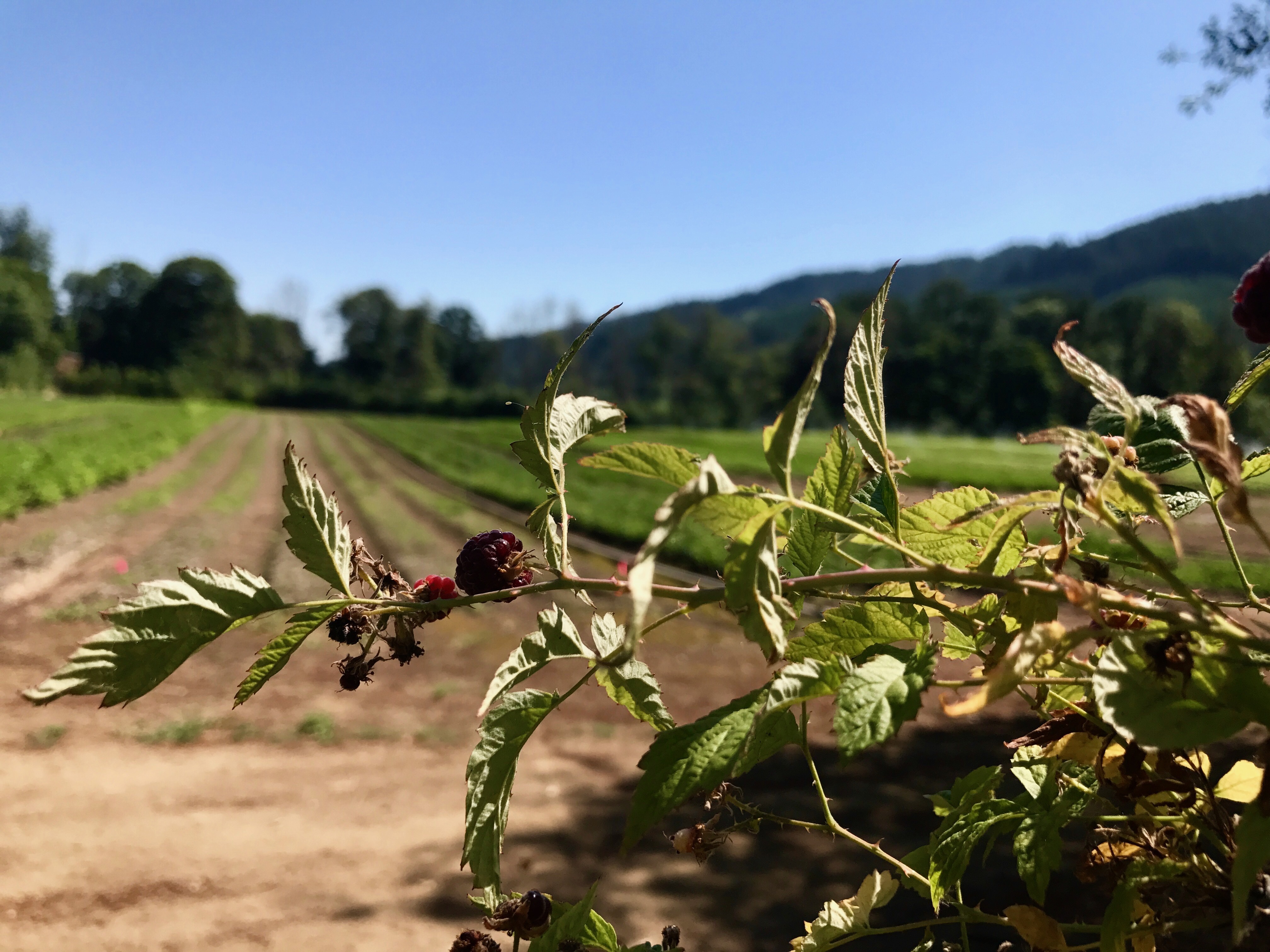
Rubus leucodermis
Blackcap
Blackcap is an erect arching shrub that reaches 2 meters (7 feet) in height. It is found throughout the Willamette Valley at low to middle elevations in disturbed sites, open forests and thickets.
This plant belongs to the raspberry family and has 3 egg-shaped leaflets with shiny white undersides. The flowers are small, white and in clusters of 3-7 on the terminal branches.
This species is used in sites that have been disturbed as it will spread, but not considered invasive. Especially useful in sites where fire has played a role. -
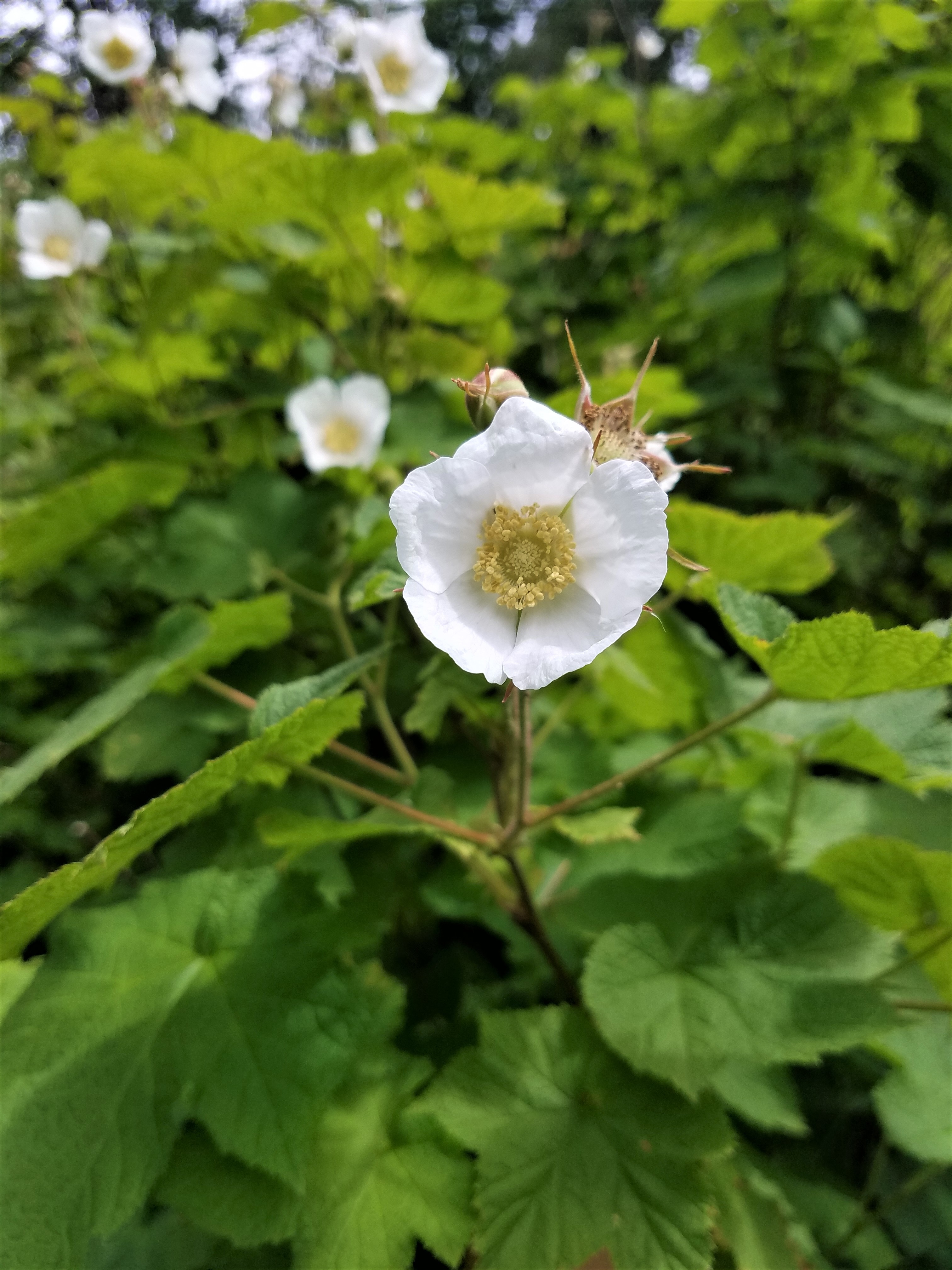
Rubus nutkanus
Thimbleberry
Thimbleberry is an erect shrub that can reach 3 meters (10 feet) in height. It prefers open sites such as forests, road sides, and shore lines with moist soils. This shrub grows at low elevations throughout the Willamette Valley.
This plant is easily identified by its large white flowers that produce thimble-shaped, bright red berries. Although it is in the raspberry family, this shrub is thornless.
Thimbleberry is an excellent plant for use in restoration sites as it will rapidly form a dense thicket. It provides habitat for many wildlife species as well as a food source for birds and people. -
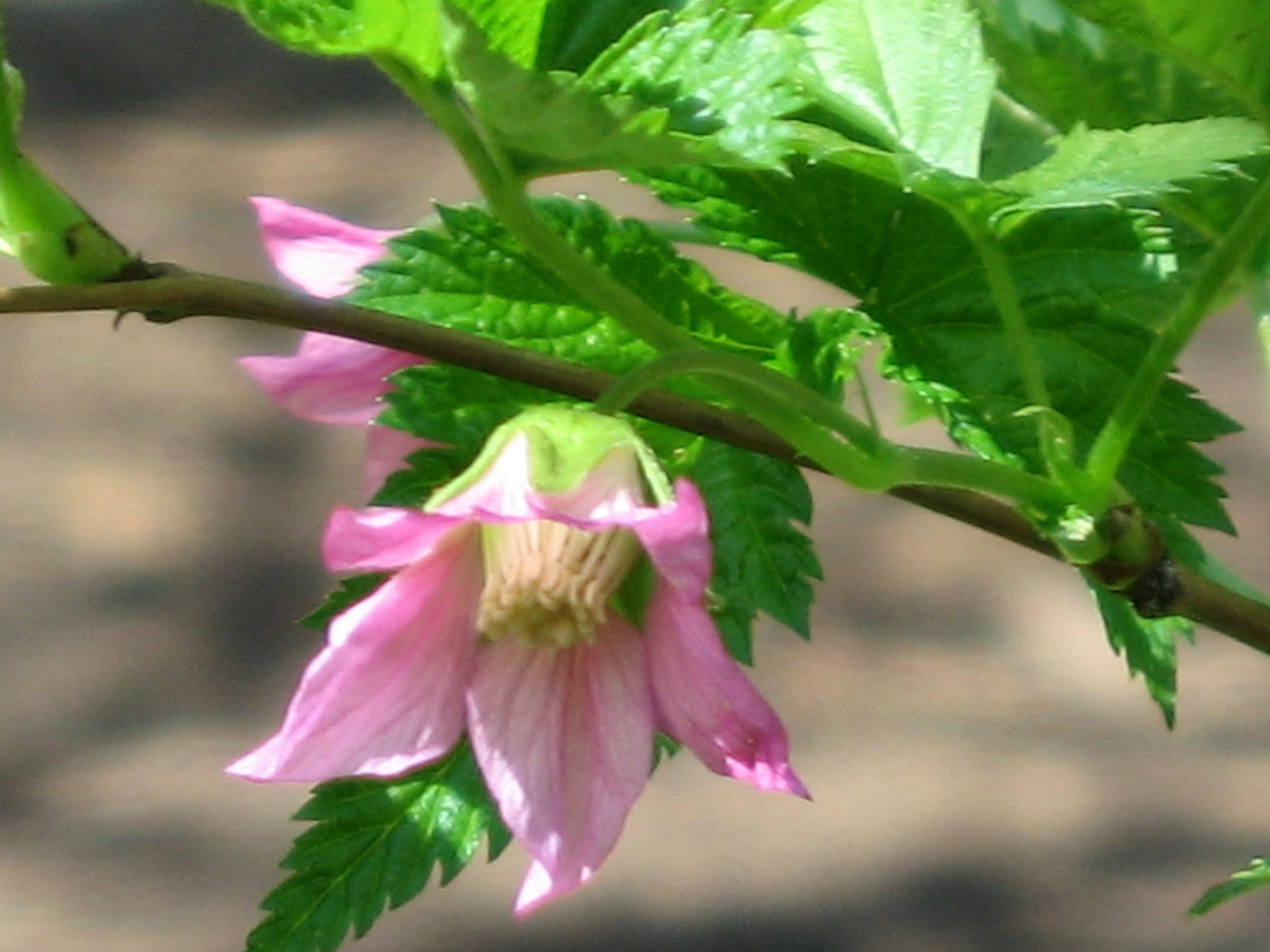
Rubus spectabilis
Salmonberry
Salmonberry is a beautiful erect shrub that reaches 4 meters (13 feet) in height. It is found throughout the Willamette Valley at low to subalpine elevations in open forests and stream sides. Usually found in disturbed sites, this shrub will grow in full to partial sun with moist to wet soils.
This plant has some thorns with large pink to reddish purple flowers that produce yellow to red berries. It has golden brown bark with sharply toothed leaves.
Salmonberry is an excellent species to use in projects that have some disturbance, such as logging. They grow quickly and form dense thickets that provide habitat for many birds and mammals. The berries are a delicious food source for people as well as birds. -
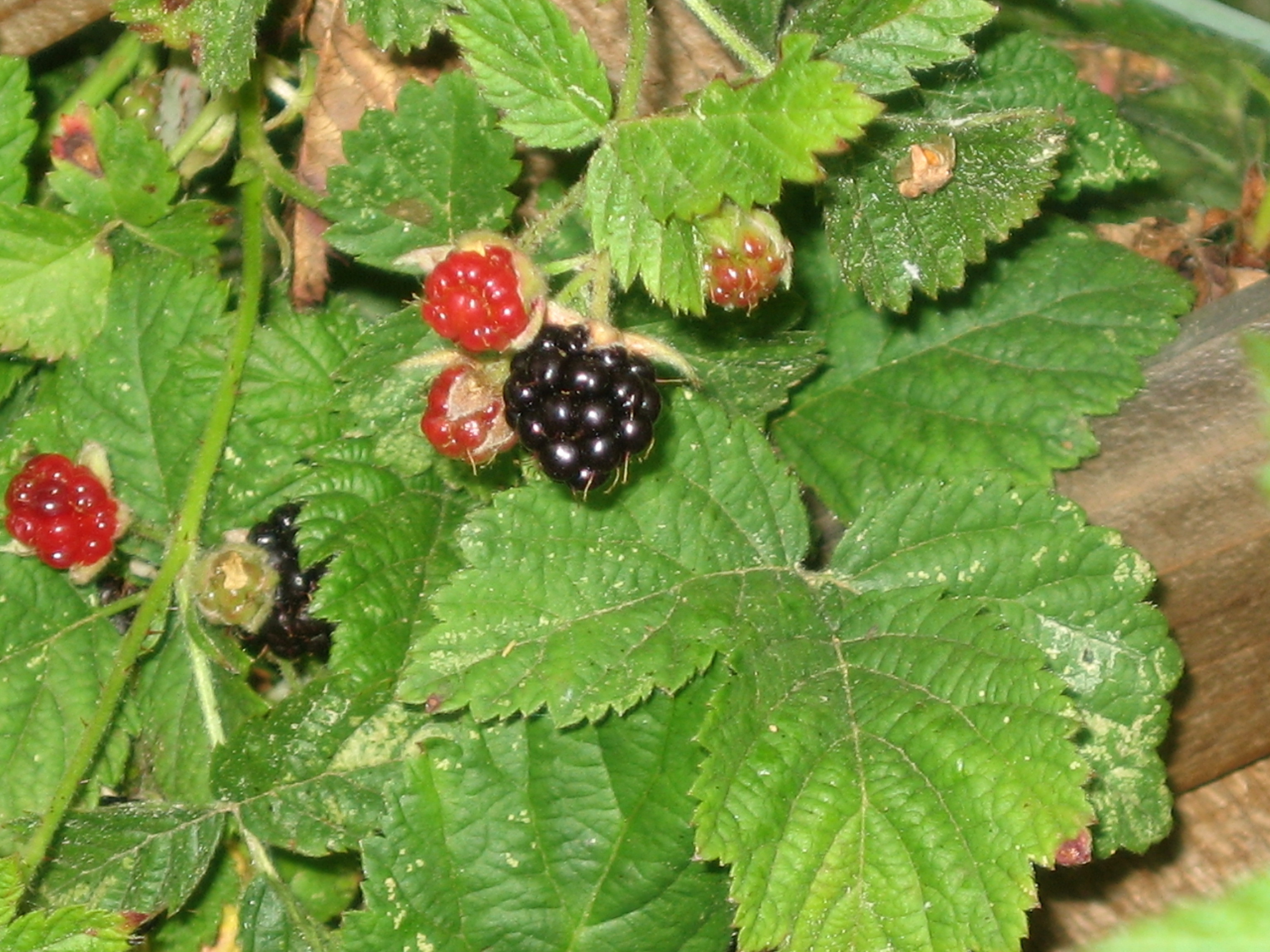
Rubus ursinus
Trailing Blackberry
Trailing Blackberry is a trailing shrub that reaches 5 meters (16 feet) in length. This is the only native blackberry found throughout the Willamette Valley at low to middle elevations. It prefers dry open forests with full to partial sun.
This plant is distinguishable by its trailing nature, 3 leaflets, and unhooked, unflattened thorns. The fruits can be identified by their small stature (1 centimeter) verses the larger fruits of the invasive blackberries (2.5 centimeters).
Trailing blackberry shrubs are best used in disturbed drier sites. It is a great food source for birds and humans find the berries quite appetizing as well. -
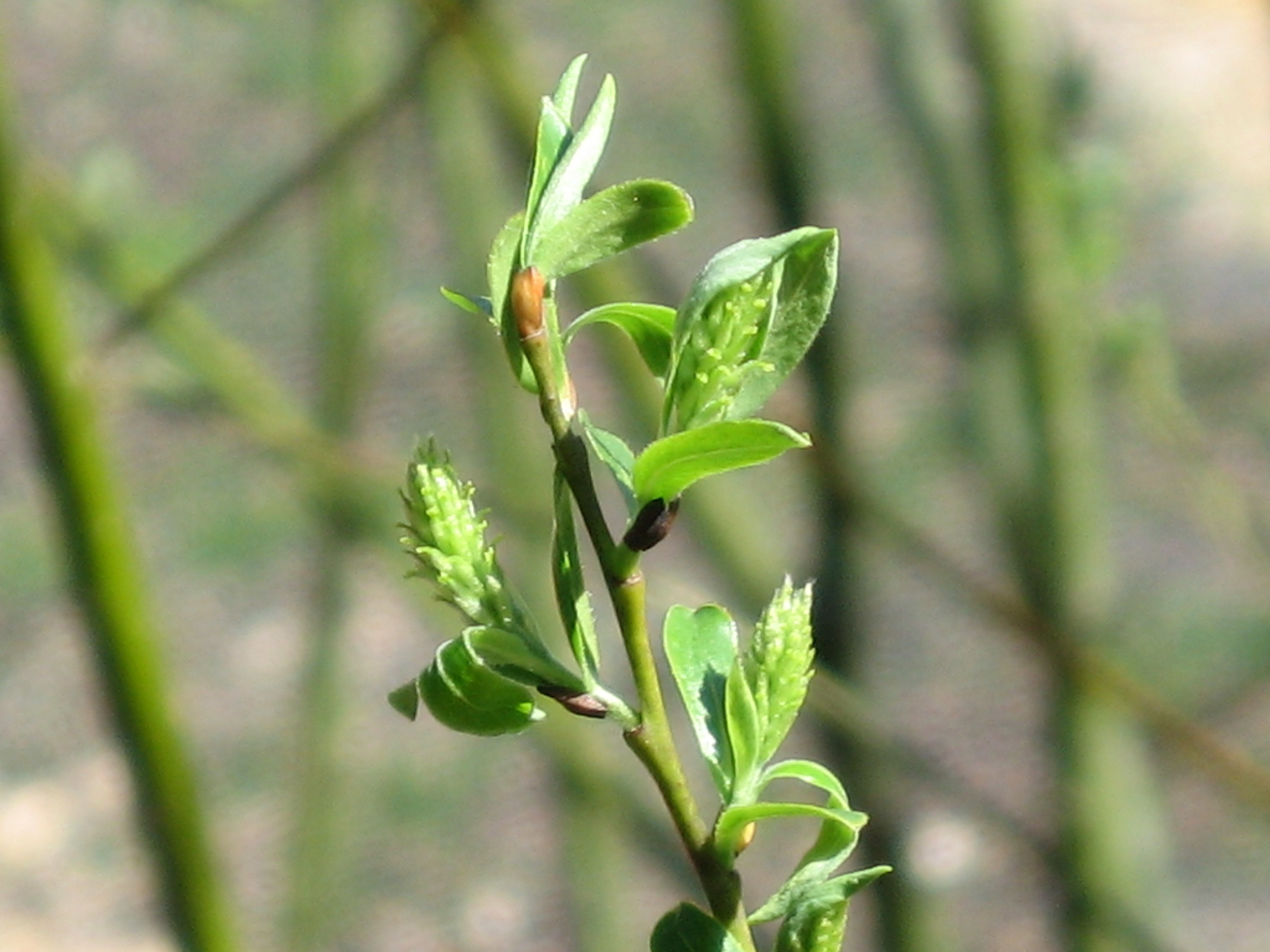
Salix geyeriana
Geyer Willow
Geyer Willow is a slender shrub that reaches 10 meters (33 feet) in height. It ranges from southwestern British Columbia down to the Willamette Valley in Oregon. This shrub prefers wet to moist places along river sides, wet meadows and creeks at low to middle elevations.
To distinguish this willow from others, look for small leaves (8 centimeters in length), minute stipules, and black bracts in the catkins.
Willows are useful in particularly wet places as they thrive in this environment. They will contain water logged soils, provide habitat for birds and wildlife, as well as maintain a healthy wetland. -
Salix lasiandra
Pacific Willow
Pacific Willow is a tall slender shrub that reaches 12 meters (39 feet) in height. It prefers moist gravelly soils, but can tolerate dry conditions. This shrub can be found throughout the Willamette Valley at sea level to middle elevations.
To identify this willow, look for yellow glossy twigs, long leaves (15 centimeters), prominent kidney-shaped stipules, and yellow bracts in the catkins.
Willows are useful in particularly wet places as they thrive in this environment. They will contain water logged soils, provide habitat for birds and wildlife, as well as maintain a healthy wetland. -
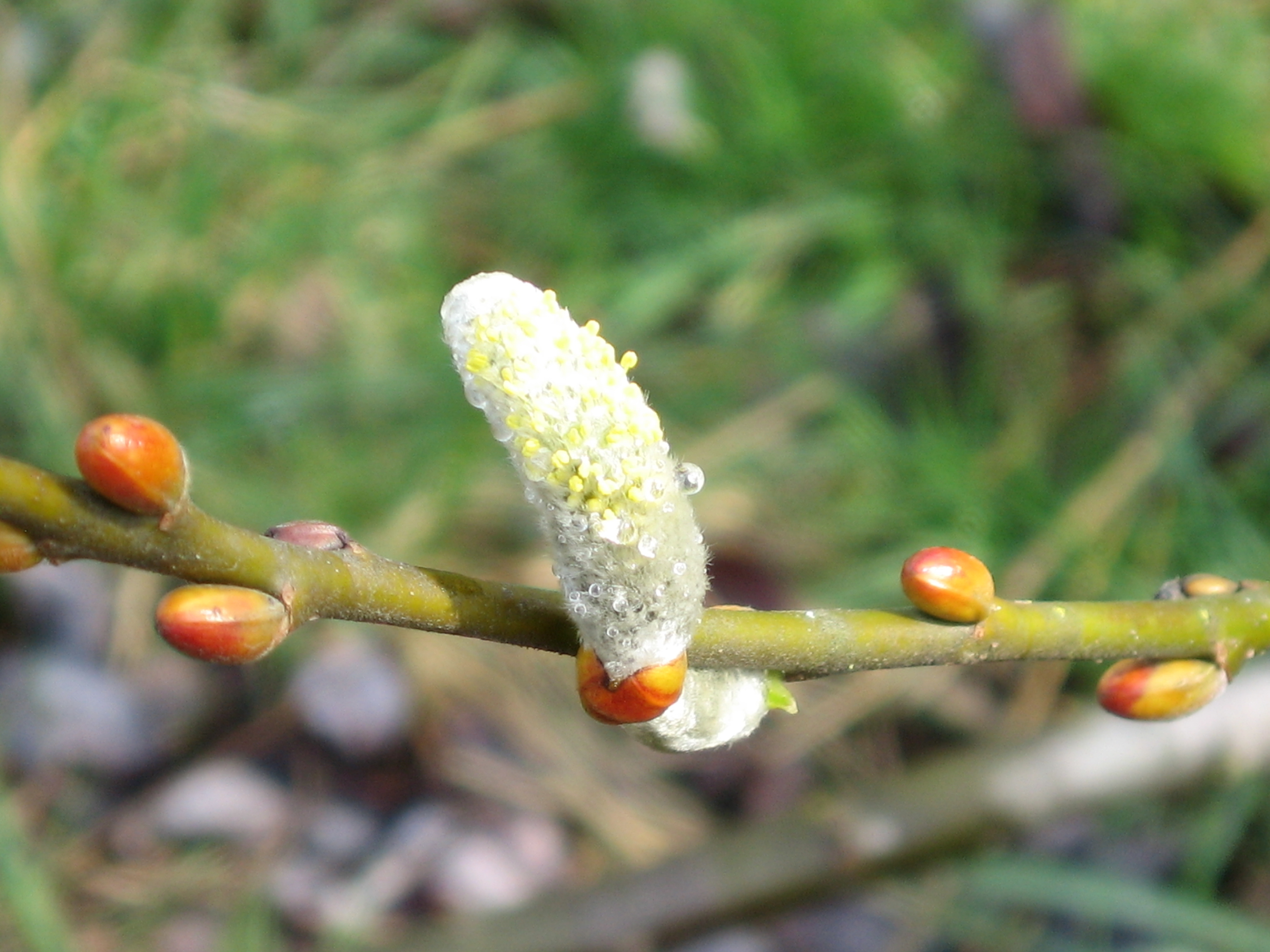
Salix piperi
Piper Willow
Piper Willow is a large shrub that reaches 6 meters (20 feet) in height. It grows in wet places, such as in wetlands and streams, at low elevations. This shrub can be found throughout the Willamette Valley.
This willow is distinguishable from others by its oval shaped leaves, stout twigs, and hairy young branches.
Willows are useful in particularly wet places as they thrive in this environment. They will contain water logged soils, provide habitat for birds and wildlife, as well as maintain a healthy wetland. -
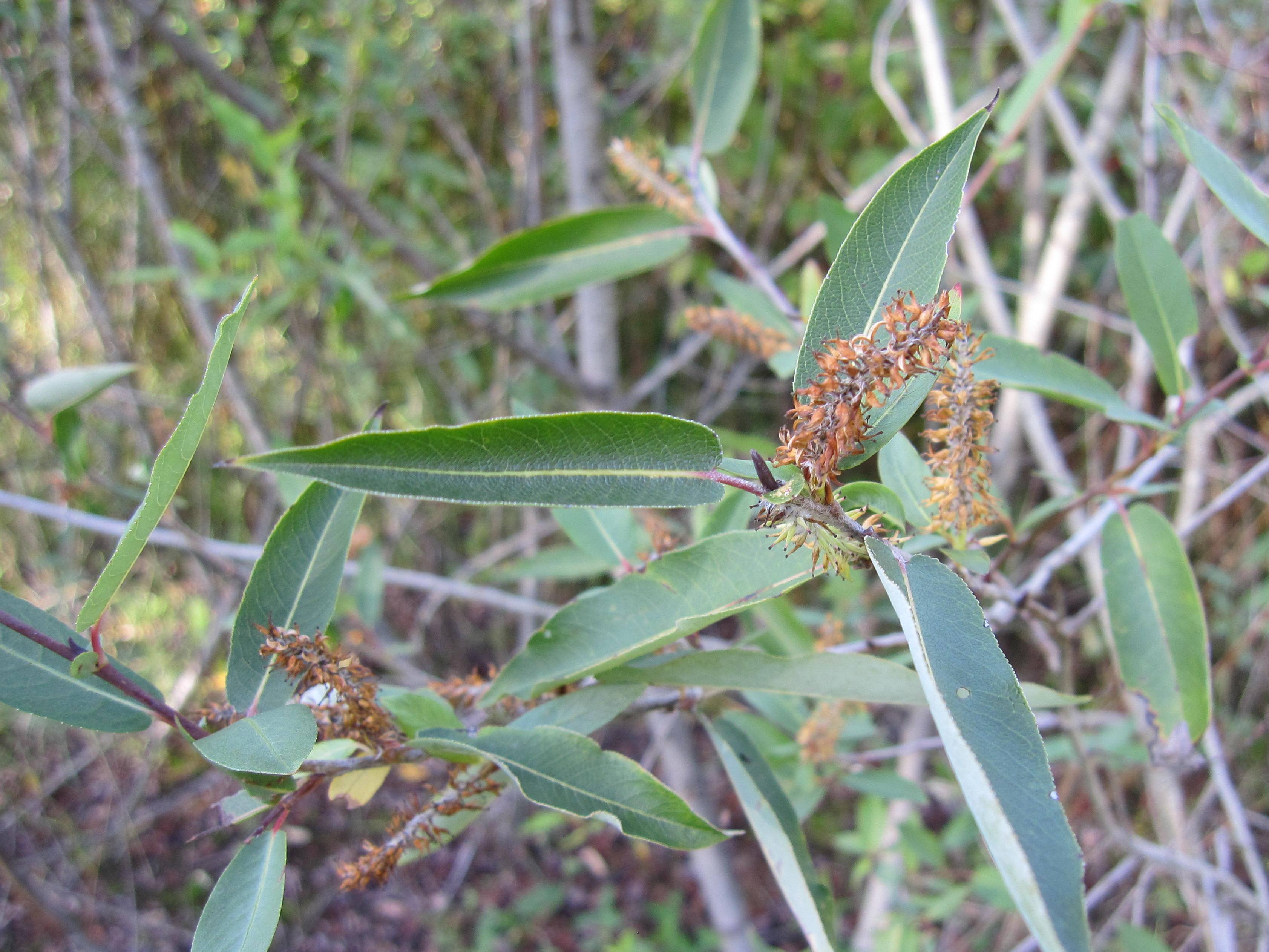
Salix rigida
Mackenzie’s Willow
Mackenzie’s Willow is a fast-growing riparian species found at low to moderate elevations, at sites with moderate to high water levels. This shrub ranges from 2-9 meters (6-30 feet) in height.
Mackenzie’s Willow has leaves that are dark green above, and pale beneath, with a heart-shaped leaf base, and tapered tips, distinguishing it from our other local willows.
This is another great willow to add diversity to riparian plantings. -

Salix scouleriana
Scouler Willow
Scouler Willow is a tall spindly shrub, which can reach 12 meters (39 feet) in height. It is an extremely hardy shrub found throughout the Willamette Valley at low to middle elevations. This shrub prefers moist sites in open forests, wetlands, clearings and thickets.
To identify this willow, look for soft hairy, egg-shaped leaves.
Willows are useful in particularly wet places as they thrive in this environment. They will contain water logged soils, provide habitat for birds and wildlife, as well as maintain a healthy wetland. -

Salix sitchensis
Sitka Willow
Sitka Willows grow to be 8 meters (26 feet) tall and prefer stream side thickets, open forests, and wetland margins. It can be found throughout the Willamette Valley at low to middle elevations.
This willow is distinguishable from others by its densely spreading dark brown branches, dark green broad leaves, and densely hairy leaf undersides.
Willows are useful in particularly wet places as they thrive in this environment. They will contain water logged soils, provide habitat for birds and wildlife, as well as maintain a healthy wetland. -
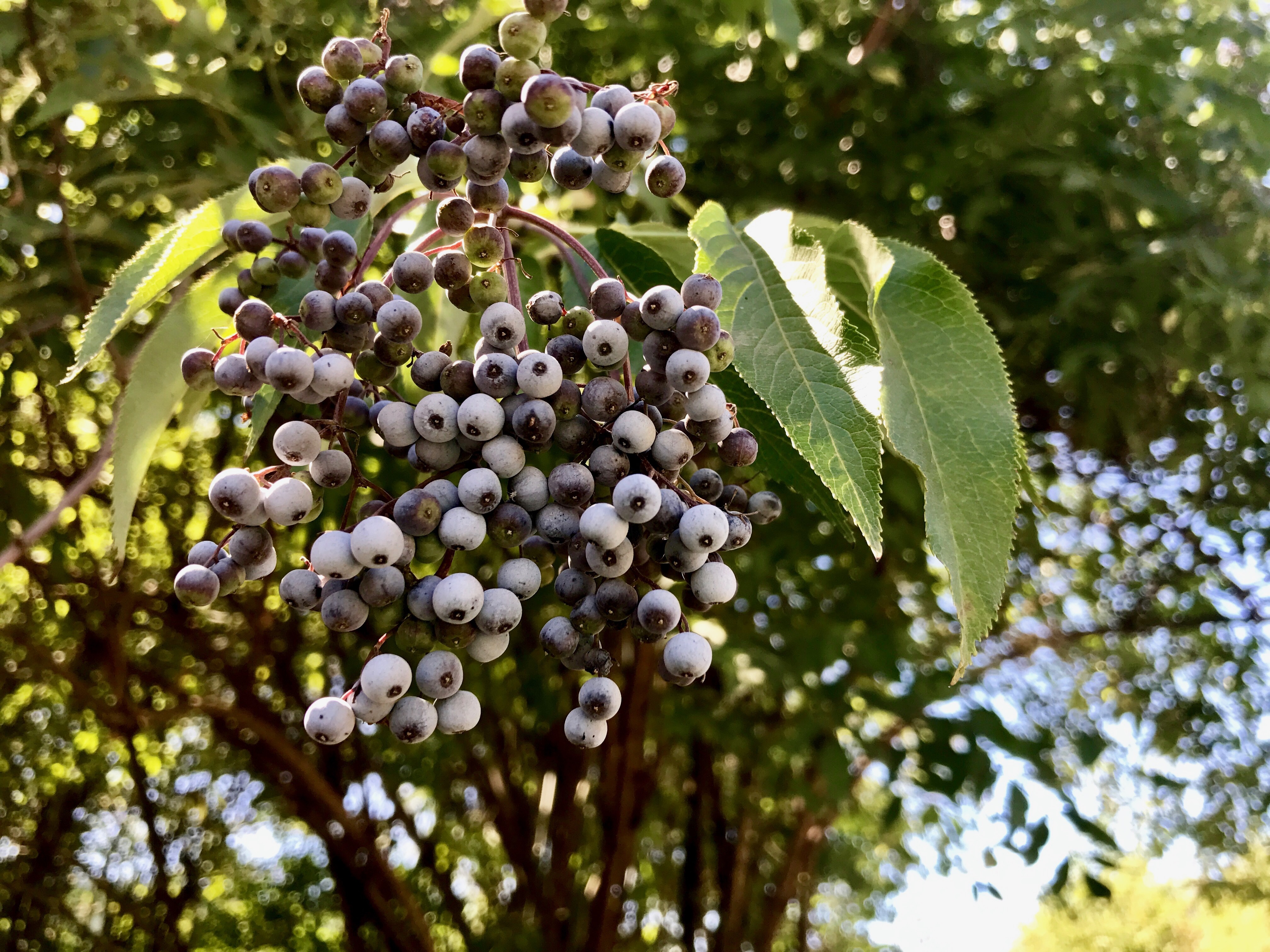
Sambucus cerulea
Blue Elderberry
Blue Elderberry is an erect shrub that reaches 3.5 meters (12 feet) in height. It is found at low elevations throughout the Willamette Valley in dry to moist soils with full or partial sun.
This shrub has 5-9 leaflets, small white flowers grouped together in a flat parasol-like cluster, and bark that is bluish green in color. In the late summer, the plant produces small blue berries.
This is a fast growing shrub, perfect for drier sites in need of a quick root establishment. Blue Elderberry provides habitat and a food source for birds and other wildlife. Humans also enjoy the blue berries in pies and preservatives, but be sure to cook berries as they have been known to cause nausea when eaten raw. -
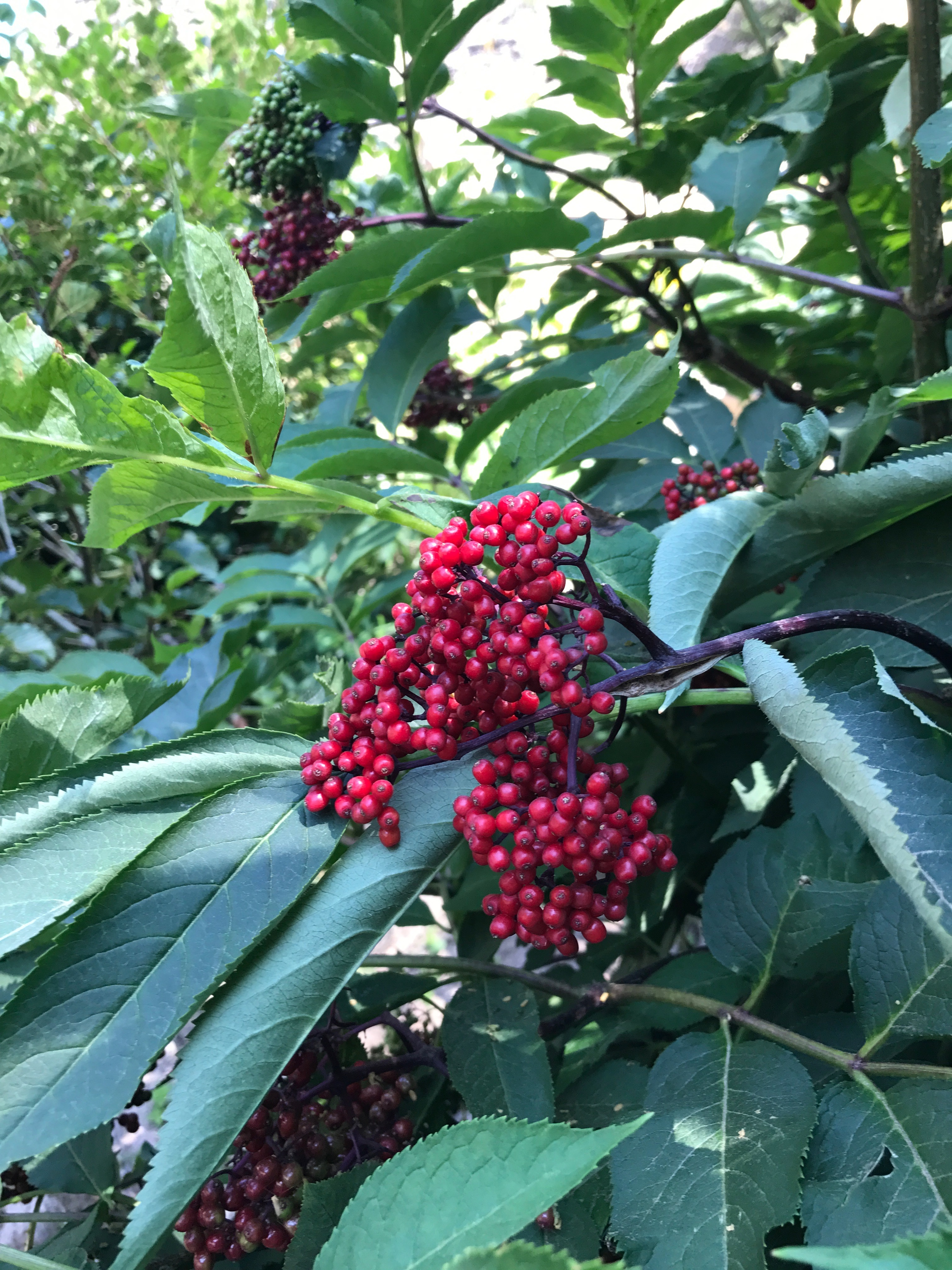
Sambucus racemosa
Red Elderberry
Red Elderberry is an erect shrub that reaches 6 meters (20 feet) in height. It prefers moist sites in the shade with poor soils. This shrub is found throughout the Willamette Valley at sea level to middle elevations.
Red Elderberry can be identified by its 5-7 leaflets, small white flowers grouped together in a pyramidal parasol-like cluster, and bark that is reddish-brown. In the early summer, the flowers produce small bright red berries.
This shrub is best used in shady wetlands and moist forested areas. It provides an excellent food source for birds. Native people used these berries in wines, but today is considered inedible. -
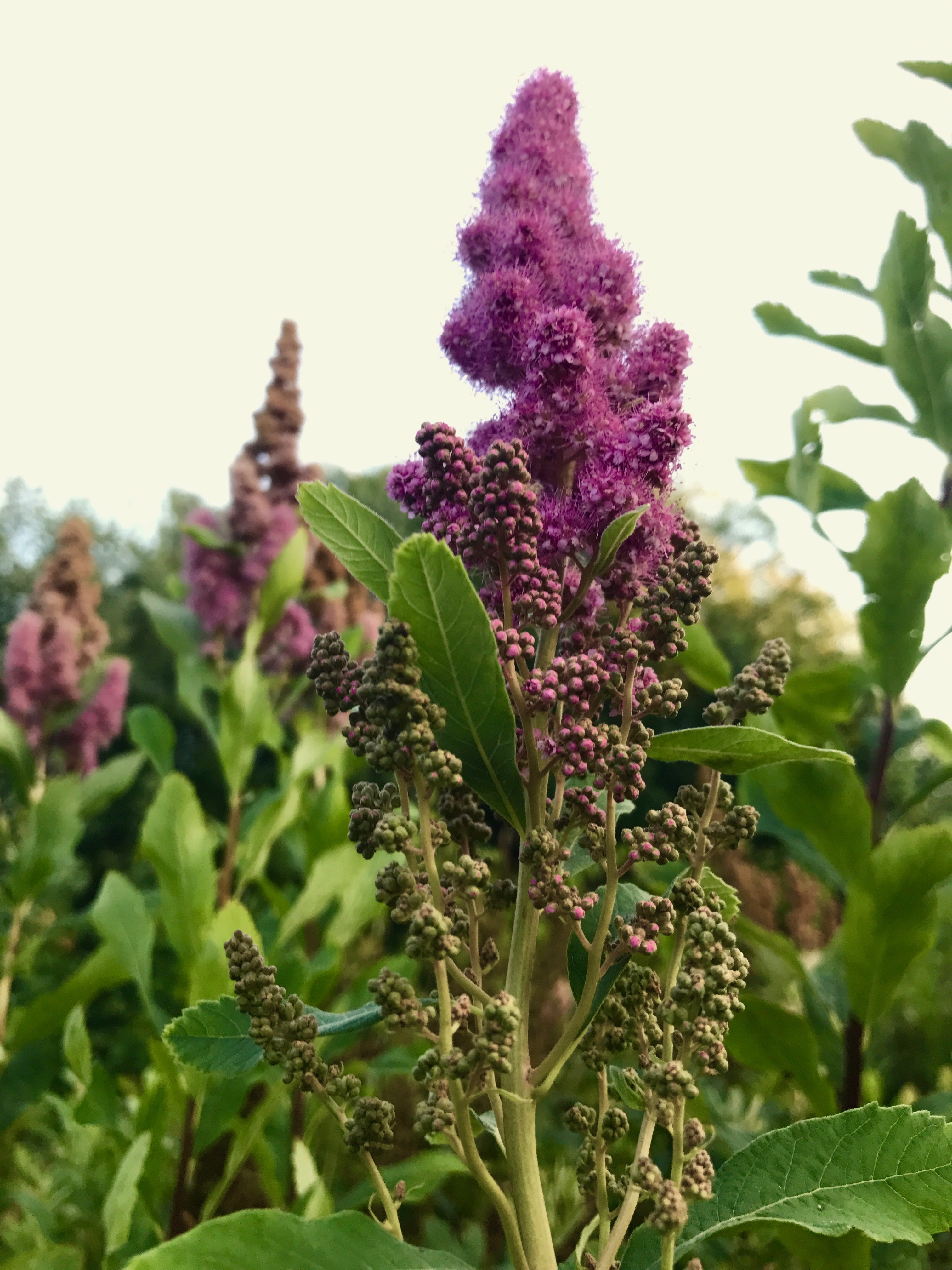
Spiraea douglasii
Douglas Spirea
Douglas Spirea is an erect multi branched shrub that reaches 2 meters (7 feet) in height. It prefers swamps, wetland margins, wet meadows and stream banks at low to middle elevations. This shrub grows best in full sun and moist to wet soils throughout the Willamette Valley.
In July, this shrub will produce a compact terminal cluster of pink to dark rose colored small flowers. The leaves are bluish green in color and silver on the undersides.
This shrub is imperative for wetland restoration as Spiraea grows rapidly, preventing erosion and tolerating seasonal flooding. -

Symphoricarpos albus
Snowberry
Snowberry is an erect shrub that reaches 2 meters (7 feet) in height. It prefers open forests, thickets, clearings and rocky slopes. Found throughout the Willamette Valley at low to middle elevations in dry to moist soils with sun or full shade exposure.
This shrub is identified by its opposite branching and leaves, small pinkish white bell-shaped flowers, and large white berries.
This plant spreads very rapidly making it a great species to use in projects that need lots of ground cover. Snowberries provide food and habitat for many different types of wildlife. -
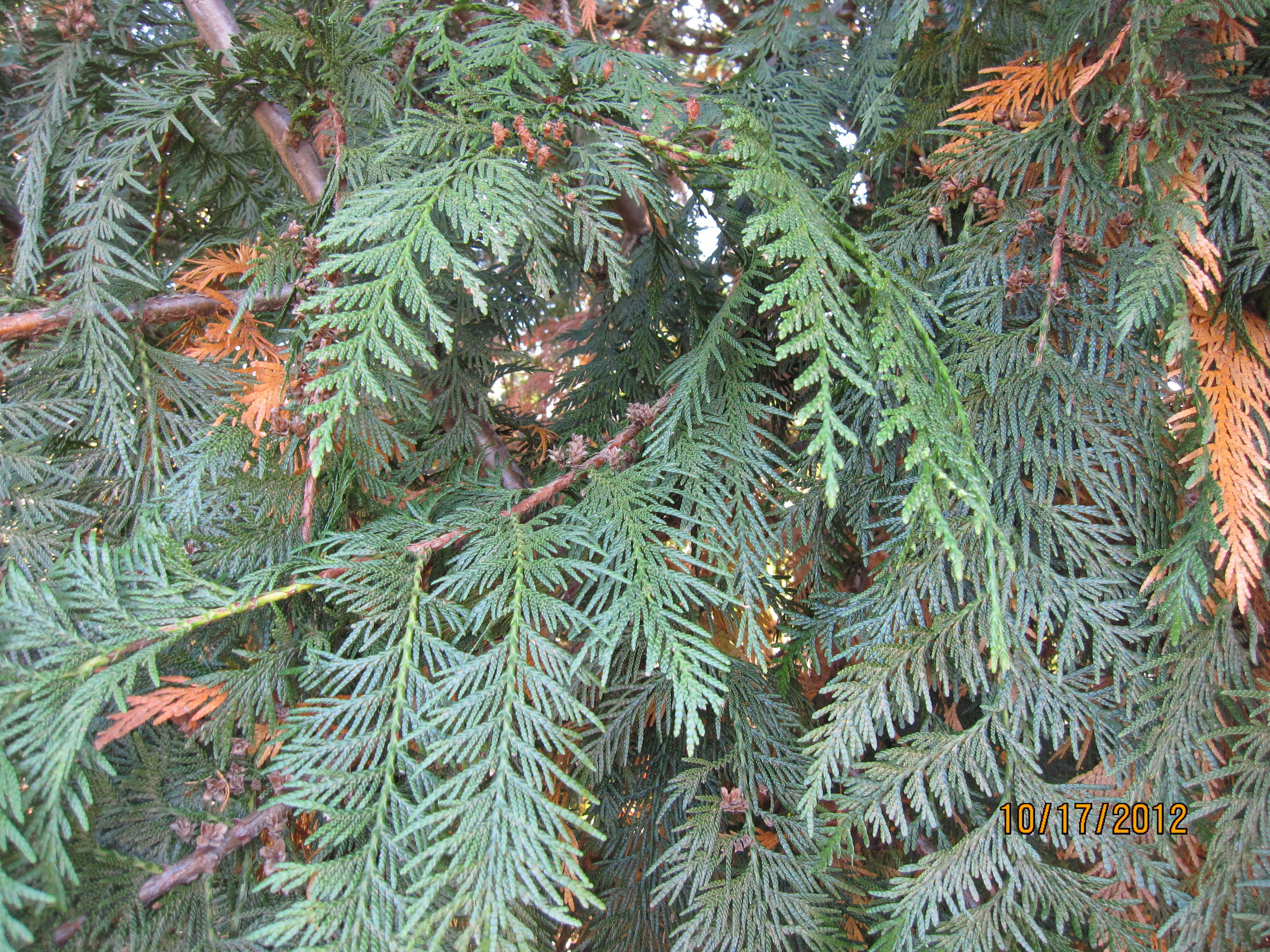
Thuja plicata
Western Red Cedar
Western Red Cedar is a large tree that reaches 60 meters (197 feet) in height. It prefers moist to wet soils in shaded forests. This tree can be found throughout the Willamette Valley at low to middle elevations in seepage sites, alluvial areas and bogs.
The scale-like leaves of this tree are in opposite pairs of 4 rows. One pair is folded, the other, not. This species has two sets of cones, the pollen cones are small, numerous and red; while the seed cones are 1 centimeter long, egg shaped, and green.
This is a rapidly growing tree, which acts as an erosion control for the soil, a windbreak for high wind areas, and habitat for many wildlife of the Pacific Northwest. -
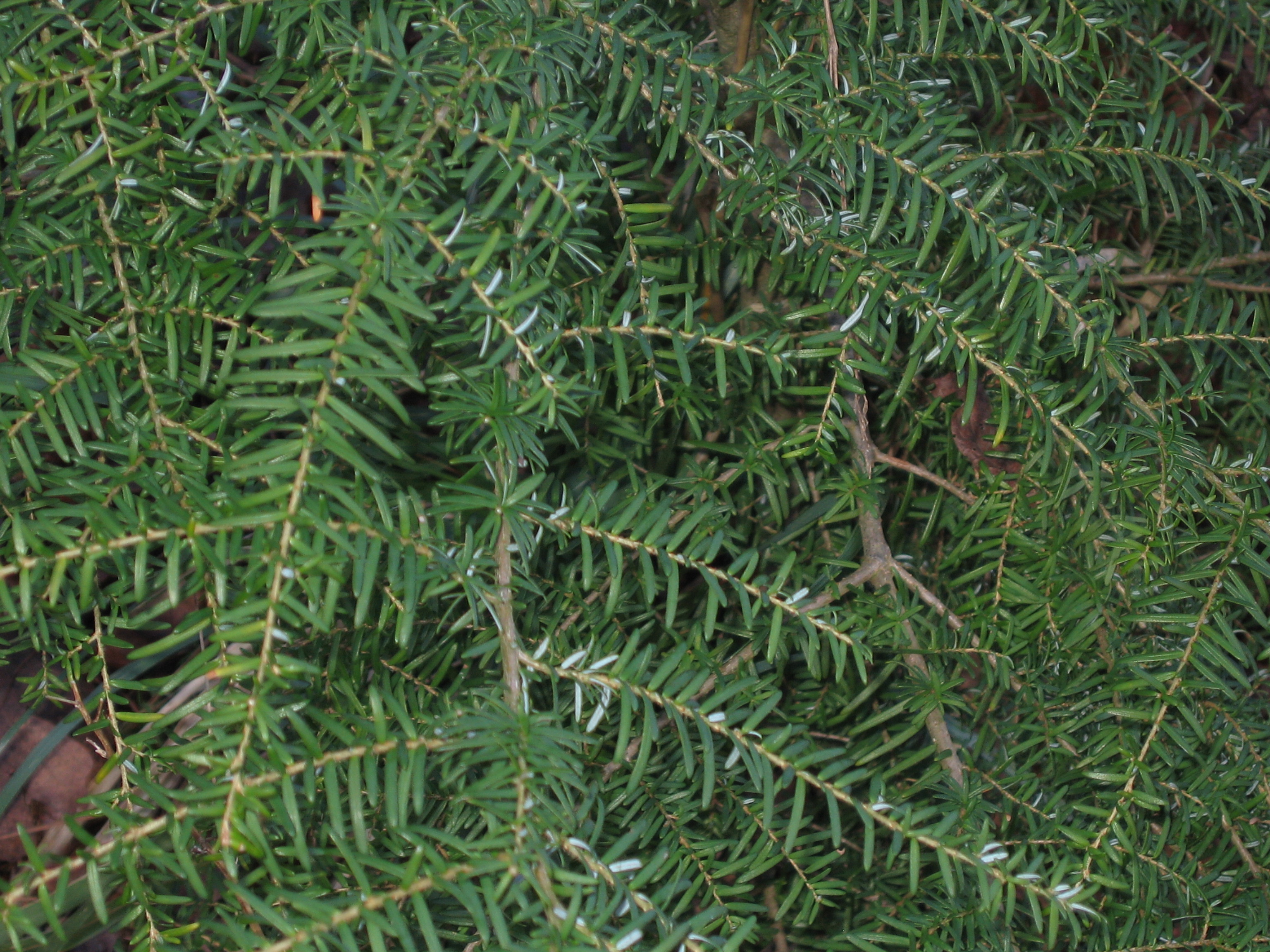
Tsuga heterophylla
Western Hemlock
Western Hemlock is a 60 meter (197 feet) tall tree that grows in dry to wet soils with full sun or shade. It is commonly found throughout the Willamette Valley at low to middle elevations on decaying wood, mineral soils, or humus.
The needles of this tree are flat and blunt with unequal lengths and spacing. The branches are delicate, swooping downwards. Western Hemlock has reddish brown bark and numerous small cones.
This is a fast growing, evergreen tree that will help in soil erosion control as well as minimize damage done by storms. -
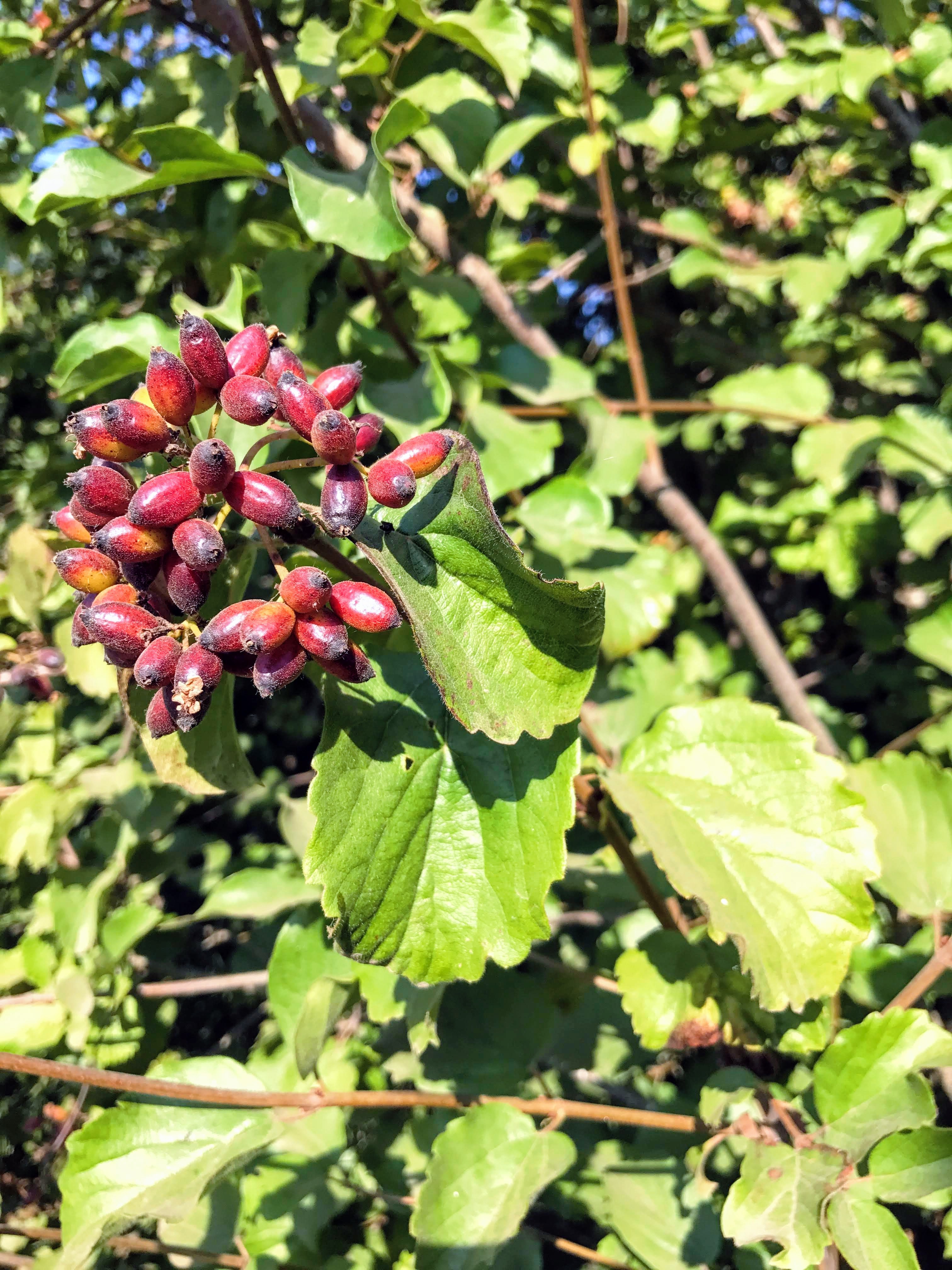
Viburnum ellipticum
Oregon Viburnum
Oregon Viburnum is a 3.5 meter (11 foot) tall shrub that prefers dry sunny sites. It is found throughout the Willamette Valley at low to middle elevations of open woods and thickets.
This is a hairy stalked shrub with coarsely toothed leaves and large inflorescence. The flowers are white and give way to purple fruits in the early fall.
This is a very showy shrub that attracts many pollinators. It is also drought tolerant and great for restoration sites without much moisture. -
Alnus incana
Thin Leaf Alder
Thin Leaf Alder is an excellent species for beaver swamp restoration. It tolerates (and thrives with) prolonged inundation and mucky soils better than any other alder. It is also particularly recommended for restoration around high-gradient, high-velocity, low to midorder streams where it provides cover, food and shade for salmonids. It can range in height from 15-80 feet tall.
-
Baccharis pilularis
Coyotebrush
Coyotebrush is a 3-9 foot tall evergreen shrub native through southern Oregon, up the east slope of the Coast Range and on the dunes. It is present at multiple locations throughout the Willamette Valley, including Benton, Lane, and Washington counties.
It is extremely drought-tolerant, preferring rocky outcrops and well drained sandy soils which allows it to thrive in oak woodlands, grasslands, chapparal, mixed evergreen forest, and coastal scrub.
Coyotebrush is an extremely important plant for pollinators, due to its late bloom period (fall and winter), and its abundant production of pollen and nectar.
-

Calocedrus decurrens
Incense Cedar
Incense Cedar is a long-lived conifer that reaches heights of 80 to 200 feet. The bark is a beautiful cinnamon red and the wood is aromatic and resistant to insects and decay.
This species is the most drought and heat resistant conifer native to the Willamette Valley, making it a great choice for drier sites. This species can be found in natural stands as far north as Marion County, and has naturalized northward through the Willamette Valley and Puget Trough.
-
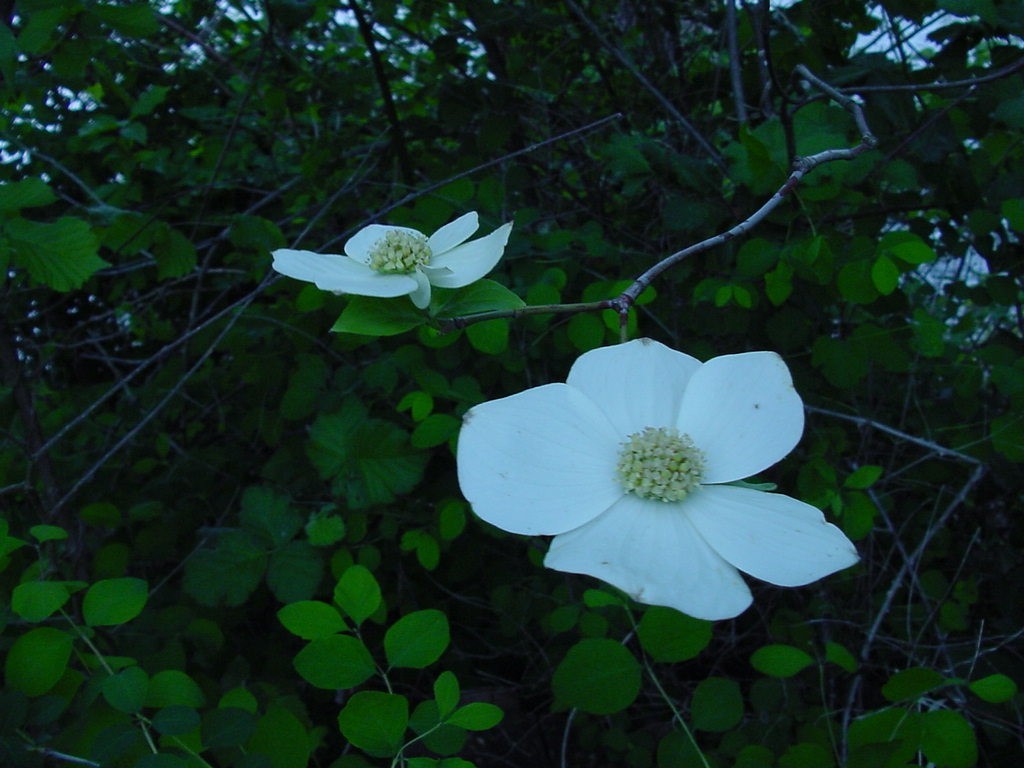
Cornus nuttallii
Pacific Dogwood
Pacific Dogwood is a tree that reaches 20 meters (66 feet) in height and grows in open or shaded forests. It is found in moist to well-drained soils along streams or gullies at low elevations on the western side of the Cascades.
The most unique character for identification of this Dogwood is its flowering structures. Many tiny flowers are clumped together and surrounded by 4-6 white or pinkish large bracts. The flowers will produce large, bright red berries in the fall. They are a good food source for many birds.
Pacific Dogwood is an excellent understory species for a conifer forested site.
-
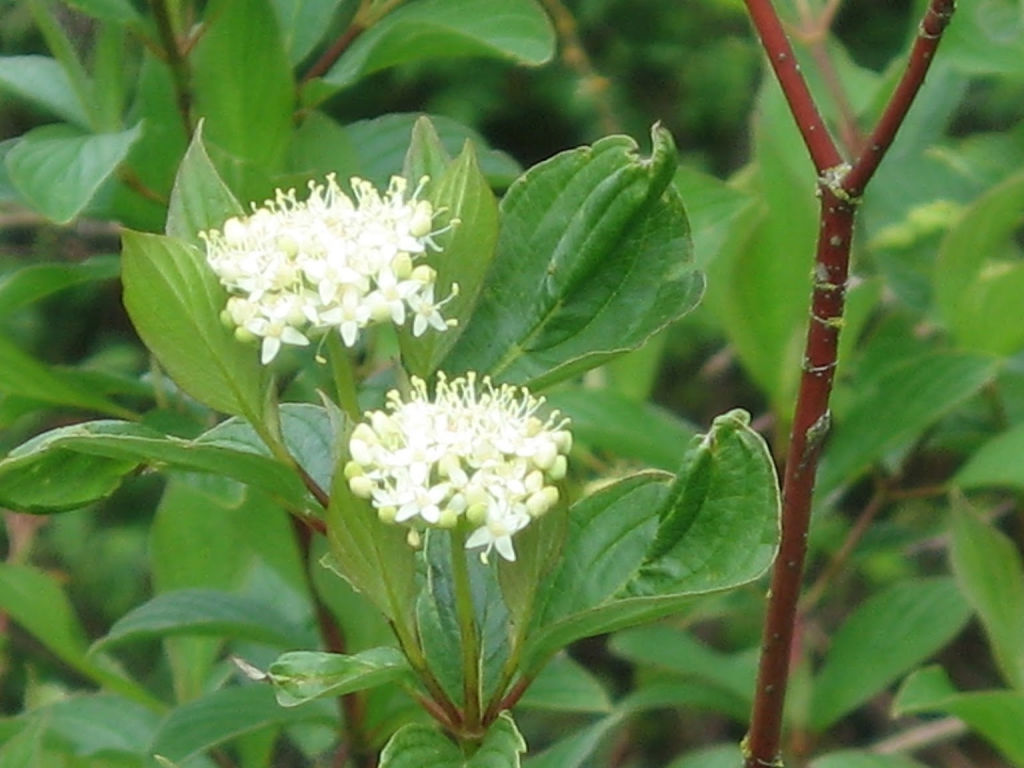
Cornus sericea
Red-osier Dogwood
Red-osier Dogwood is a freely spreading shrub that reaches 6 meters (20 feet) in height. It prefers moist soils in swamps and stream edges in partially sunny areas. This shrub can grow on the Valley floor to middle elevations of the Willamette Valley.
Red-Osier Dogwood gets its common name from its bright red twigs. The flowers are small and bunched together but do not have large, showy bracts. In late summer, the flowers produce white berries.
This is a key species in erosion control projects as this plant spreads by runners that hold the soil and will slow water flow, increasing sedimentation. It also provides a valuable food source for native wildlife and pollinators.
-
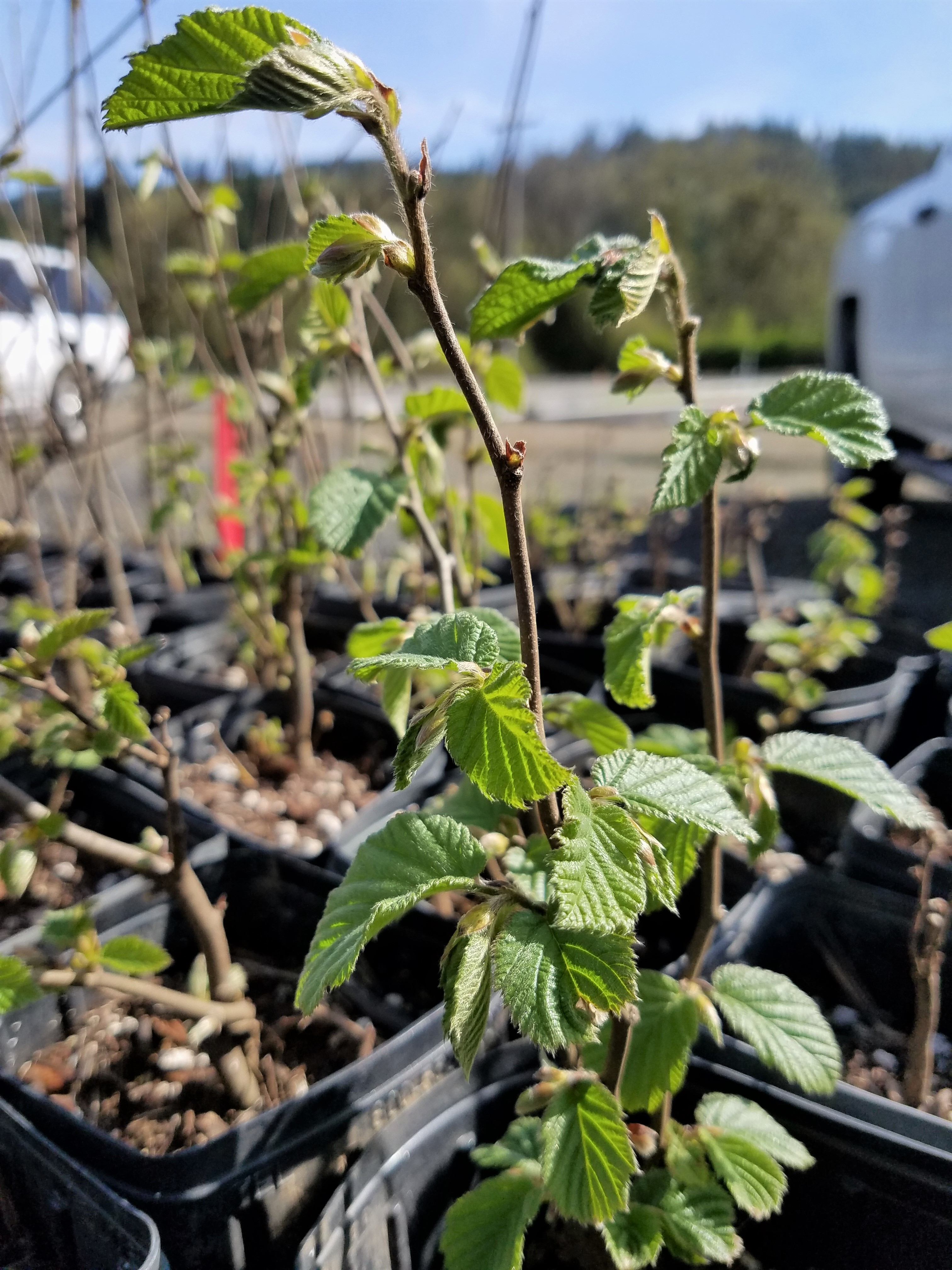
Corylus cornuta
Beaked Hazelnut
Beaked Hazelnut grows to be 12 to 50 feet tall occuring most frequently in mixed conifer forests and hardwood woodlands.
It is deciduous with fuzzy serrate leaves, and its fruits are enclosed in a pair of long beak shaped bracts. The fruits are an excellent food source for deer, squirrels, and grouse.
This plant occurs at low density in its habitat, but is an important secondary successional species and is often abundant in areas with recent canopy mortality.
-
Prunus virginiana
Choke Cherry
Choke Cherry is a small tree that grows up to 20 ft tall. In the Willamette Valley it is found in habitats ranging from very dry uplands to droughty riparian areas. It is a great plant for very poor soils, disturbed areas, and floodplain sites that become dry to extremely dry in summer. Its beautiful racemes of flowers and fruits attract birds and pollinators.
-
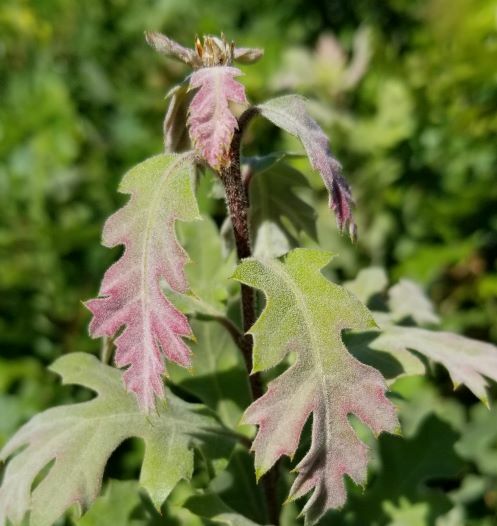
Quercus kelloggii
California Black Oak
California Black Oak typically grows to be 30 to 80 feet tall. It is a long-lived element of open oak woodlands and savanna and a tremendously valuable wildlife tree native to the southern Willamette Valley.
California Black Oak can be a heavy acorn producer and a major food source for acorn woodpeckers and many other birds, mammals, and insects.
-
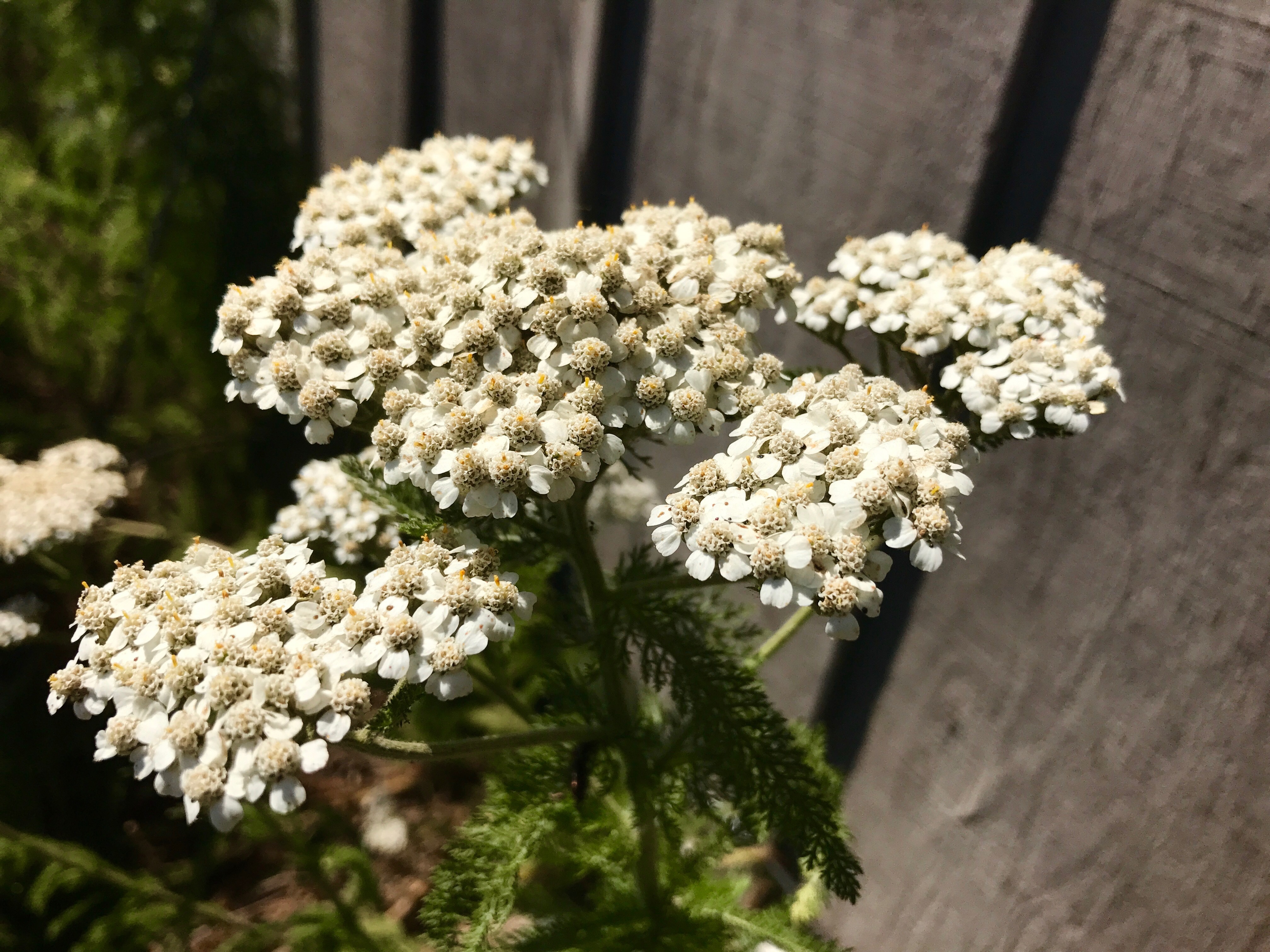
Achillea millefolium
Yarrow
Yarrow is a hardy herbaceous perennial that occurs on dry to mesic soils in full sun at low to high elevations. This herb can be found throughout the Willamette Valley in meadows, rocky slopes, open forests and roadsides.
Yarrow has leaves which are fern-like with a flat or round-topped cluster of white to pink, ray flowers at the terminal ends of stems. The flowers are aromatic and the plant contains many medicinal qualities. This herb is an important herbaceous component to sites that are open and dry.
-
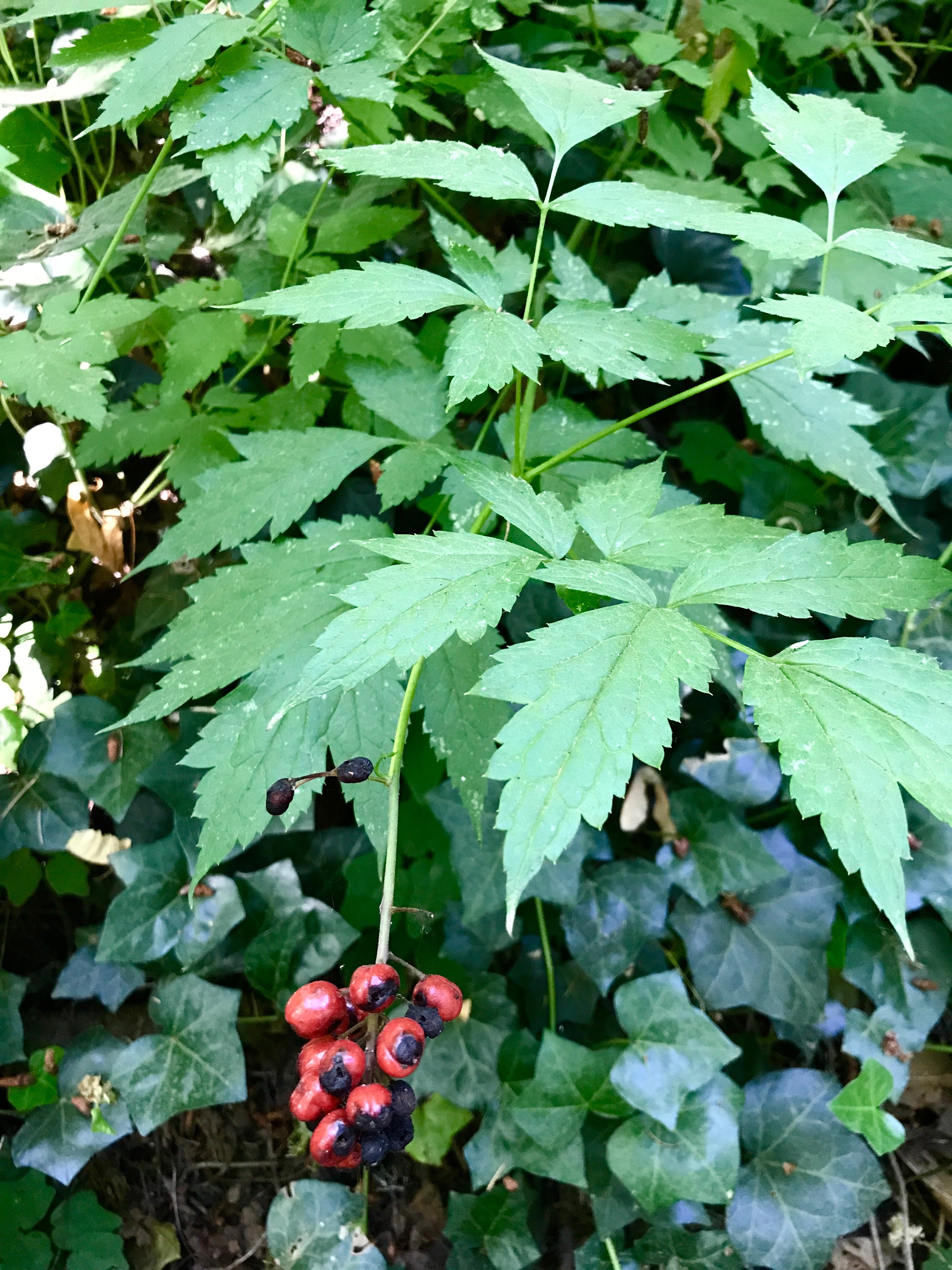
Actaea rubra
Baneberry
Baneberry is a perennial that prefers moist soils and shade in rich mixed woodlands and forests. This herb can be found throughout the Willamette Valley in forests and along stream banks.
Baneberry has large leaves which are crinkly and divided 2-3 times in groups of three. Each segment is coarsely lobed and toothed. The small flowers are delicate and white, producing brilliant red or white berries in summer.
-

Anaphalis margaritacea
Pearly Everlasting
Pearly Everlasting is a rhizomatous perennial that reaches 1 meter (3 feet) in height. It is found in a wide variety of habitats including open forests, rocky slopes and meadows from sea level to subalpine elevations. This herb prefers dry soils with full sun and can be found throughout the Willamette Valley.
The leaves of this plant are green above and woolly underneath. White bracts form small heads on the terminal ends of the stems with many minute yellow flowers forming a disk in the center.
Pearly Everlasting may be used in sites that are open, exposed to lots of sun, and are usually dry throughout the season. -

Aquilegia formosa
Western Columbine
Western Columbine is a beautiful native perennial that reaches 1 meter (3 feet) in height. This herb can tolerate a wide variety of moist soils in open to partly shaded areas. It is found throughout the Willamette Valley from the Valley floor to the timberline.
This plant is easily distinguishable by its bright yellow, honey-comb shaped center and bright red outer petals with long nectar spurs that columbines are known for. They are found on the terminal ends of arching stems.
This plant is useful in forests, meadows, and thickets as it attracts many pollinators to an area, including butterflies and hummingbirds.
-
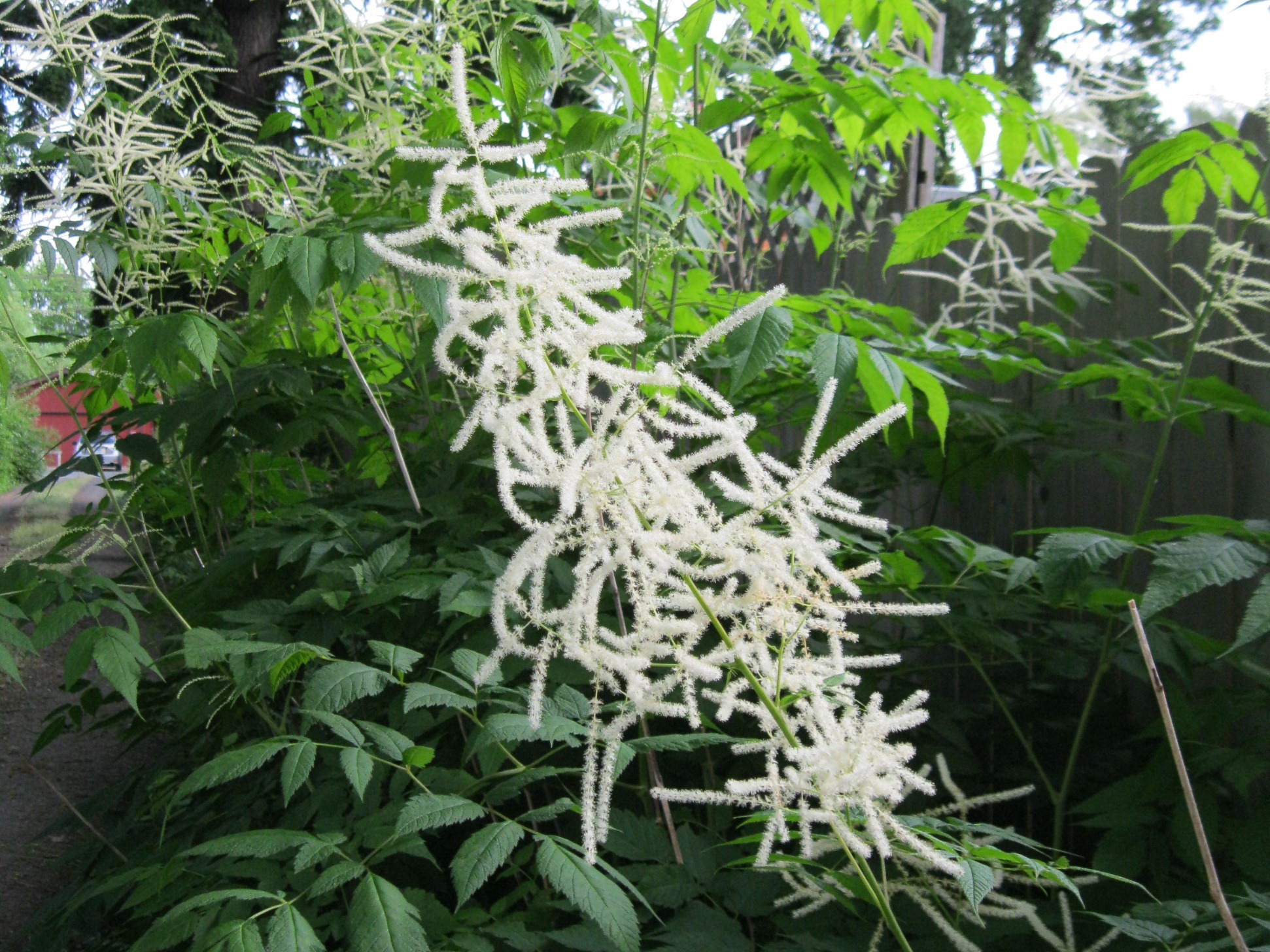
Aruncus dioicus
Goat's Beard
Goat's Beard is a very hardy and graceful perennial that can reach 2 meters (7 feet) tall. This herb prefers edge habitats such as roadsides, streams, and forests. It is found throughout the Willamette Valley at low to middle elevations in sites that are moist and shady.
To identify this plant, look for leaves which are compounded three times. Each leaflet is pointed with sharply toothed edges. Male and female flowers are on separate plants. The flowers themselves are minute, white and densely packed on an elongated terminal spike.
This herb is excellent for use in sites that are relatively bare as it will spread and quickly fill the area. -
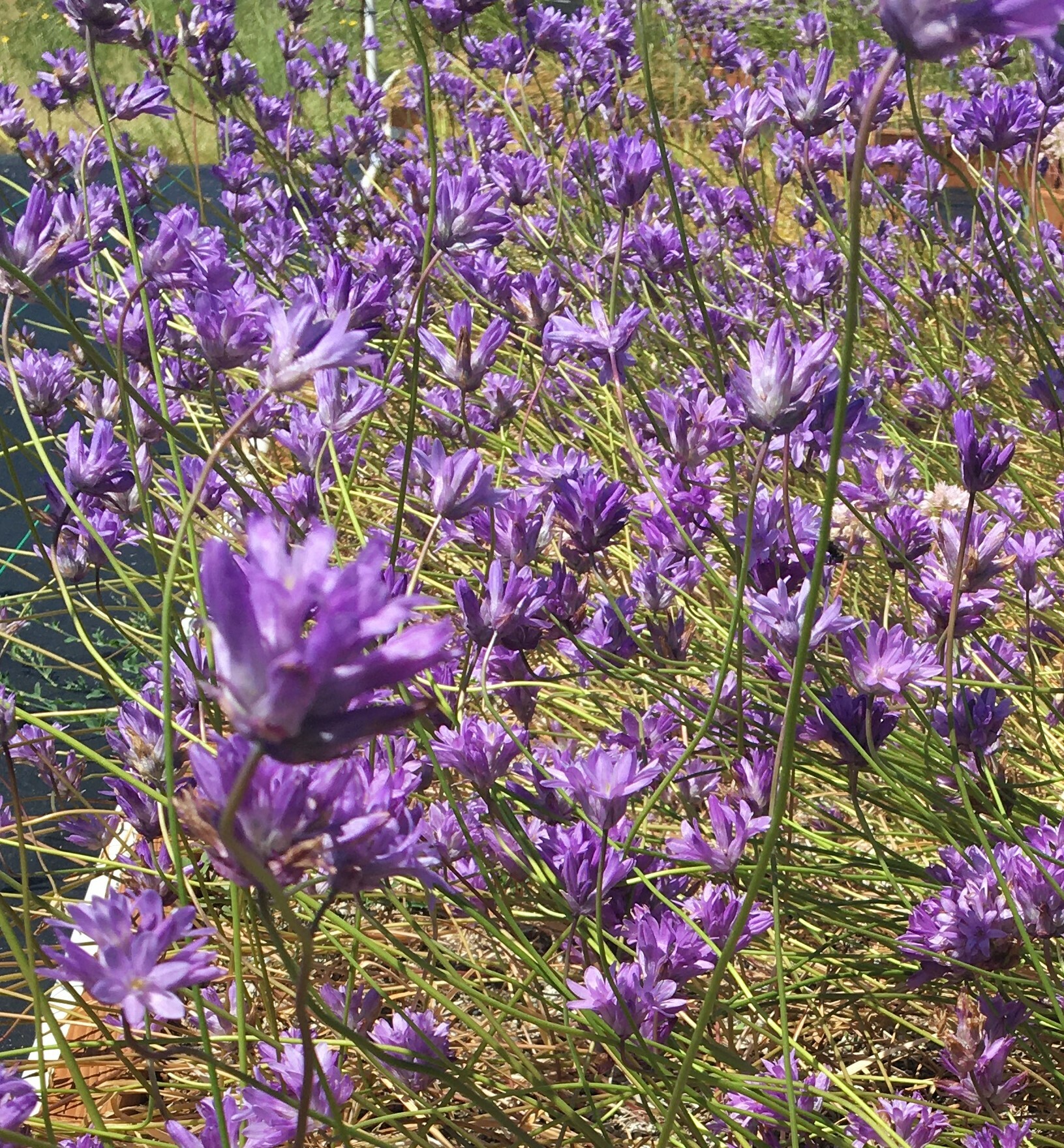
Dichelostemma congestum
Ookow
Ookow is a perennial herb that reaches 4 centimeters (2 inches) in height. It prefers dry climates throughout the Willamette Valley at low to middle elevations.
This plant is distinguished by its bluish flowers which are clustered in a dense group at the end of the stalks. It commonly has 2-3 leaves.
These plants are great for open grassy sites and will require little maintenance once planted. -
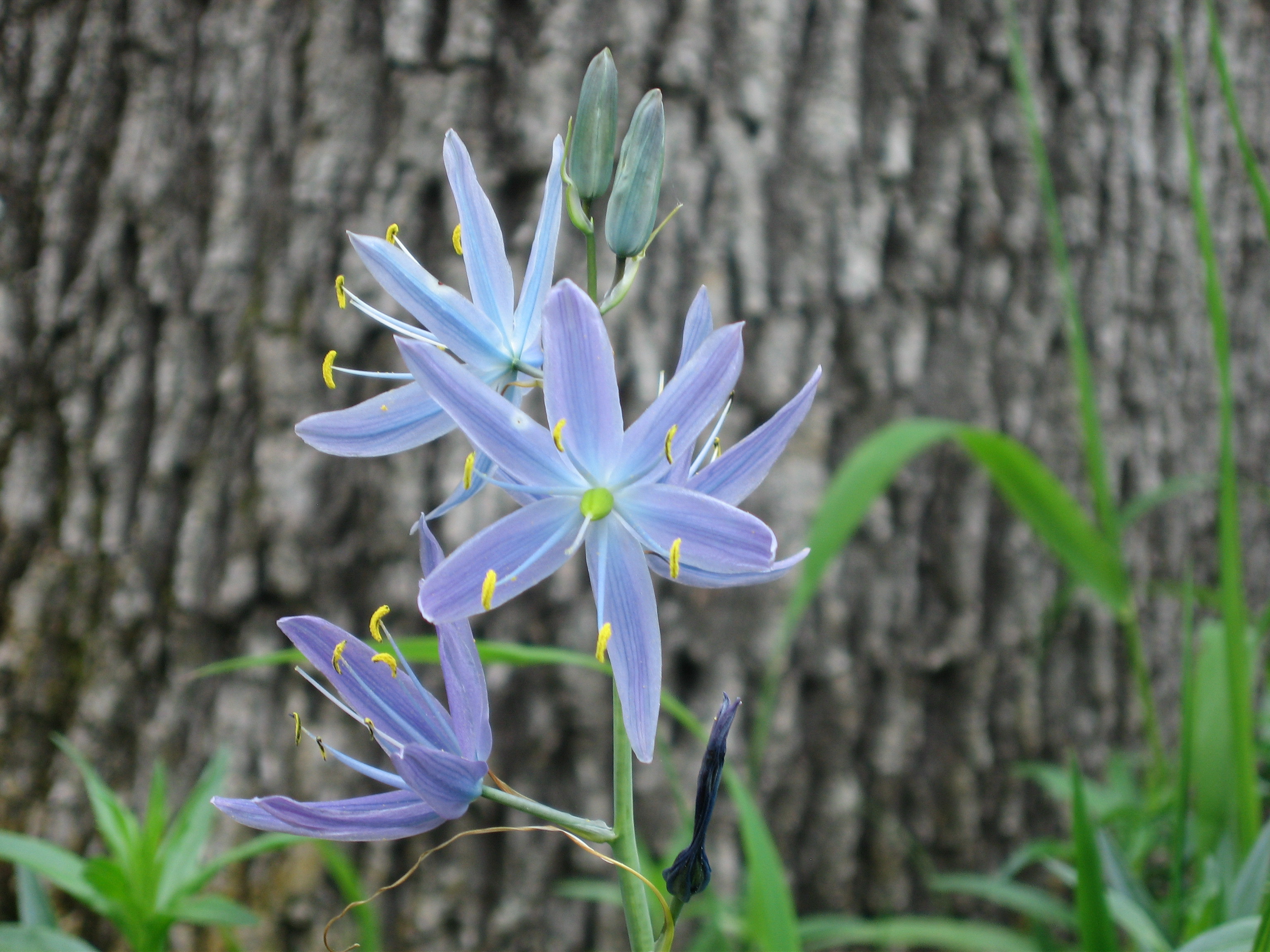
Camassia leichtlinii
Great Camas
Great Camas is a perennial lily of moist to wet, open to wooded sites throughout the Willamette Valley. Great Camas makes a beautiful and colorful addition to prairies and oak woodlands that are moist in spring, and an ideal plant for pollinator support in orchards and farms.
-
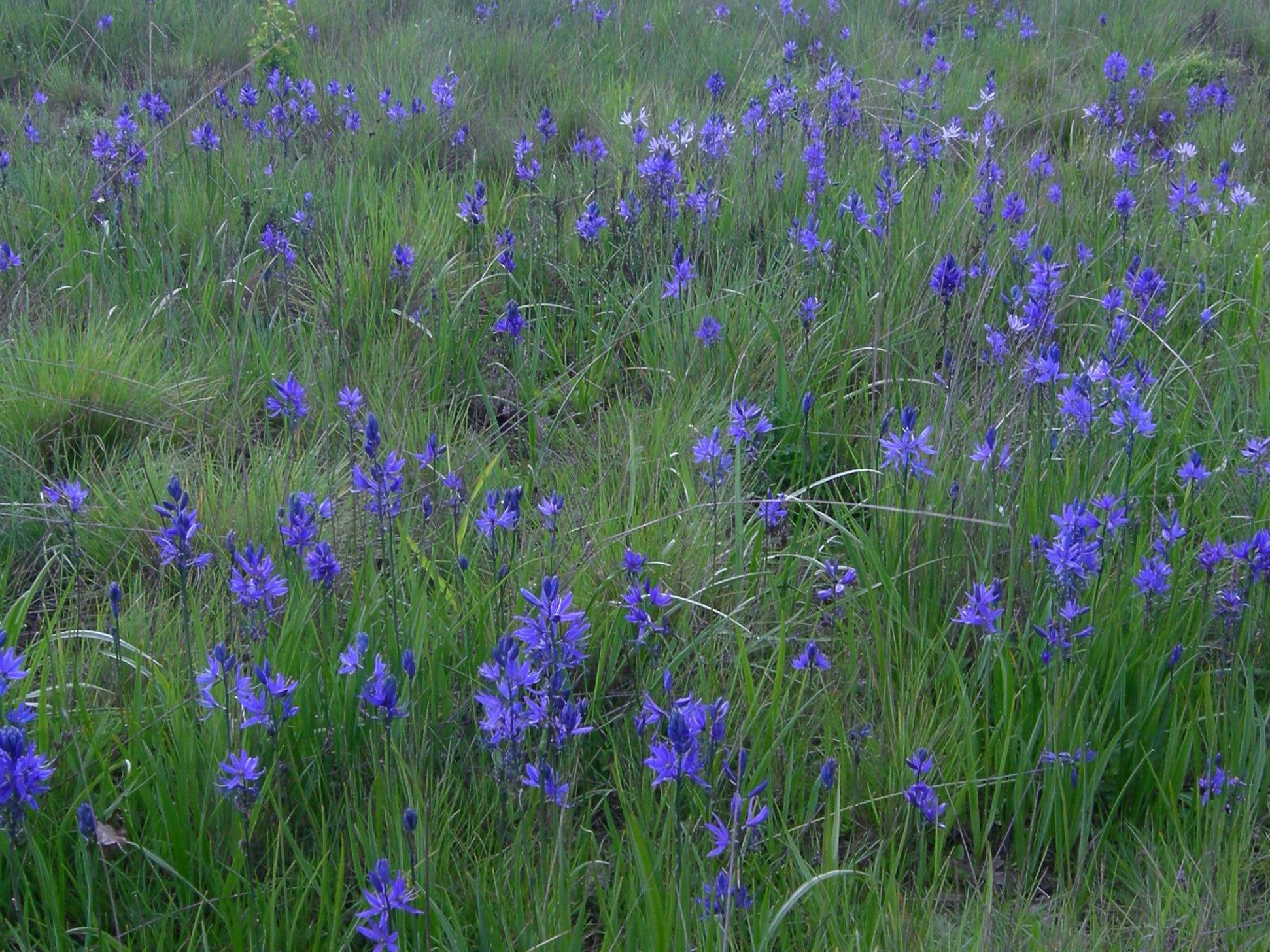
Camassia quamash
Common Camas
Common Camas is a perennial herb that reaches 70 centimeters (28 inches) in height. It prefers moist sites that are mostly shaded. This herb ranges throughout the Willamette Valley at low to middle elevations in meadows and grassy slopes.
To distinguish this flowering plant from the closely related Great Camas, look for the pale to deep blue flowers growing out of the stalk and then curving back in towards it.
Common Camas makes a beautiful and colorful addition to any grassy site throughout the Willamette Valley. -
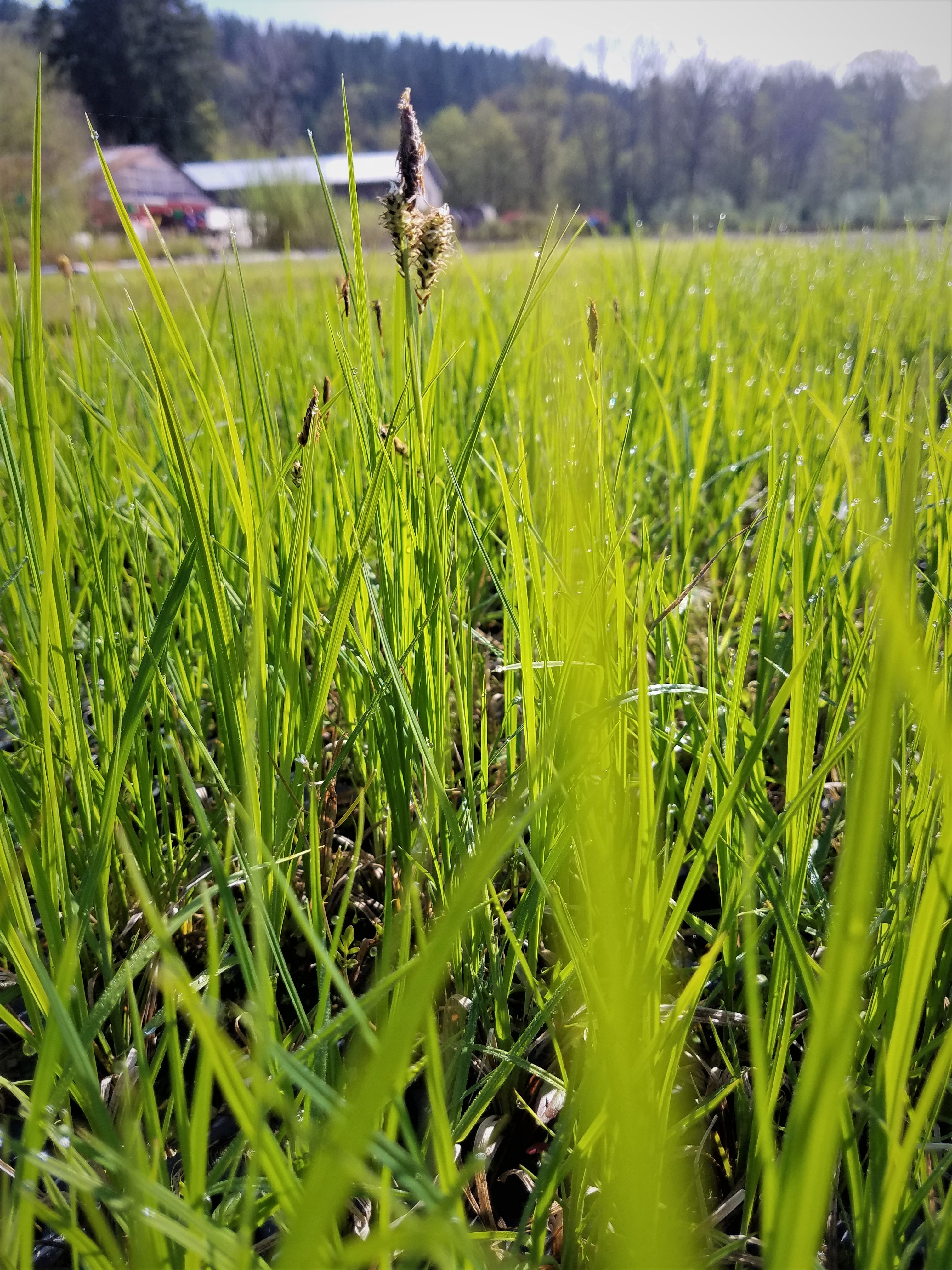
Carex aperta
Columbia Sedge
Columbia Sedge is a perennial that reaches 1 meter (3 feet) in height. It is found throughout the Willamette Valley at low to middle elevations. This is a wetland sedge that prefers wet soils and mostly sunny areas such as creeks, ponds and streams.
The most distinguishing characteristic of this plant is its inflorescence. The color is a purple violet and the plant blooms from early spring until late summer.
This plant is best used in wetland areas to stabilize the soil and help with erosion control issues. -
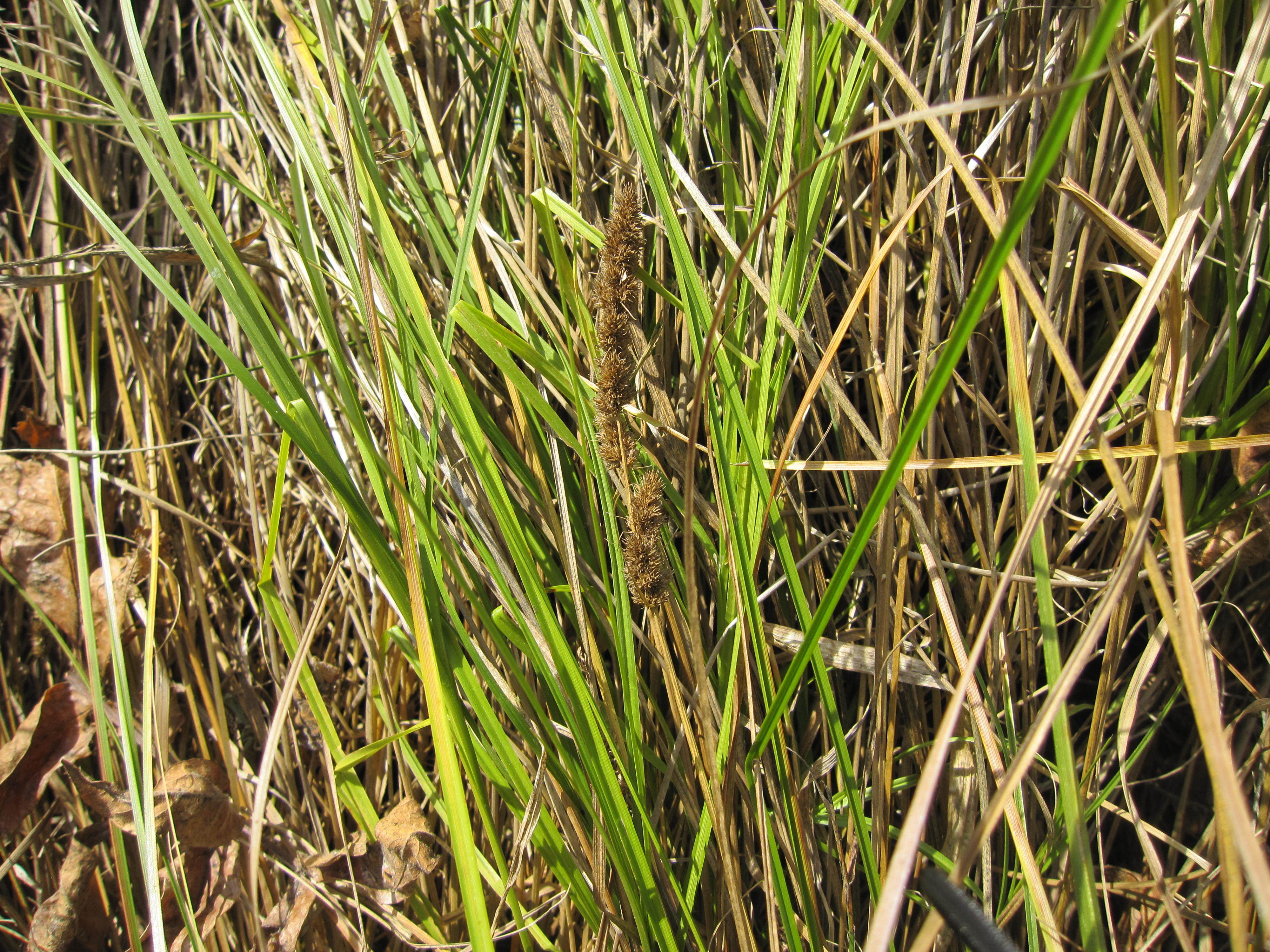
Carex densa
Dense Sedge
Dense Sedge is a medium-sized, strongly caespitose sedge. With its narrow, arching leaves, long, slender culms, and coppery spikes, dense sedge forms beautiful round clumps in Willamette Valley wet prairies, and can be found with regular associates, including one-sided sedge, coyote thistle and many annual forbs such as fragrant popcorn flower.
-
Carex leptopoda
Shortscale Sedge
Shortscale Sedge is a loosely tufted sedge found in alluvial forests and moist woodlands at low to middle elevations in the Willamette Valley. It has weak spreading stems with flat thin leaves. The inflorescence are 2-6 spikelets which form a loose head.
This prolific sedge readily spreads from seeds, so innoculation plug plantings can have dramatic results in moist, shady habitats in just a few years.
-
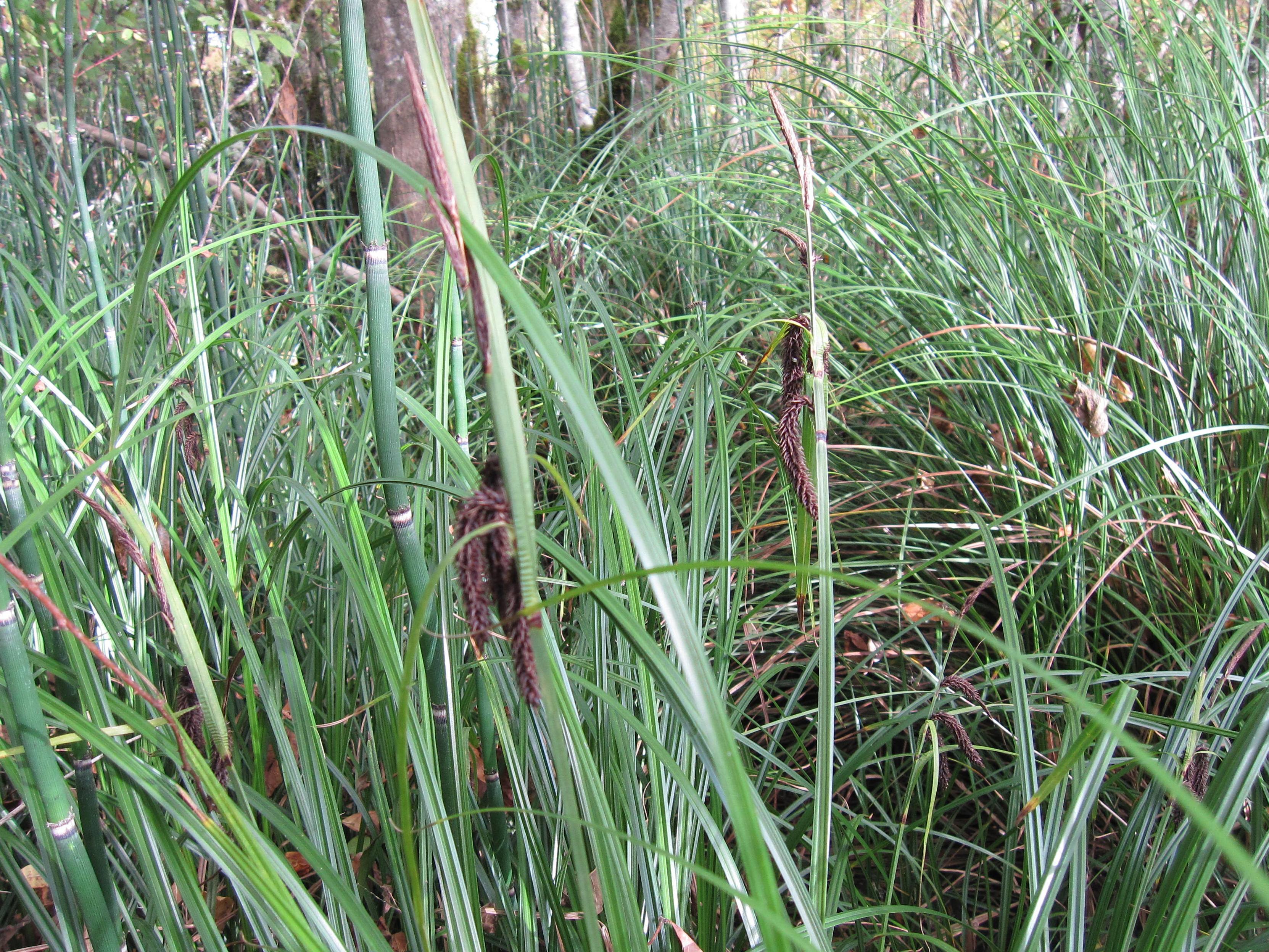
Carex obnupta
Slough Sedge
Slough Sedge is a strongly rhizomatous sedge common in a variety of wet, open to heavily shaded environments. Slough sedge is highly competitive and hardy, tolerates inundation under slow or moderately fast-flowing water and is therefore an ideal plant for stormwater treatment applications. A critical element of forested wetland, riverbank and pond edge systems.
-
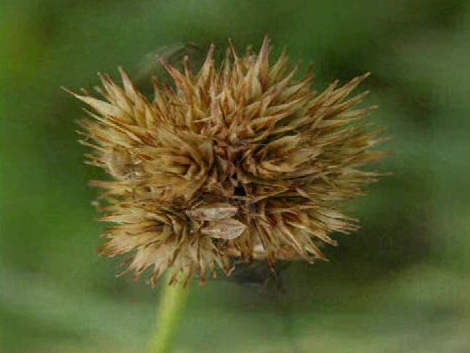
Carex pachystachya
Thick-headed Sedge
Thick-headed Sedge is a perennial, tufted sedge that ranges from 20-50 cm (8-20 inches) in height. It prefers open, wet to moderately wet sites.
The flower spikes form a dense head 1-2.5 cm across, and are subtended by a narrow bract. Leaves are 2-4 mm wide.
Thick-headed sedge is a great choice for wet prairies, or other open sites that hold water much of the year. -

Carex scoparia
Pointed Broom Sedge
Pointed Broom Sedge is a perennial herb that reaches 1 meter (3 feet) in height. It is found in prairies, wetlands, creeks and stream banks in wet soils and full sun. This sedge is common throughout the Willamette Valley at low to middle elevations.
This sedge is characterized by its partially overlapping, pointed spikelets, thickened rootstocks, erect slender stem that is rough to the touch, and elongated, narrow, smooth leaves.
This is a perfect plant for sites with wetlands in an open area. -
Carex stipata
Sawbeak Sedge
Sawbeak Sedge is a densely tufted sedge that reaches 1 meter (3 feet) in height. It can be found in wet ditches, clearings and streamsides at low elevations throughout the Willamette Valley.
This sedge is identifiable by its flat yellowish green leaves and inflorescences of stackless dense, thick, oblong clusters.
This sedge is great for sites where the soils remain moist to wet throughout the season. -
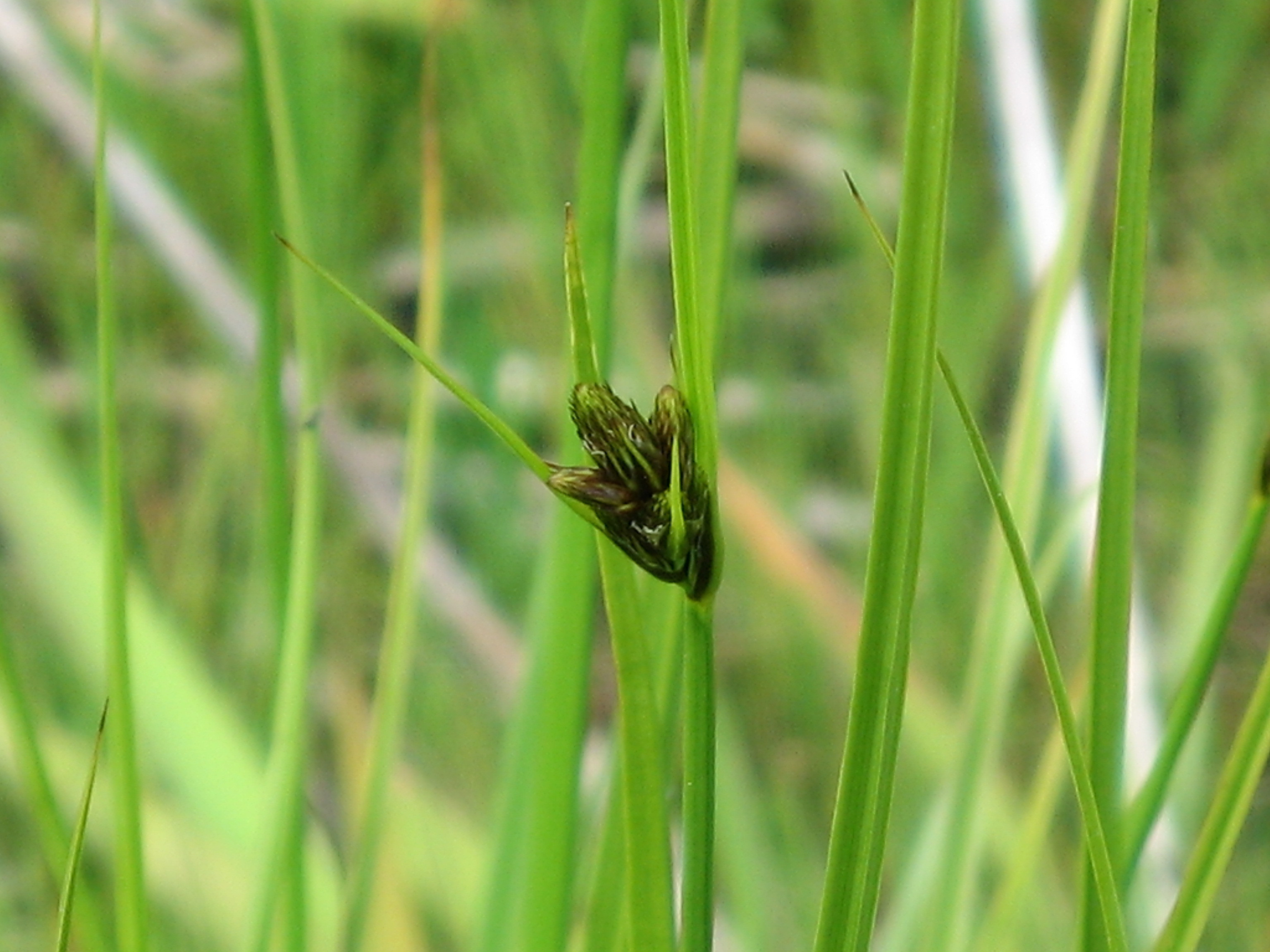
Carex unilateralis
One Sided Sedge
One Sided Sedge is a dense tufted perennial sedge that reaches 1 meter (3 feet) in height. It is found in full sun with seasonally wet soils of wetlands, creeks, and stream banks throughout the Willamette Valley at low to middle elevations.
To identify this sedge, look for dense ascending spikelets, which are reddish in color and often awned.
This sedge is best used in sites that are flooded seasonally where it will help in controling erosion. -
Carex vulpinoidea
Fox Sedge
Fox Sedge is a perennial herb with a thickened root stalk that can reach 1 meter (3 feet) in height. It is found in moist soils and full sun areas such as woods, stream banks, prairies, and wetlands. This sedge commonly ranges from low to middle elevations throughout the Willamette Valley.
To identify this sedge, look for elongated spikes containing 10 or more spikelets with the lowest one having a long slender bract. The stems are erect and slender with a triangular shape and rough edges.
This plant is best used in open, moist areas that are in need of erosion control. -

Claytonia sibirica
Spring Beauty
Spring Beauty is a herbaceous annual to perennial that reaches a spreading. 10-40 cm (4-16 inches) in height. It is commonly found in forest understories and other moist, shady places throughout the Pacific Northwest.
This species has fleshy leaves and stems, sessile leaves, and white to pink flowers that are present throughout the spring and into the summer.
Spring beauty is a great species to add diversity and brightness to understory plantings. -
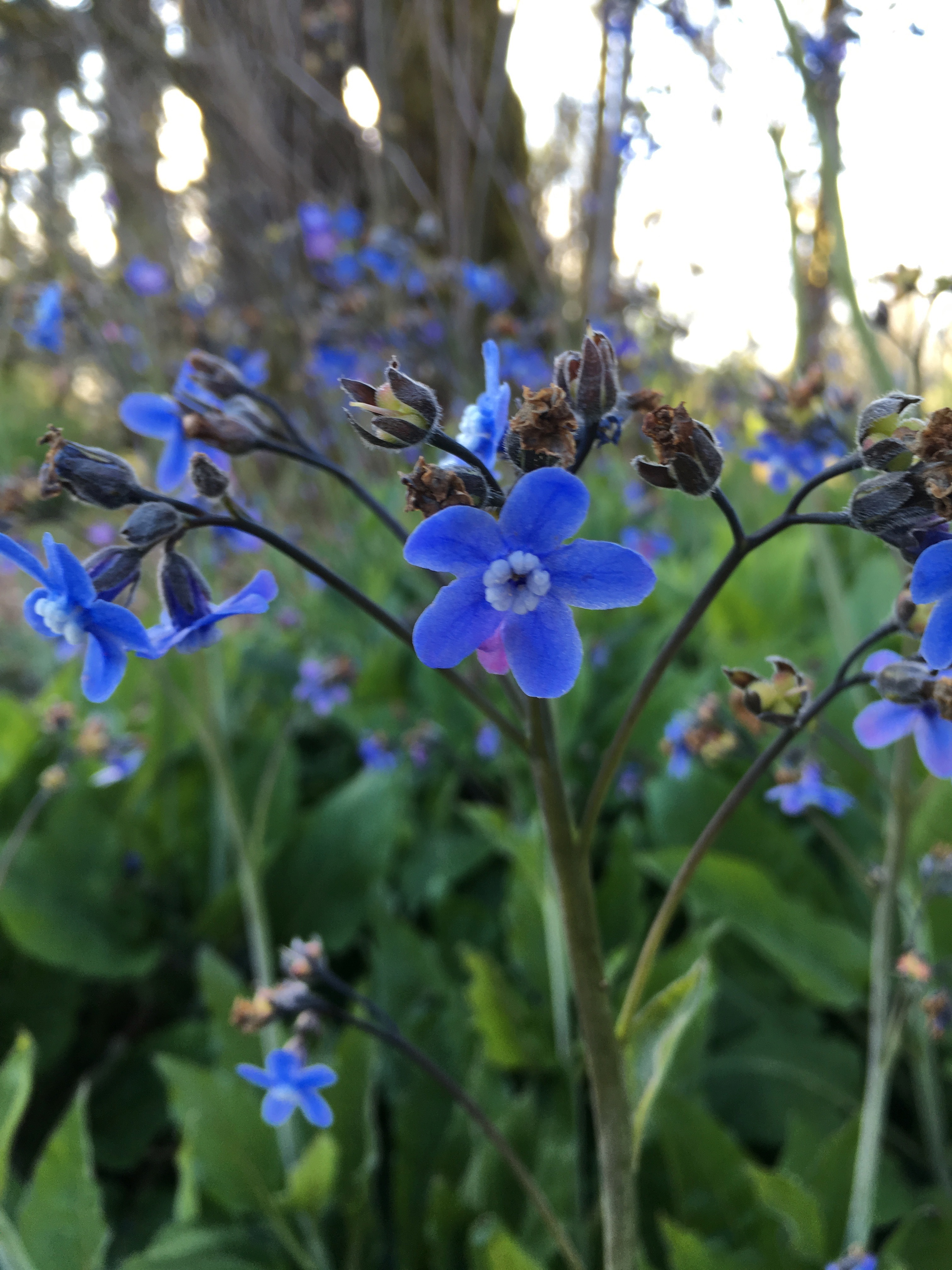
Cynoglossum grande
Pacific Hound's Tongue
Pacific Hound's Tongue is a stout perennial that reaches 20-80 cm (8-31 inches) tall. It is found in shaded or open woodlands throughout the Willamette Valley.
Pacific Hound's Tongue has striking blue flowers atop leaves that reach 8-18 cm (3-7 inches) long.
This is a great species for herbaceous color and will attract pollinators. -
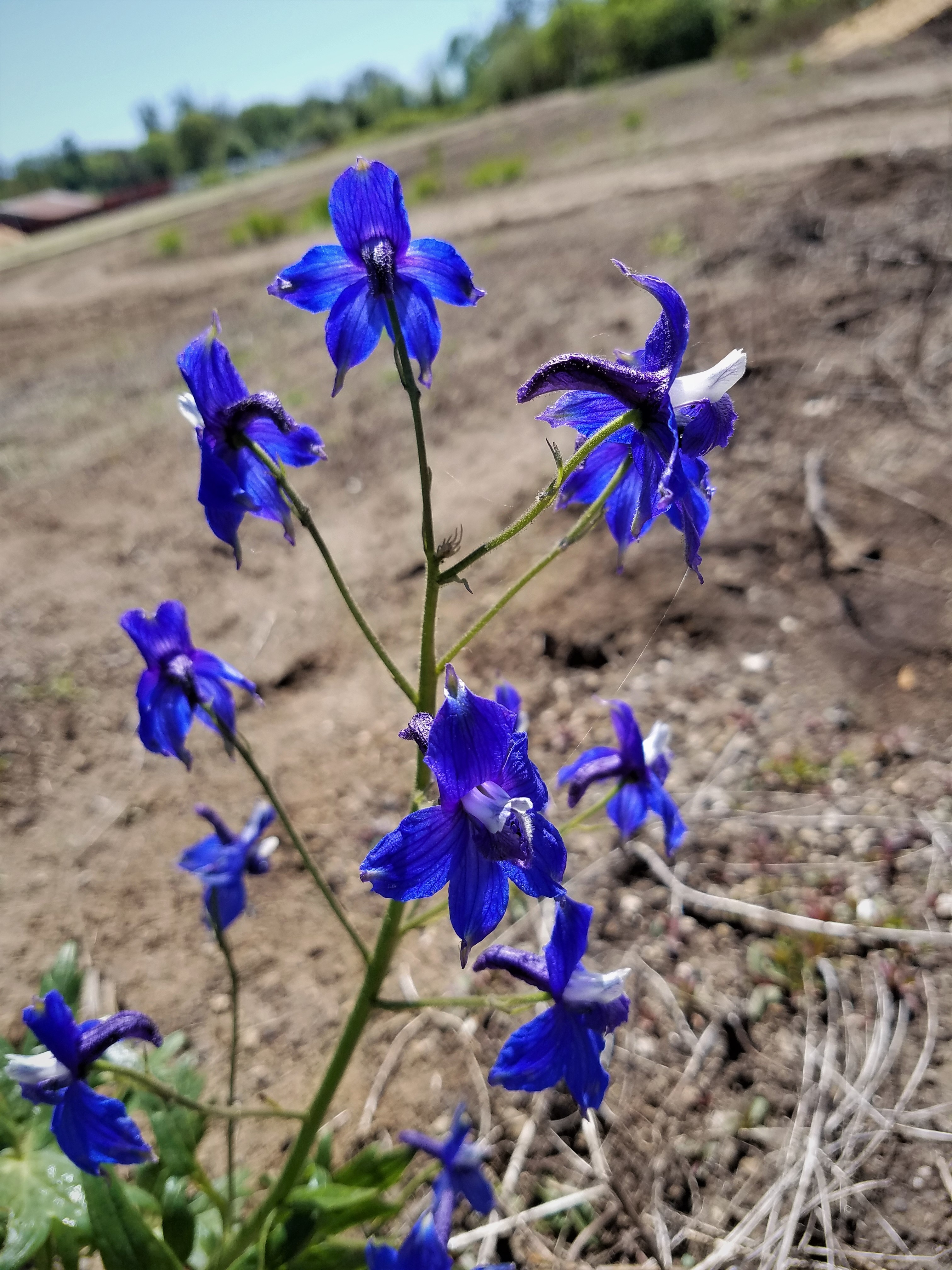
Delphinium trolliifolium
Columbian Larkspur
Columbian Larkspur is a perennial that grows to 1.5 meters in height. It prefers moist, shaded to partly sunny areas throughout the Willamette Valley.
Columbian larkspur is identified by their dark blue flowers with white inner petals and a long nectar spur off the back.
This plant is a beautiful addition to any site and will help attract many native pollinators. -
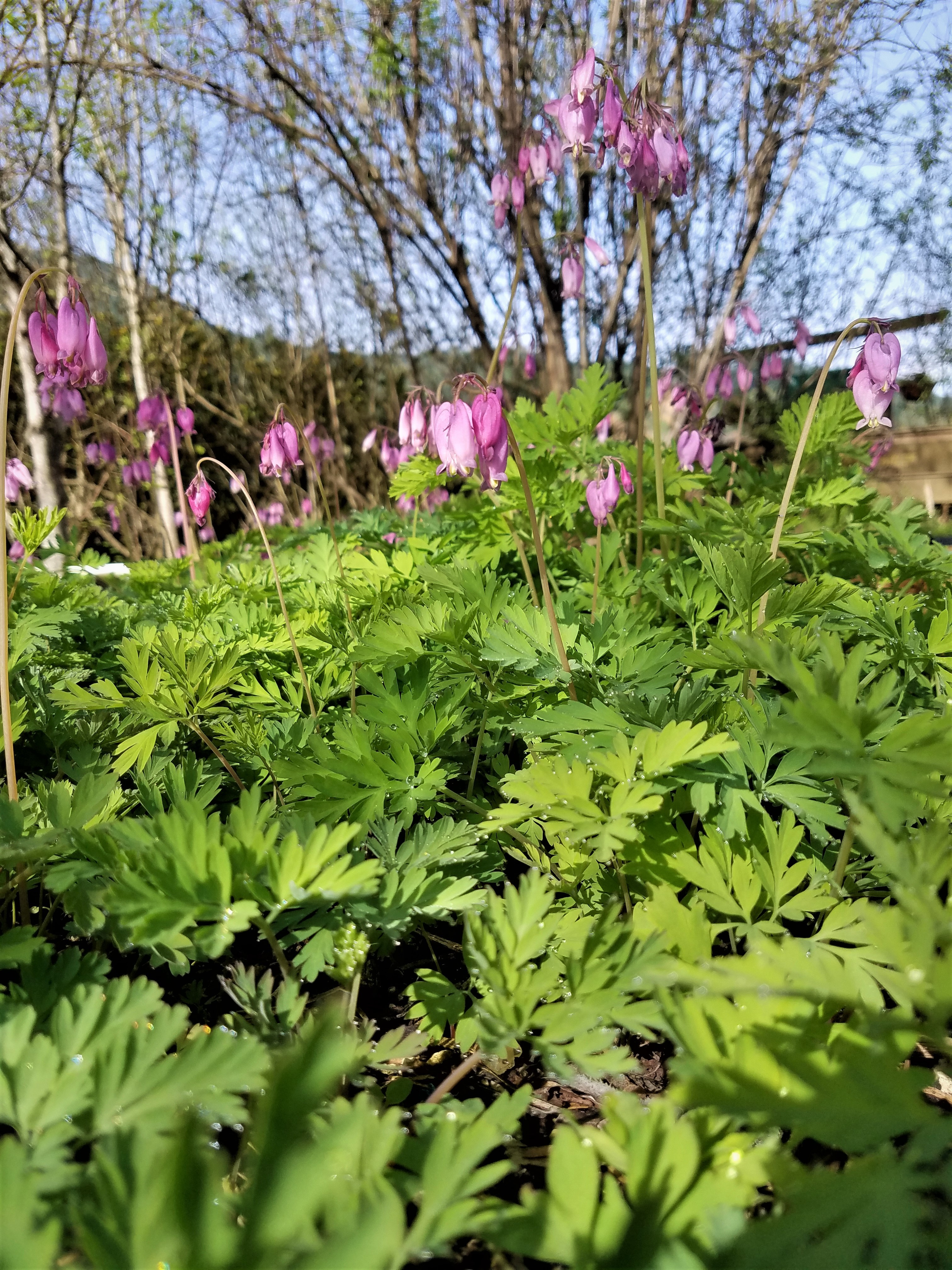
Dicentra formosa
Pacific Bleeding Heart
Pacific Bleeding Heart is a showy perennial that reaches 50 centimeters (20 inches) in height. It prefers shaded moistareas like forests, ravines, and stream banks at low to middle elevations throughout the Willamette Valley.
Bleeding Hearts are distinguishable by their basal, long-stalked and much divided leaves as well as their heart-shaped pinkish purple flowers. The flowers bloom from early spring through late summer and have a light fragrance.
This herb is an important understory species for our native forested habitats. -
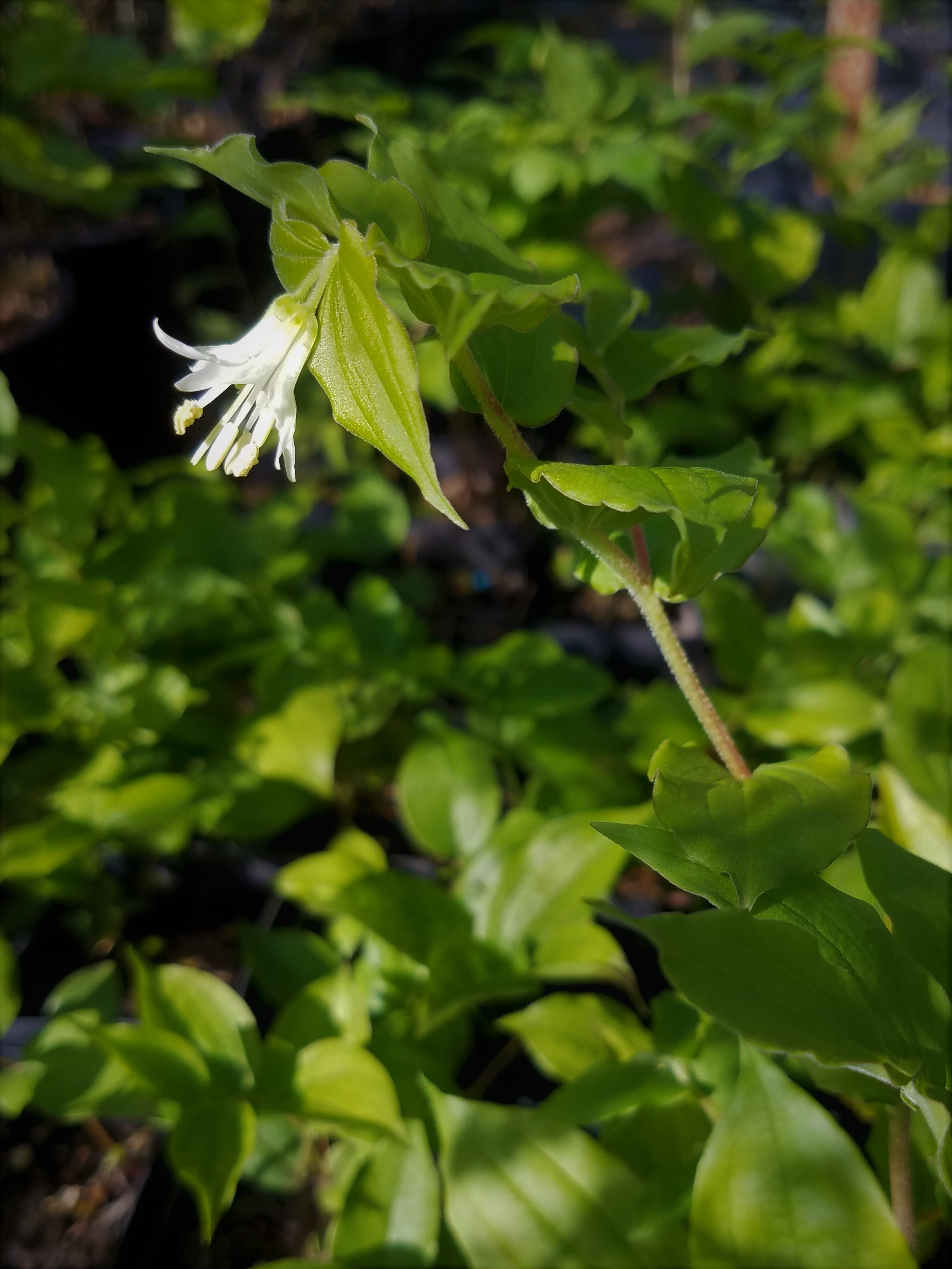
Prosartes hookeri
Hooker's Fairy Bells
Hooker's Fairy Bells are beautiful perennials that reach 1 meter (3 feet) in height. They prefer moist, shaded coniferous or mixed forests at low elevations throughout the Willamette Valley.
The leavers are oval to lance-shaped with pointed tips. The flowers are white, narrow bell-shaped and hang from the bottom for the branches. In the summer, the flowers produce bright orange egg-shaped berries.
This is an important understory species for forests of the Pacific Northwest. Hooker's Fairy Bells are often associated with False Solomon Seal and Wood Sorrel. -
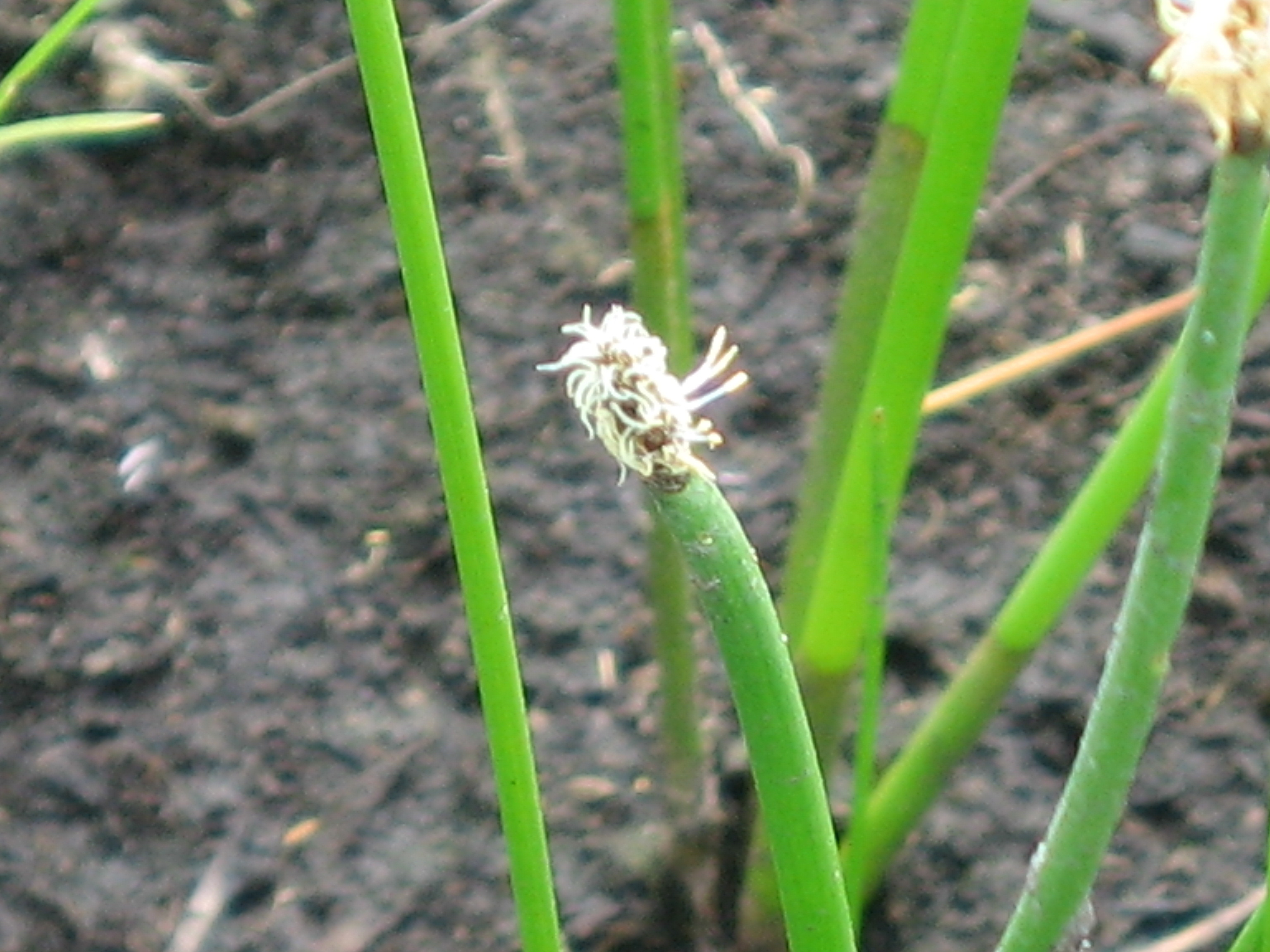
Eleocharis palustris
Creeping Spikerush
Creeping Spikerush is a clustered perennial that can reach 1 meter (3 feet) in height. It is found in wet ditches and meadows at low to middle elevations throughout the Willamette Valley.
This spike-rush has dark brown rhizomes with reddish sheaths at the base. The inflorescence is a solitary terminal spikelet.
This is an important species for wetland habitats throughout the Pacific Northwest. -
Eriophyllum lanatum
Oregon Sunshine
Oregon Sunshine is a woolly perennial that reaches 60 centimeters (24 inches) in height. It prefers dry, sunny habitats such as bluffs and rocky slopes at low to middle elevations throughout the Willamette Valley.
This plant is most identifiable by its woolly stems, bright yellow ray flowers and narrowly lobed leaves.
An excellent species to use in dry, open sites as a ground cover and food source for pollinators. -
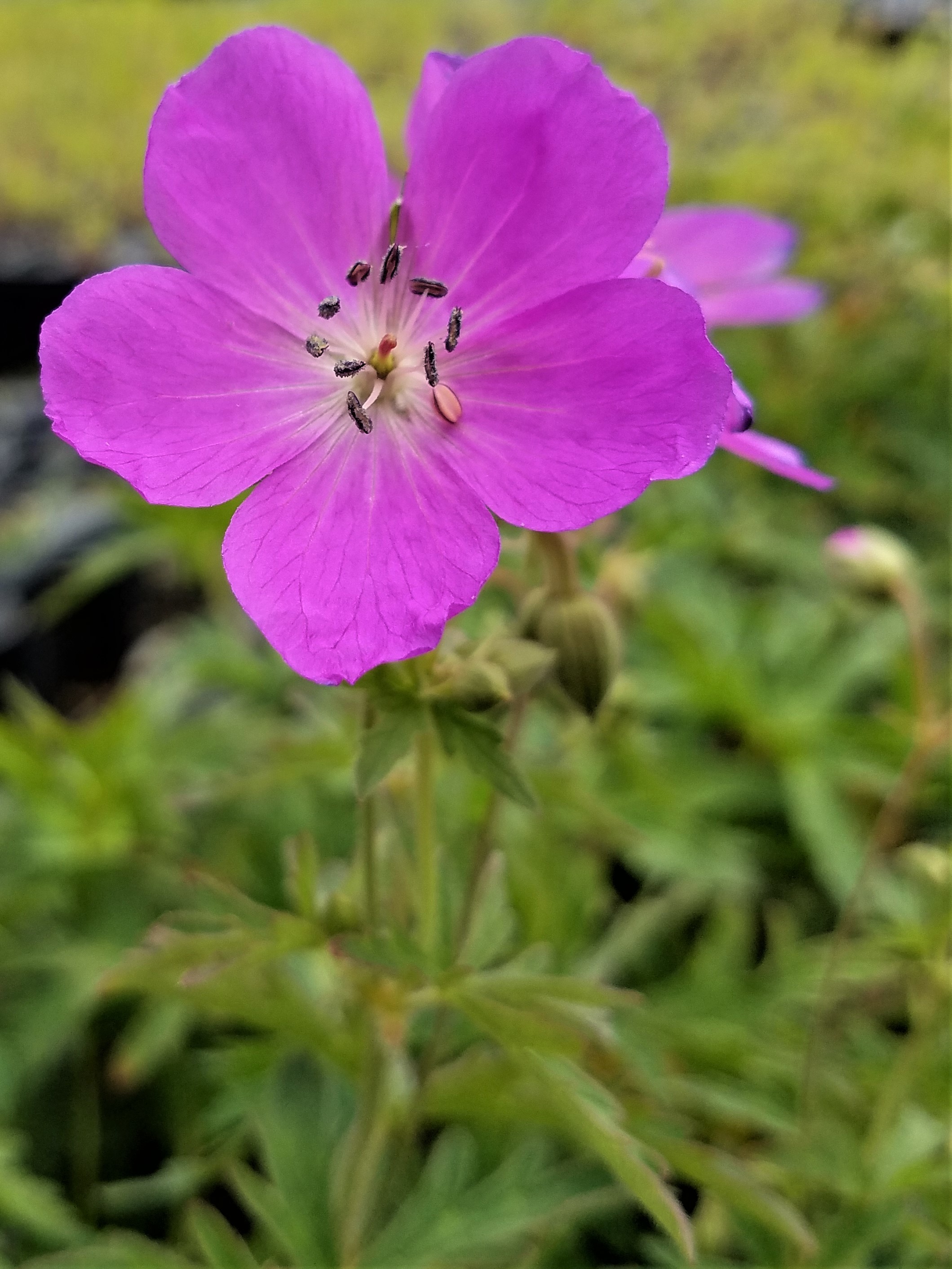
Geranium oreganum
Western Geranium
Western Geranium is a large perennial herb that reaches 30 centimeters (12 inches) in height. This showy plant grows well in moist meadows and forests with some exposure to sunlight. It is found throughout the Willamette Valley at low to middle elevations.
To identify this plant from other native Geraniums, look for large, showy flowers that are reddish purple in color. The sepals are lightly hairy, as opposed to the very hairy in other Geraniums.
This plant is an excellent species to use in wet prairies throughout the Willamette Valley as it provides excellent ground cover, as well as adding a beautiful splash of color to the landscape.
-
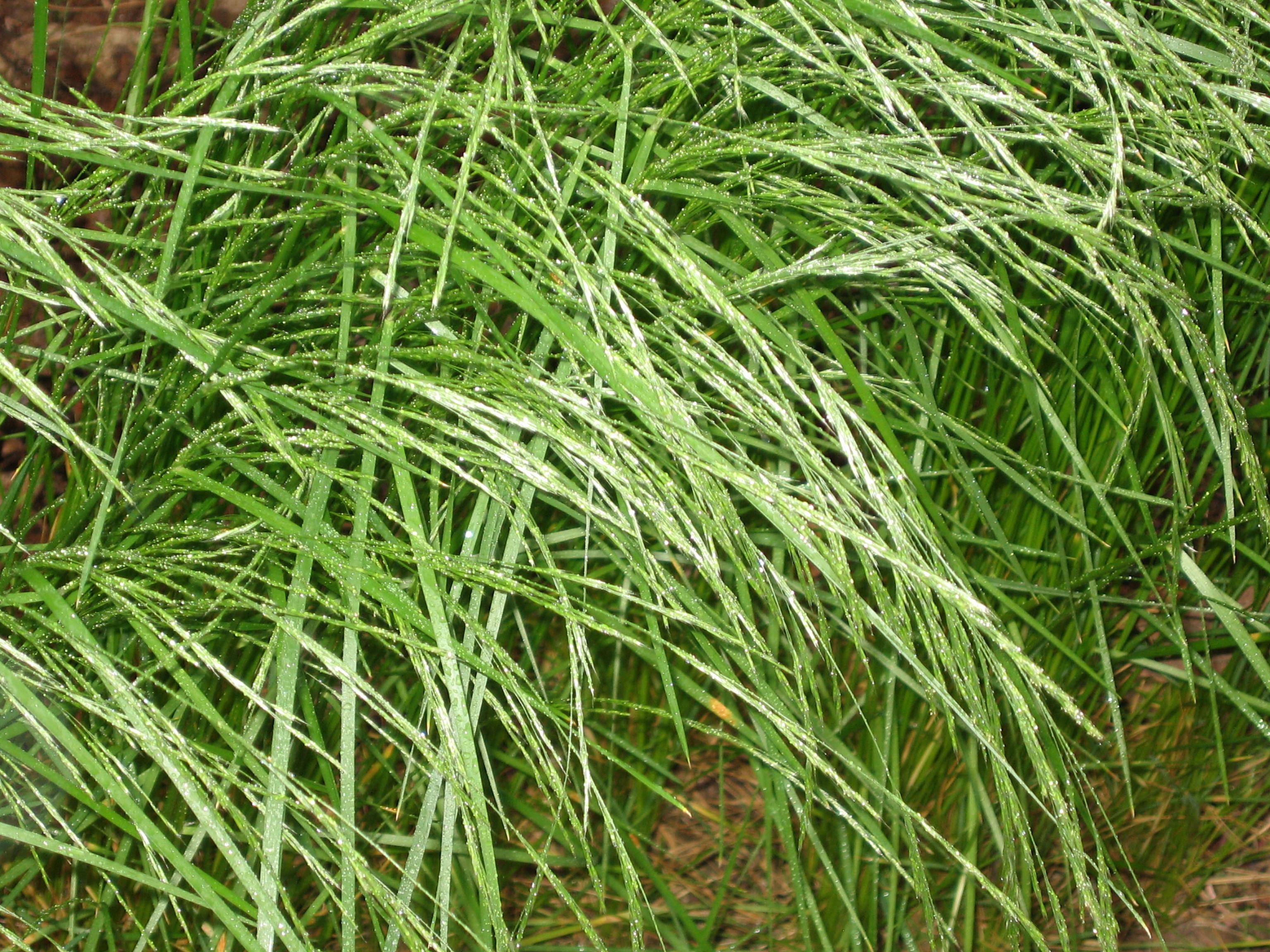
Glyceria elata
Tall Mannagrass
Tall Mannagrass is a loosely tufted, succulent perennial that reaches 1.5 meters (5 feet) in height. It prefers meadows, stream sides, and woods in moist, shady areas throughout the Willamette Valley at low to middle elevations.
This grass is distinguishable by its flat wide leaves that have short hairs. The inflorescence is panicle in shape with loose, open, spreading branches. Tall
Mannagrass is an important species to include in any shaded wetland sites.
-

Hydrophyllum tenuipes
Pacific Waterleaf
Pacific Waterleaf is a perennial herb that can reach 80 centimeters (31 inches) in height. It is found throughout the Willamette Valley at low to middle elevations along the floor of moist, open forests.
This plant has greenish white to lavender flowers, which are bell-shaped with the pistols sticking out. The leaves are large and hairy with the edges deeply divided into an odd number.
Pacific Waterleaf is a key species for the understory to forested projects throughout the Willamette Valley. It provides a valuable food source for grazing wildlife.
-
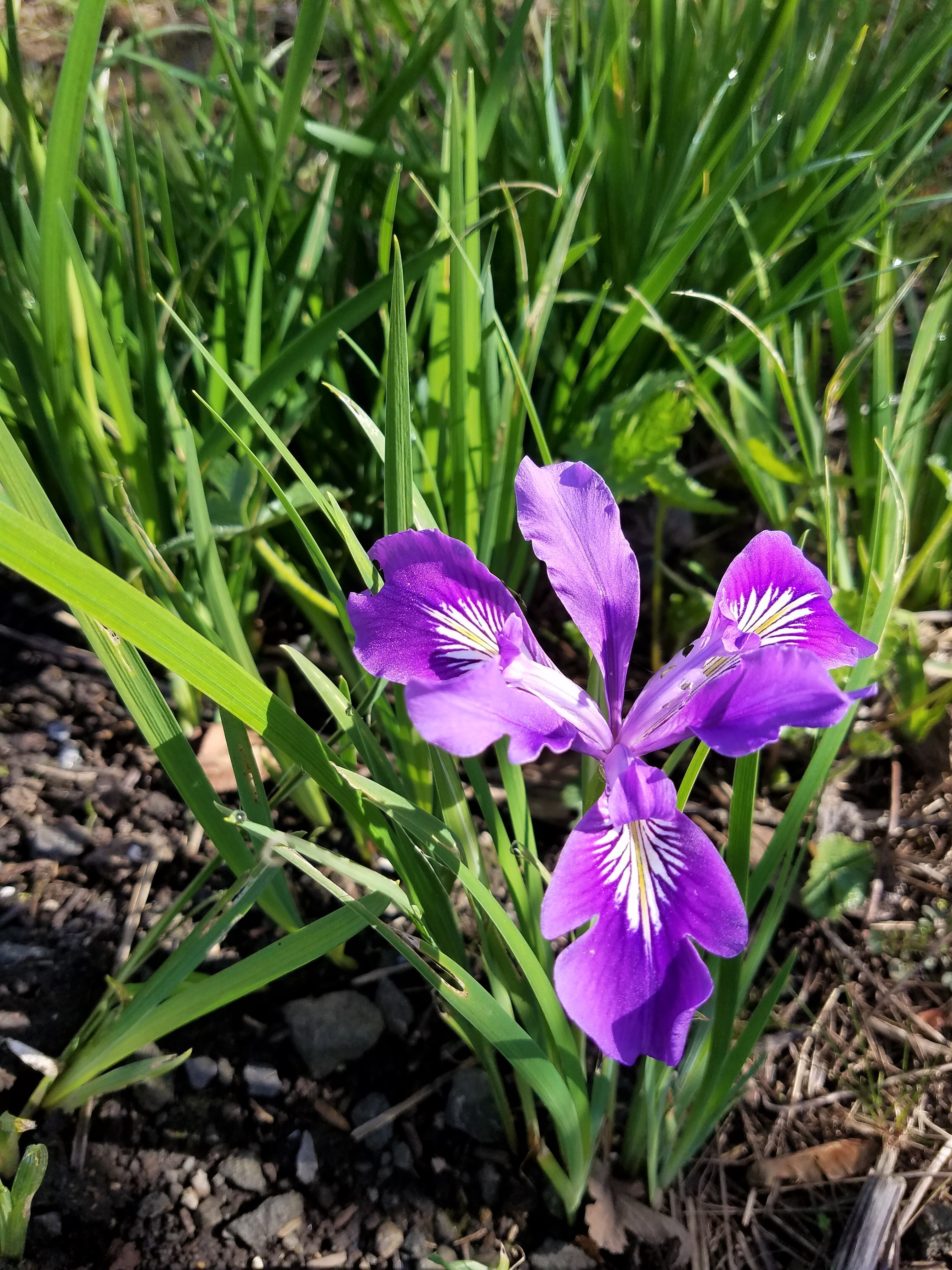
Iris tenax
Oregon Iris
Oregon Iris is a showy herb that can reach 70 centimeters (28 inches) in height. It is found in open, full sun places with acidic soils such as meadows, grassy fields, and pastures. This herb grows throughout the Willamette Valley at low to middle elevations.
To distinguish this iris from others, look for blue to lavender flowers with petals and sepals measuring 6 centimeters (2 inches) in length. The leaves resemble grass blades, but the fibers of the iris leaves makes them incredibly strong and durable.
The Oregon Iris is an excellent species to use in grassy, open sites as it will add a splash of color and diversity.
-
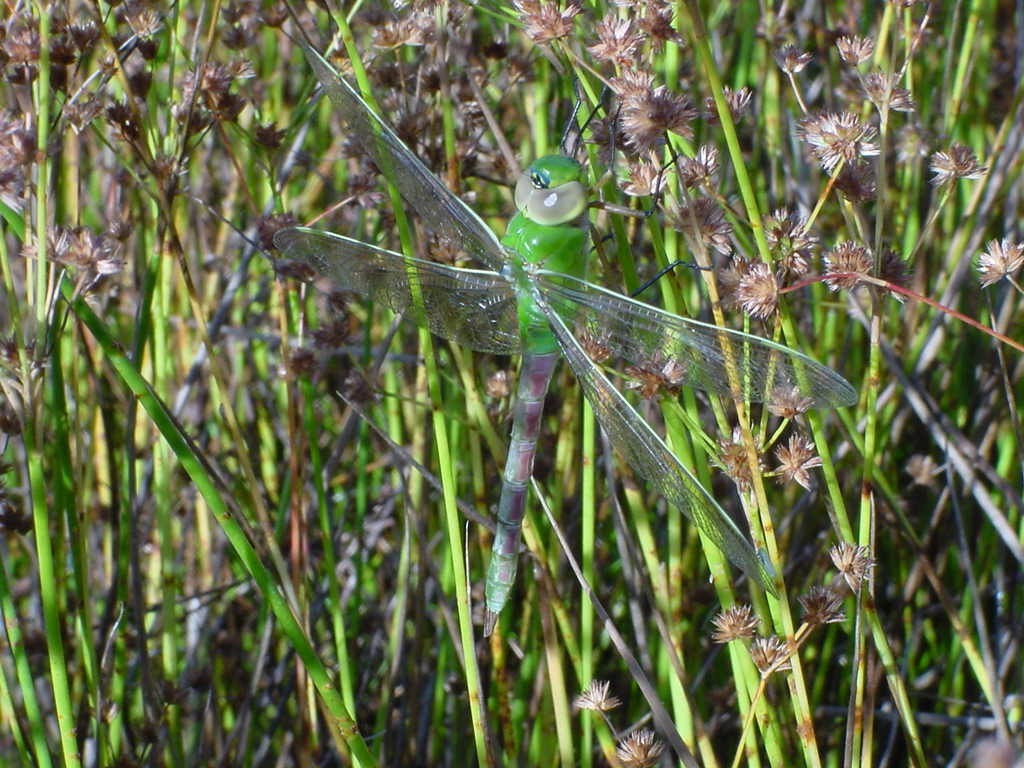
Juncus acuminatus
Tapered Rush
Tapered Rush is a tufted perennial that reaches 80 centimeters (31 inches) in height. It is found in very wet, sunny sites such as meadows, marshes and bogs. This herb is commonly found throughout the Willamette Valley from low to middle elevations.
To identify this rush, look for hollow stems, prominently jointed by crosswall leaves that are erect. The inflorescence are 5 to many bunched, compacted flower heads.
This species is an essential part of wetland ecology and health. It provides shelter, habitat, food source, and erosion control for the area in which it is planted. -

Juncus ensifolius
Dagger-Leaved Rush
Dagger-Leaved Rush is a solitary perennial that reaches 60 centimeters (24 inches) in height. It grows in wet, sandy soils throughout the Willamette Valley. This herb can be found in bogs, wet meadows, and stream banks at low to subalpine elevations throughout our region.
This rush has flattened, iris-like leaves which grow from thick rhizomes. The inflorescence is a terminal head of many clustered flowers.
Dagger-Leaved Rush is an important species for wetlands in our area as it will stabilize the banks of the site.
-
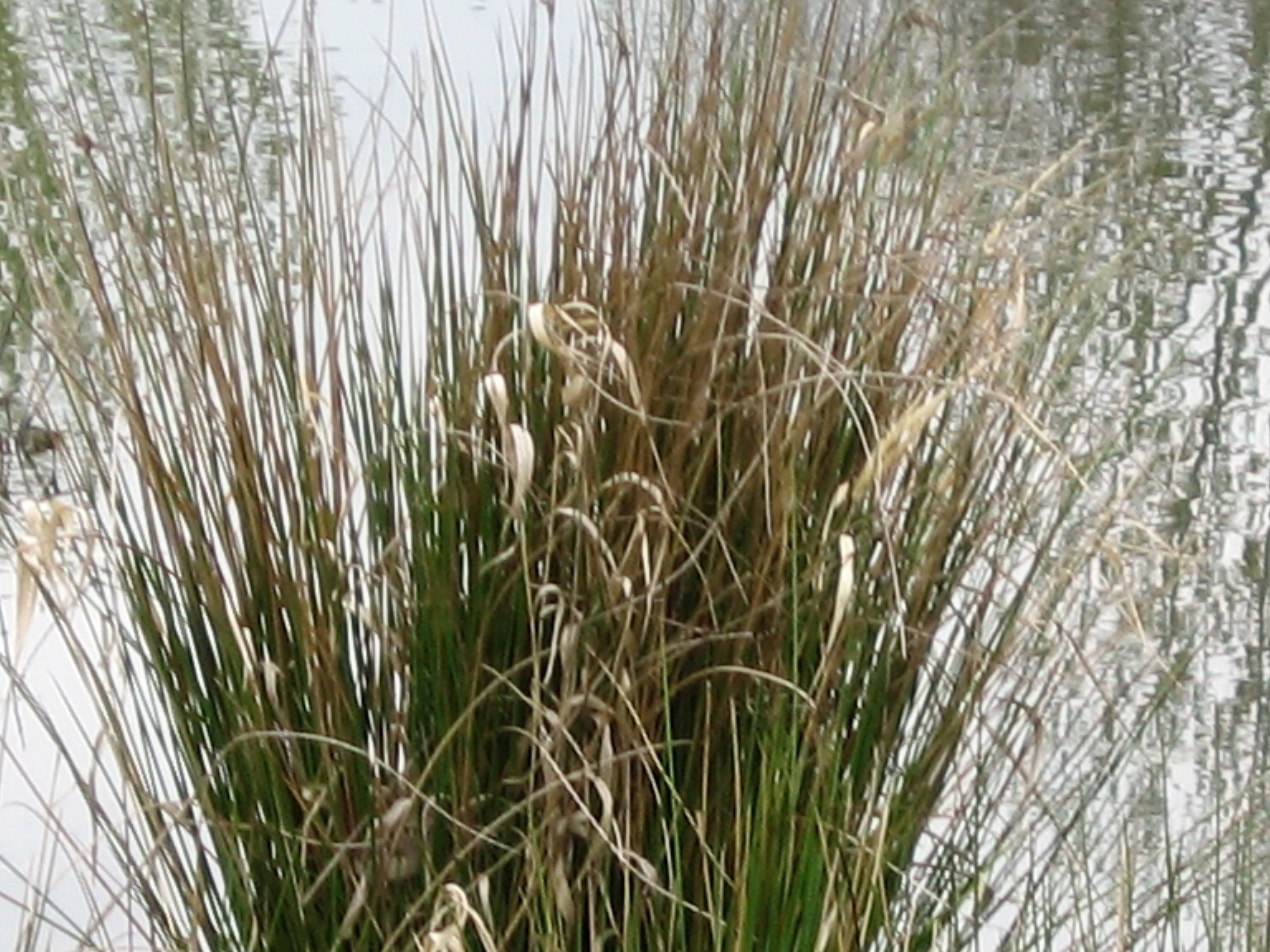
Juncus patens
Bluish Rush
Bluish Rush is a clumping perennial that reaches 1 meter (3 feet) in height. It prefers riparian areas such as rivers and creeks throughout the Willamette Valley. This rush is commonly found in moist to wet soils with plenty of sun at low to middle elevations.
To identify this plant, look for yellow flowers and upright, long leaves which are bluish grey in color.
As true with all rushes, Bluish Rush will help stabilize and control erosion in wetland sites. -
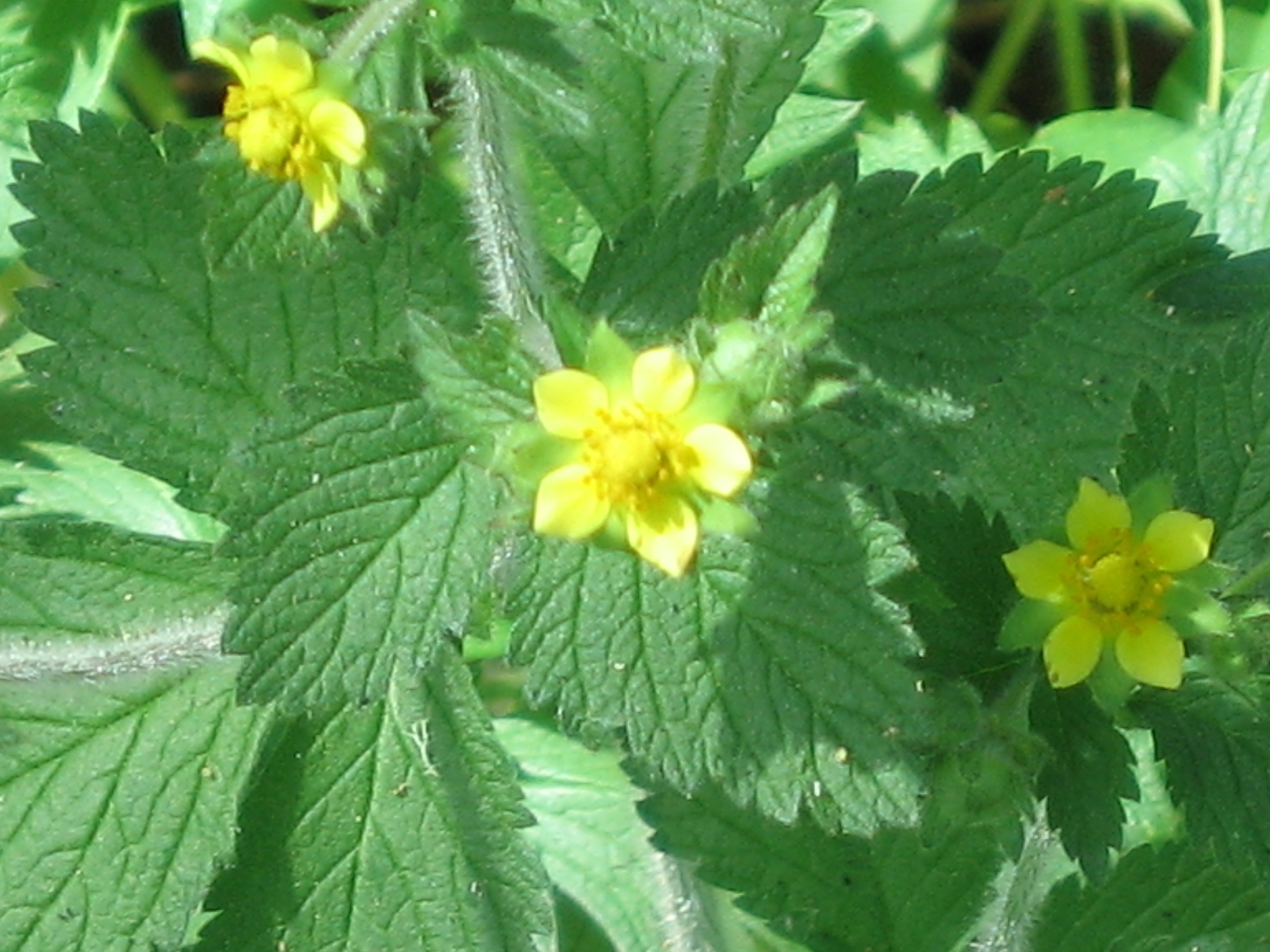
Potentilla gracilis
Slender Cinquefoil
Slender Cinquefoil is a hairy perennial herb that reaches 40 centimeters (16 inches) in height. It is found in moist, sunny openings along meadows and clearings throughout the Willamette Valley at low to middle elevations.
The leaves are palmately compound with a woolly covering. The flowers are a bright yellow that have oval petals.
This species will attract many pollinators to an area as well as provide a food source for wildlife. -

Scirpus microcarpus
Small-Fruited Bulrush
Small Fruited Bulrush is a clustered sedge that reaches 1.5 meters (5 feet) in height. This species prefers sunny to partly shaded areas with wet soils in swamps, wetlands, creeks, stream banks, and clearings. It is found throughout the Willamette Valley at low to middle elevations.
The stems of the Small-Fruited Bulrush are single or in small groups with the stems having purplish sheaths with white, knot-like cross walls.
This species is best used in wetlands to help with erosion control. -
Scrophularia californica
Bee Plant
Bee Plant is a perennial herb that reaches 1 meter (3 feet) in height. This bee plant prefers moist soils with partial sunlight along stream banks, thickets, forests, and creeks at low elevations throughout the Willamette Valley.
The leaves of this plant have opposite placement with saw toothed margins and are triangular-egg shaped. The flowers are very small with many being located on the terminal end. Their coloring is brownish to maroon.
The Bee Plant is an excellent herb to use in forested areas of the Pacific Northwest. -

Sidalcea campestris
Meadow Checker Mallow
Meadow Checker Mallow is a stout perennial that reaches 2 meters (7 feet) in height. It is found in meadows, fields and grassy slopes throughout the Willamette Valley at low elevations. This species grows in moist soils with full to partial sun.
To identify these plants, look for tall hairy stalks with multiple white to pale pink flowers.
This species is excellent to use in wetlands where it will attract many pollinators into the area. -
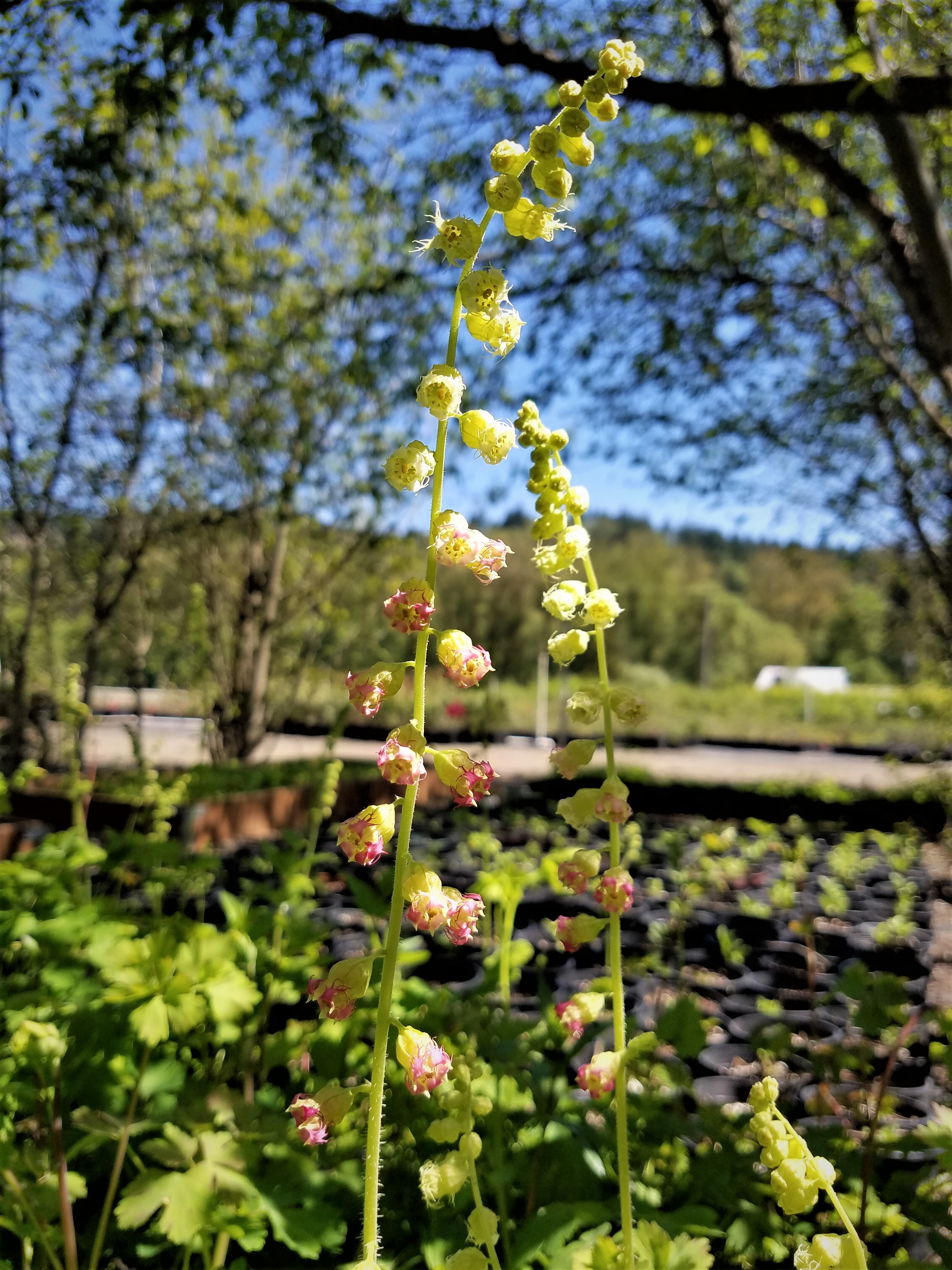
Tellima grandiflora
Fringecups
Fringecups is a perennial that reaches 80 centimeters (31 inches) in height. It is found in moist, shaded areas such as forests, glades, thickets, and stream banks. This species typically grows throughout the Willamette Valley at low to middle elevations.
To identify Fringe-Cup, look for basal leaves that are heart-shaped with shallow lobing and coarse toothing. The flowers are greenish-yellow when young and fade to red tipped as they age. These are bell-shaped with frilly petals and contain a sweet fragrance.
This species is excellent to use in forested sites as it will provide a quick spreading ground cover. -
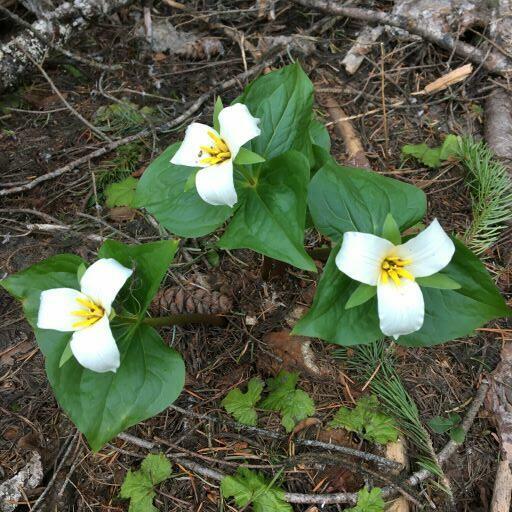
Trillium ovatum
Western Trillium
Western Trillium is a showy perennial that can reach 45 centimeters (18 inches) in height. It prefers moist to wet sites that are mostly shaded in woods and stream banks. This lily is commonly found at low to middle elevations throughout the Willamette Valley.
To identify this beautiful lily, look for leaves in whorls of 3 which are triangular-oval in shape with a pointed tip. The flowers start off in early spring as white, but fade to purple with age. In late spring or early summer, the flowers produce a capsule full of a sticky mass of seeds and starch globules.
This species is a must for Oregon reforestation projects as it attracts many pollinating insects as well as being a recognized staple to Pacific Northwest forest dwellers. -
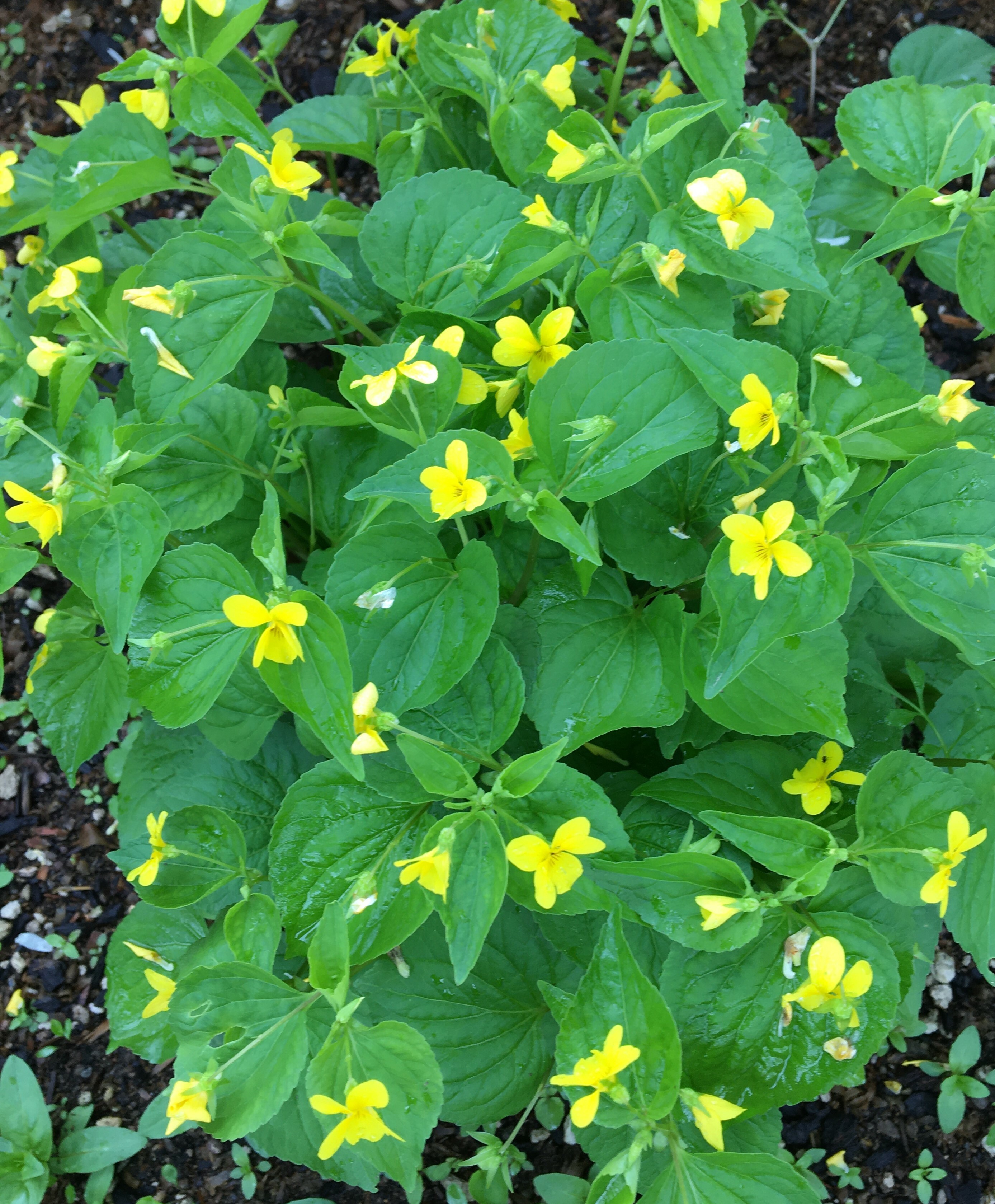
Viola glabella
Yellow Wood Violet
Yellow Wood Violet is a perennial that reaches 50 centimeters (20 inches) in height. It prefers to grow in forests, glades, and along streams in moist, shaded soils. This violet can be found at all elevations throughout the Willamette Valley.
To identify this plant, look for heart-shaped leaves with a sharply pointed tip. Each plant produces a solitary flower that is yellow with the bottom 3 petals having purple lines.
This plant is best used in reforestation projects as it attracts many pollinating insects and grows well along side the Western Trillium. -

Asarum caudatum
Wild Ginger
Wild Ginger grows as an understory plant in moist mixed conifer forests. It is a low growing perennial with deep green heart shaped leaves which release a gingery fragrance when crushed.
Wild Ginger reproduces rhizomitously as well as by seed, and is evergreen through most of its range, making it a great ground cover. Its purplish brown flowers bloom from April to July.
-

Brodiaea coronaria
Crown Brodiaea
Crown Brodiaea is found in multiple plant communities including valley grasslands, foothill woodlands, mixed conifer forests, and volcanic mesas.
This herbaceous perennial reproduces by both seeds and corms. It blooms in May and June sending up umbels of 3 to 11 bell shaped purple flowers
-
Heracleum maximum
Cow Parsnip
Cow Parsnip occurs in a wide variety of forested habitat types, as well as grassland, wet meadow, and riparian areas. It is a large perennial forb that grows 3 - 10 feet tall with leaves that can be up to 20 inches long. It produces a large umbel of small white flowers in June and July.
Cow Parsnip grows best in shady areas on moist soils with good drainage and prefers sandy loam soils, but can also occur in clay or gravely substrates.
-
Lilium columbianum
Columbia Lily
Columbia Lily is a perennial monocot that grows in forest openings and meadows, preferring moist loamy soils. It grows up to 4 feet tall with leaves whorled around the stem and an inflorescence of many bell-shaped orange flowers with dark spots.
-
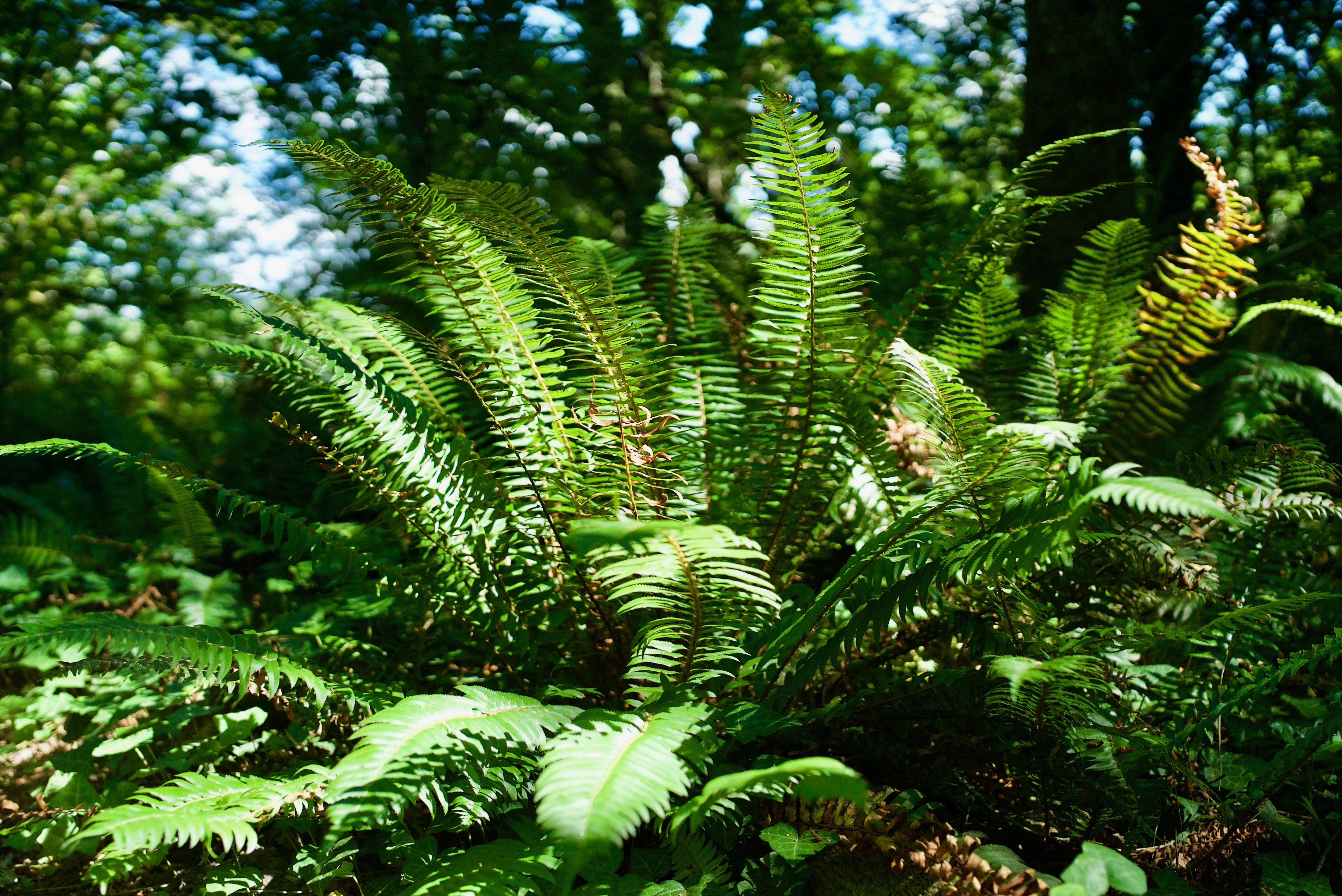
Polystichum munitum
Western Sword Fern
Western Sword Fern is a long leaved evergreen fern, reaching heights of up to 3 feet. It is a widespread understory plant in mesic coniferous and moist mixed-evergreen forests at low to middle elevations.
This plant does best in areas with moist nutrient rich soils, though it can tolerate drier conditions than many of our other native ferns.
-

Sisyrinchium idahoense
Blue-eyed Grass
Blue-eyed Grass is an excelent species for meadow, wetland, or riparian restoration sites. It attracts pollinators and other beneficial insects, and its root structure aids in soil stabilization.
It can tolerate full sun to partial shade, making it a versitile species which can handle the changing environmental cconditions in a developing restoration site.
This perennial monocot is in the iris family and produces small blue to purple 6 petaled flowers and reaches heights of 6 to 18 inches tall.
-
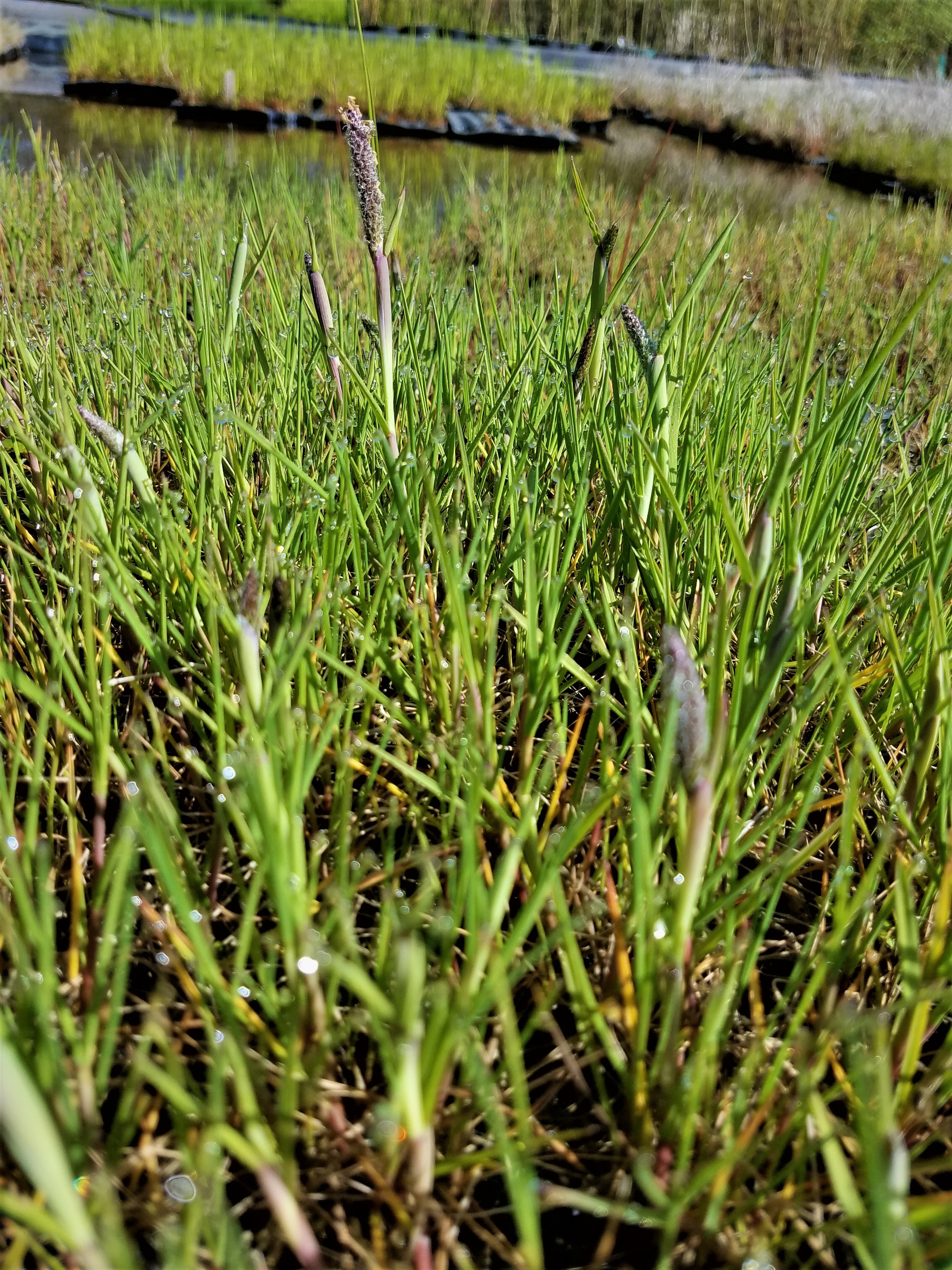
Alopecurus geniculatus
Water Foxtail
Water Foxtail is a perennial, nodally-rooting and rhizomatous grass that can grow up to 2 feet tall. It occurs in wet meadows, pools, and streambanks.
-
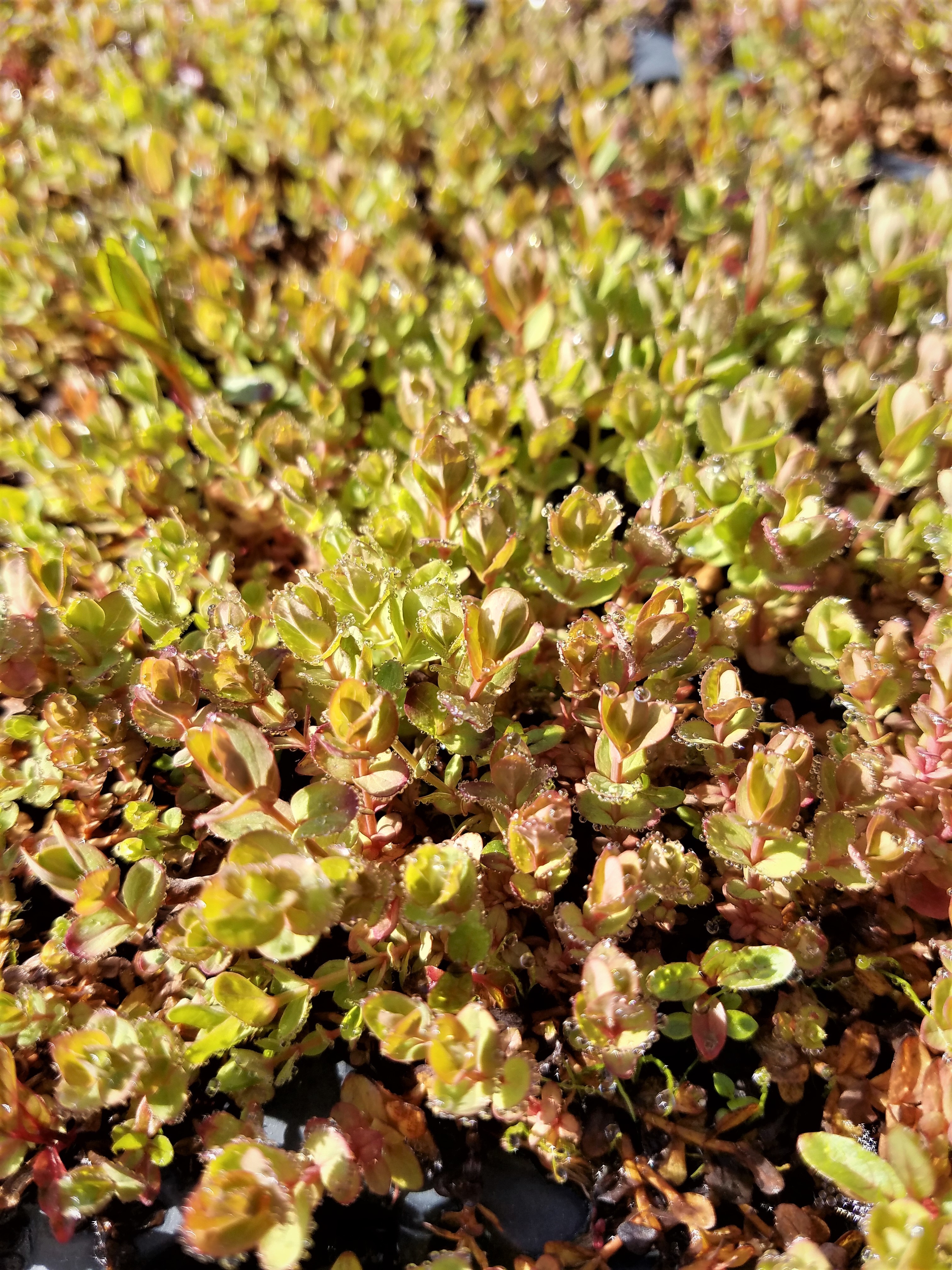
Hypericum anagalloides
Tinker's Penny
Tinker's Penny grows in wet areas such as mountain meadows, streambanks, and wetlands. It is stoloniferous, and tends to form low mat-like patches of vegetation. It has five-petaled yellow flowers in June and July.
-
Carex cusickii
Cusick's Sedge
Cusick's Sedge grows on stumps, beaver dams and rotting logs in and around peat swamps and beaver ponds. This medium-large, robust sedge has long, arching leaves and deep brown spikelets in dense clusters atop slender culms.
-
Carex tumulicola
Foothill Sedge
Foothill Sedge is a tufted sedge of wet prairie margins and moist to dry slopes. Foothill sedge is one of several species, including slender rush and chamisso sedge, that occupy an often neglected niche at the margins of wetlands. Ranges well beyond wetland habits - our most upland sedge.
-

Sagittaria latifolia
Wapato
Wapato is a semi-aquatic emergent perennial that is often found in marshes, ponds, lakes, and wet ditches.
It grows from a tuber and produces rosettes of large arrow shaped leaves and a stalked inflorescence of white flowers. This plant is variable in size and can reach up to 3’ in height.
The starchy tubers of this plant are edible and were widely consumed by many of the indigenous peoples from the Americas.
-
Schoenoplectus tabernaemontani
Softstem Bulrush
Softstem Bulrush is a 3 meter (10 feet) tall stout perennial. This sedge prefers moist, sunny sites in marshes, wetlands, and creeks at low elevations throughout the Willamette Valley.
To distinguish this species, look for soft stems and spikelets that are easily crushed between the fingers. The plant has few leaves that are near the base of the stem. The inflorescence consists of many brown spikelets.
This species is best used in wetlands to help with erosion control.

Stay Up To Date
Receive the latest news and information about seasonal sales


Scholls Valley Native Nursery, LLC
4036 NW Half Mile Ln,Forest Grove, OR 97116
Main
503.516.9129Sales
503.470.0420Fax
503.359.5980